Oxandrolone: the burn trials behind its indication
Fifteen randomised trials and 806 patients in severe burns, a six-day reduction in donor-site healing time in a twenty-patient double-blind study, and a 1999 muscle-protein-synthesis experiment in six men. The numbers are real — and they come from a hospital, not a gym.
13 October 2026 · 5 min read
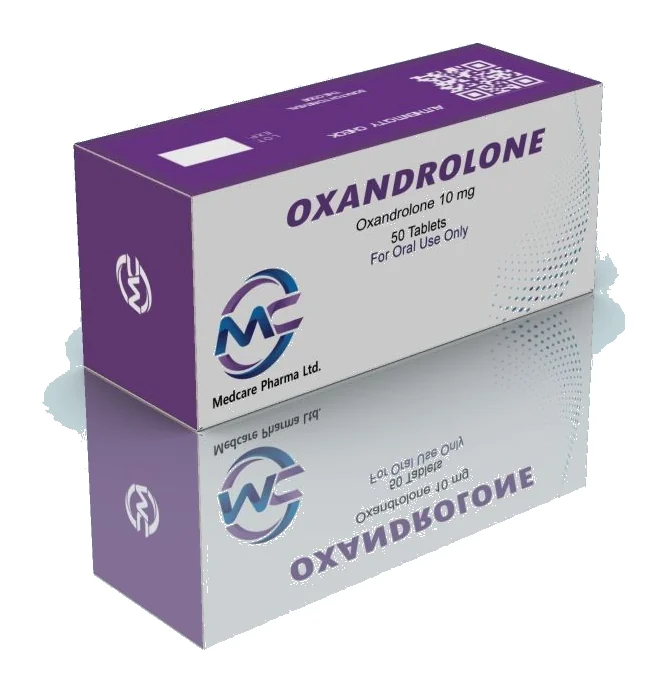 Oxandrolone
There is a rule of thumb in this field that anabolic steroids have no legitimate medicine behind them. Oxandrolone is the compound that breaks the rule, and the reason it does is worth reading carefully — because the evidence is real, and it is real in a burn unit, not in a gym.
The one double-blind trial that can be read in full
From the Journal of Critical Care in 2000, and it is short, which is a virtue here. Patients with burns covering 40% to 70% of body surface were randomised, double-blinded and placebo-controlled. Twenty patients with oxandrolone 20 mg/day and nine with placebo, started between days 2 and 3 after the burn. Mean burn size was 49±8% of total body surface in the placebo group and 53±9% in the oxandrolone group; smoke inhalation was present in roughly half of each. All patients survived.
Net weight loss was 8±3.1 kg on placebo against 3±1.9 kg on oxandrolone, a statistically significant decrease. Net daily nitrogen loss over a three-week window, days 7 to 28, was 13±4 g on placebo against 4±1.9 g on oxandrolone, also significant. Healing time of a standardised donor site fell from 13±3 days to 9±2 days. And the sentence the paper ends on: no major liver dysfunction, or other complication attributable to an anabolic steroid, was seen in either group.
Twenty patients. That is the entire trial, and it is a trial in severely burned people hospitalised for an average of 33±9 days.
The meta-analysis that pooled the field
A 2016 systematic review and meta-analysis in Burns pulled 15 randomised controlled trials together, 806 participants, and split the outcomes into four groups.
Mortality, infection and liver function: oxandrolone did not affect mortality (RR 0.85, 95% CI 0.38-1.89, p=0.69) or infection (RR 0.87, 0.69-1.11, p=0.26), and there was no significant difference in liver dysfunction (RR 1.15, 0.83-1.59, p=0.41). All 15 RCTs reported no incidence of hepatic insufficiency in either arm.
In the acute catabolic phase, oxandrolone shortened length of stay by 3.02 days (2.37, 3.66), shortened donor-site healing time by 4.41 days (3.41, 5.41), shortened the interval between surgical procedures by 0.63 days (0.11, 1.16), reduced weight loss by 5 kg (3.70, 6.30) and reduced nitrogen loss by 8.19 g/day (6.87, 9.52), all p<0.00001.
In the rehabilitative phase it shortened length of stay to 6.45 days (4.20, 8.69), decreased weight loss by 0.86 kg/week (0.76, 0.96) and reduced lean body mass loss by 5% (3.34, 6.66), all p<0.00001. At six months, an additional lean body mass gain of 3.99% (3.08, 4.89); at twelve months, 10.78% (9.92, 11.64).
Read the acute and rehabilitative lists honestly: every effect in them is a shortening or a less loss. Not one of them is the creation of mass where no mass had been lost. The six- and twelve-month figures are a third category again — lean mass regained over the following year by patients the burn had stripped of it, not tissue built on top of a healthy baseline.
The muscle protein synthesis experiment, in healthy men
The 1999 Journal of Clinical Endocrinology & Metabolism study is the one that connects the burn trials to the mechanism, and it is tiny — six healthy men, 22±1 years, studied in the postabsorptive state before and after five days of oral oxandrolone at 15 mg/day. Muscle protein synthesis and breakdown were measured with a three-compartment model using stable isotopes, femoral arterio-venous sampling and muscle biopsy.
Model-derived muscle protein synthesis rose from 53.5±3 to 68.3±5 nmol/min·100 mL leg (p<0.05) while breakdown was unchanged. Inward amino acid transport was unchanged; outward transport decreased (p<0.05). The fractional synthetic rate increased 44% (p<0.05) with no change in fractional breakdown. And the RT-PCR result is the one worth keeping: oxandrolone significantly increased skeletal muscle androgen receptor mRNA without changing insulin-like growth factor I mRNA. The authors attribute the stimulation to an oxandrolone-induced increase in androgen receptor expression in skeletal muscle.
Note the subject of that word significantly. Six men, five days, and a 44% rise in a laboratory rate. No strength, no lean mass, no body composition in that paper.
Why the burn population, and why that matters
A 2021 review in the American Journal of Physiology explains the context. Critical illness — sepsis, cancer cachexia, burn injury — produces systemic metabolic and inflammatory derangements that drive increased energy expenditure and catabolism of fat and lean mass. Burns are the extreme case: the magnitude and duration of the hypermetabolic response greatly exceeds other forms of critical illness, which drastically raises the risk of morbidity and mortality. Skeletal muscle is altered specifically because it is the main source of fuel supporting wound healing. And the detail the review emphasises: muscle catabolism is sustained long after the wound has healed, indicating additional mechanisms beyond wound healing are involved.
The review surveys the mitigations tried — insulin, human growth hormone, propranolol, metformin, oxandrolone, resistance exercise — and the honest summary is that this is a hard problem with partial answers.
What the data do not show
They do not show a muscle-building effect in a healthy person. The 44% figure is a fractional synthetic rate in six men over five days. The pooled outcomes are reduced losses and shorter stays. The trials are in patients with 40-70% body surface burns, on a hospital protocol, with a clinical team monitoring liver function. Nothing in this literature is a dataset about what oxandrolone does to somebody who is well.
They do not show a survival benefit. The meta-analysis found no effect on mortality (RR 0.85, CI 0.38-1.89, p=0.69), and a confidence interval that wide could hide a real difference in either direction. The indication rests on wound healing and nitrogen balance, not on lives saved.
They do not show safety at leisure doses. The reported absence of hepatic insufficiency comes from 15 trials in a monitored hospital setting with a defined adult population and a defined regimen. Liver toxicity for 17α-alkylated oral androgens is a well-documented class concern that these studies were not powered to detect, and “no hepatic insufficiency was reported” is not the same as “no hepatic risk”.
They do not show that the long-term lean-mass figures are oxandrolone alone. The 10.78% gain at twelve months in the pooled analysis is from patients who, by then, were in rehabilitation — a period that in most burn programmes includes resistance training and nutritional support. Attributing that number to a pill would be reading it exactly wrong.
Where this sits on the shelf
The compound as supplied by the manufacturer: Oxandrolone
What we supply
The oxandrolone preparation above, as supplied by the manufacturer, tracked, from inside the EU.
Research use only. This page summarises published studies for research reference. It is not medical advice, not a protocol, and not a suggestion for human use. Nothing we supply is for human or veterinary use.
References.
- Li H, Guo Y, et al. The efficacy and safety of oxandrolone treatment for patients with severe burns: A systematic review and meta-analysis. Burns 2016;42(4):717-727.
- Demling RH, Orgill DP, et al. The anticatabolic and wound healing effects of the testosterone analog oxandrolone after severe burn injury. J Crit Care 2000;15(1):12-17.
- Sheffield-Moore M, Urban RJ, et al. Short-term oxandrolone administration stimulates net muscle protein synthesis in young men. J Clin Endocrinol Metab 1999;84(8):2705-2711.
- Knuth CM, Auger C, et al. Burn-induced hypermetabolism and skeletal muscle dysfunction. Am J Physiol Cell Physiol 2021;321(1):C58-C71.
10% off every product in your first order
Join the list for your welcome code plus early access to new research arrivals. No spam — unsubscribe anytime.