Anti-aging & longevity.
Longevity and cellular-support formulations: epithalon, NMN, nicotinamide, GHK-Cu, resveratrol and the premium pre-mixed pens built around senolytics, exosomes, glutathione and NAD. Every composition on this shelf is the manufacturer's published one, printed in full — no proprietary blends hiding their contents.
Sources checked 30 September 2026 · evidence graded from the abstracts cited on this page
Evidence, claim by claim
Every claim this category is sold on, next to the study that does or does not support it. A row graded “none” means no supporting source was found, and it is left in.
Grade: human RCT · small human · animal · in vitro · none (no source found)
| Claim | Source | Grade | What was actually measured |
|---|---|---|---|
| Oral glutathione raises the body's own stores | Eur J Nutr 2015 · PMID 24791752 | human RCT | GSH up 30–35% in erythrocytes, plasma and lymphocytes and 260% in buccal cells on the high dose at six months (P < 0.05, n=54); natural killer cytotoxicity more than doubled in a subset. Levels returned to baseline one month after washout. |
| NMN improves insulin sensitivity | Science 2021 · PMID 33888596 | small human | Insulin-stimulated glucose disposal and muscle AKT/mTOR phosphorylation increased over ten weeks in postmenopausal women with prediabetes who were overweight or obese, and did not change on placebo. Not men, not people with normal blood sugar. |
| Epithalon activates telomerase and lengthens telomeres | Bull Exp Biol Med 2004 · PMID 12937682 | in vitro | Telomerase catalytic-subunit expression, enzymatic activity and telomere elongation in telomerase-negative human fetal fibroblast culture. The life-span statement in the paper is an inference from that culture, not a measurement of an organism. |
| Epithalon extends the number of times a human cell divides | Bull Exp Biol Med 2005 · PMID 15455129 | in vitro | Treated fibroblasts made ten extra divisions — 44 passages against a control that lost proliferative potential at 34 — and continued dividing. Same group, same cells, same journal. |
| Resveratrol improves cognition | Ageing Res Rev 2021 · PMID 33303422 | human RCT | Most animal publications reported positive outcomes, but 11 meta-analyses of human placebo-controlled resveratrol, grape or wine trials found no statistically significant effect on cognitive and mood assessments, grey matter volume or blood pressure. |
| A longevity peptide extends human lifespan or slows biological ageing | — | none | No lifespan, no mortality, no biological-age endpoint in any of the five papers. Every endpoint is a blood chemistry value, a muscle glucose clamp, a count of cell divisions in a dish, or a null result. |
Nothing on this page has been shown to extend a human life. That sentence belongs in the first paragraph, not in a footnote, because every paper below measures a blood chemistry value, a muscle glucose clamp, a count of cell divisions in a dish, or a null result. What the category does have is one clean six-month randomised trial with published effect sizes, one ten-week human trial with a real metabolic endpoint, and a genuinely useful pair of failures — two Epithalon papers that are entirely in vitro, and a systematic review of eleven meta-analyses in which resveratrol did not replicate in people. This page is written so that a reader can tell, molecule by molecule, which of those four categories they are looking at.
What the literature shows
PMID 24791752 — A six-month, randomised, double-blinded, placebo-controlled trial in 54 non-smoking adults, measuring glutathione levels in blood, erythrocytes, plasma, lymphocytes and exfoliated buccal mucosal cells, with a battery of immune markers in a subset. The authors state this is the first time oral glutathione has been shown effective at raising body compartment stores in humans. The endpoint is a measured molecule, not an outcome a person feels.
At six months, mean GSH levels increased 30–35% in erythrocytes, plasma and lymphocytes and 260% in buccal cells in the high-dose group (P < 0.05). In the low-dose group, GSH increased 17% in blood and 29% in erythrocytes. Increases were dose and time dependent, and levels returned to baseline after a one-month washout period. The oxidised-to-reduced glutathione ratio fell after six months in both groups. Natural killer cytotoxicity increased more than twofold in the high-dose group versus placebo at three months (P < 0.05).
PMID 33888596 — A ten-week, randomised, placebo-controlled, double-blind trial of NMN in postmenopausal women with prediabetes who were overweight or obese, using a hyperinsulinaemic-euglycaemic clamp and skeletal muscle insulin signalling. The population is narrow and the paper says so — this is not everyone, not men, and not people with normal blood sugar. A comment on the trial was published and answered (34326209): the authors note that muscle insulin sensitivity was identical in both groups at baseline and improved only on the active arm.
Insulin-stimulated glucose disposal and skeletal muscle insulin signalling — phosphorylation of AKT and mTOR — increased after NMN supplementation and did not change after placebo. NMN up-regulated the expression of platelet-derived growth factor receptor β and other genes related to muscle remodeling. NCT03151239.
PMID 12937682 — This is the entire human dataset for the peptide whose name is epithalon. The work was done in telomerase-negative human fetal fibroblast culture. The abstract describes what the peptide did in that dish and then interprets it as indicating the possibility of prolonging the life span of a cell population and of the whole organism. Read the two halves of that sentence separately.
Addition of the peptide to telomerase-negative human fetal fibroblast culture induced expression of the catalytical subunit and enzymatic activity of telomerase, and telomere elongation. The reported interpretation is the possibility of prolonging life span of a cell population and of the whole organism. That is an inference drawn from a culture, not a measurement of an organism.
PMID 15455129 — The companion paper from the same group, in the same laboratory setting, on the same cells. It reports a countable outcome — extra divisions — which is why it is here: even when the human paper is a cell culture, the result is a hard number rather than a feeling.
Primary pulmonary fibroblasts derived from a 24-week fetus lost proliferative potential at the 34th passage. Adding the peptide to aging cells induced elongation of telomeres to a size comparable to their length during early passages, and the treated cells made 10 extra divisions — 44 passages against control — and continued dividing.
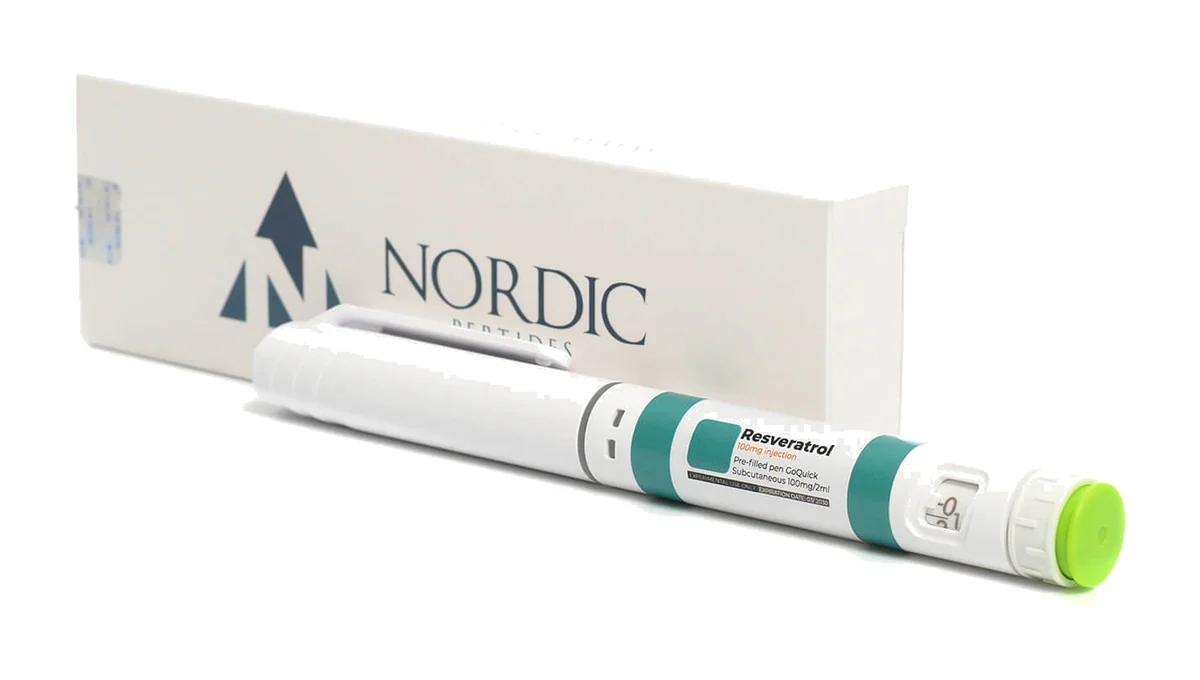
PMID 33303422 — A systematic review and meta-analysis following PRISMA guidelines, with independent data extraction by two authors, of human trials and animal studies published before January 2020. We sell resveratrol in three pens. This is the cleanest available warning about it, and it belongs on the page in the same size as the positives.
Most animal-model publications reported positive outcomes on cognition and brain function after resveratrol or grape seed extract exposure. By contrast, 11 meta-analyses of human placebo-controlled resveratrol, grape or wine trials identified no statistically significant effect on cognitive and mood assessments, grey matter volume or blood pressure. The authors conclude that the promising effects seen in animal models are not replicated in human clinical trials, and that any effects on human cognition are likely to be small.
Where these compounds stand
Nothing on this page is on the Prohibited List by name, and one of the compounds is an approved medicine. That combination is worth a table rather than a paragraph, because both facts are checkable: each row below gives the list section and the database entry.
The list is the 2026 Prohibited List, in force since 1 January 2026. ‘Medicine status’ is the US position, read from FDA Drugs@FDA on 1 October 2026: an application number means a marketing authorisation exists in that database, and ‘no application’ means the database holds none under that name — a statement about the database, not a clearance for anything. For a supplement the second half of that is expected: there was never an application to find.
| Compound | Status | Source |
|---|---|---|
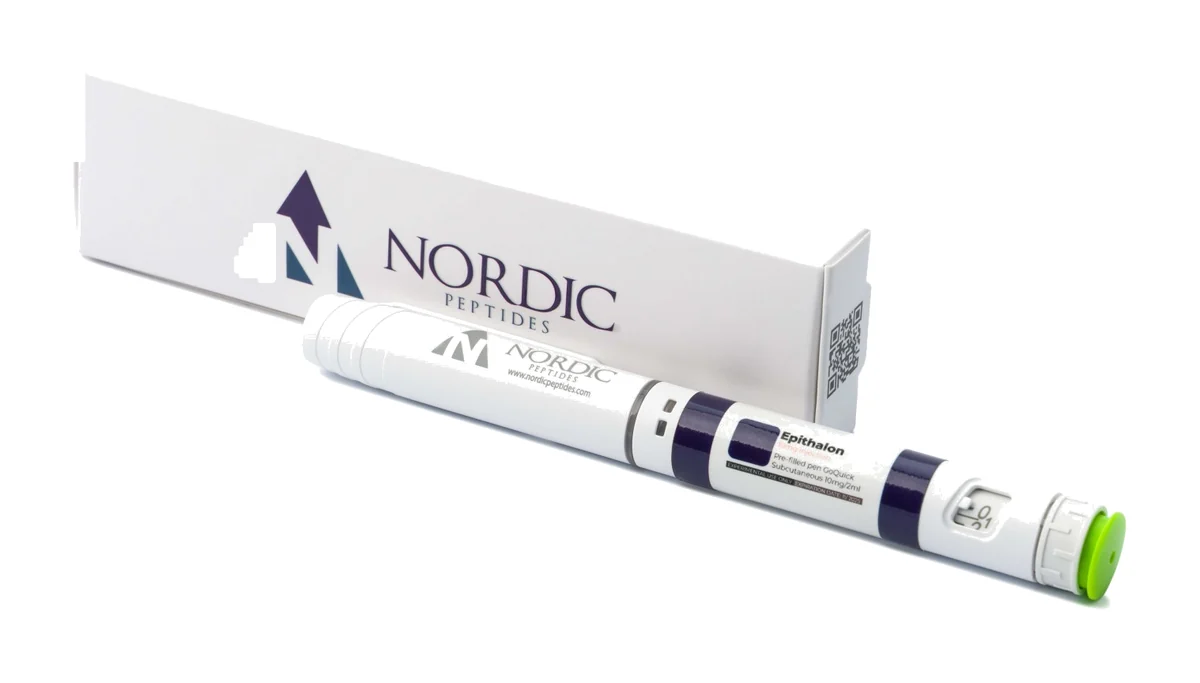
| Epithalon | Not named in the list and no application in Drugs@FDA, so S0’s catch-all covers it. | WADA 2026, S0 · Drugs@FDA |
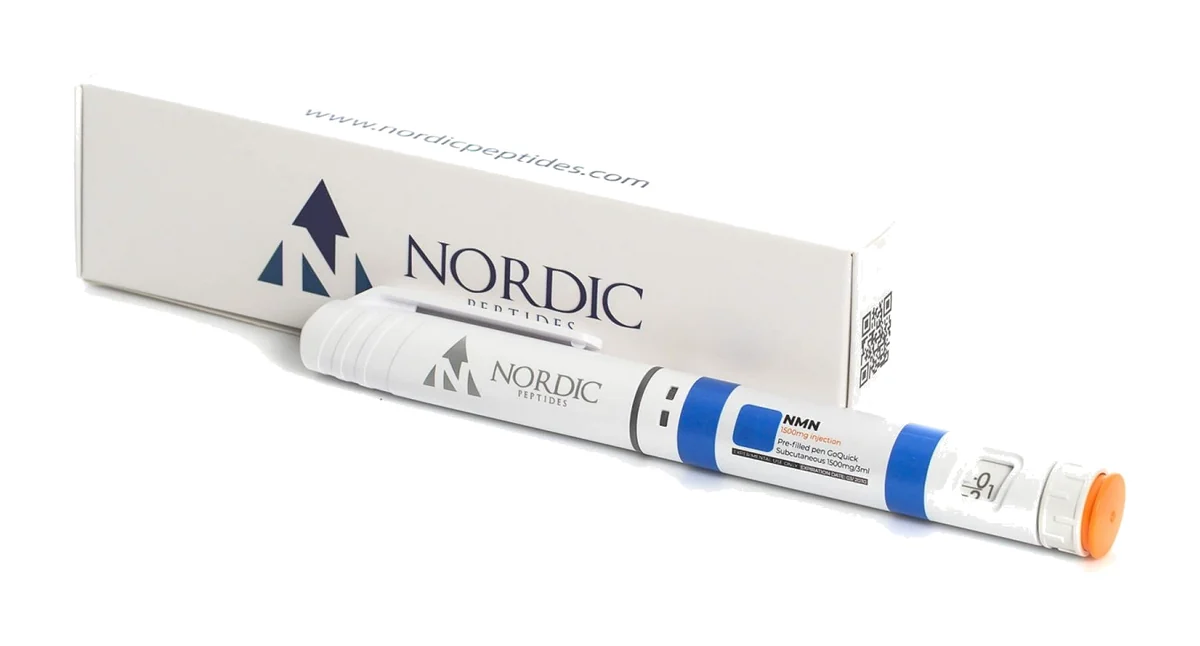
| NMN (nicotinamide mononucleotide) | Not named in the list and no application in Drugs@FDA, so S0’s catch-all covers it. | WADA 2026, S0 · Drugs@FDA |
| Resveratrol | Not named in the list and no application in Drugs@FDA, so S0’s catch-all covers it. | WADA 2026, S0 · Drugs@FDA |
| Glutathione | Not named in the list, so S0’s catch-all covers it. The one Drugs@FDA record matching the name is BSS PLUS, a balanced salt solution with glutathione among its components, not a glutathione product. | WADA 2026, S0 · Drugs@FDA |
| Methylene blue | Not named anywhere in the list, and S0’s no-approval clause does not reach it, because it is an approved medicine — NDA204630 (Provayblue) and generics. | WADA 2026, S0 · Drugs@FDA |
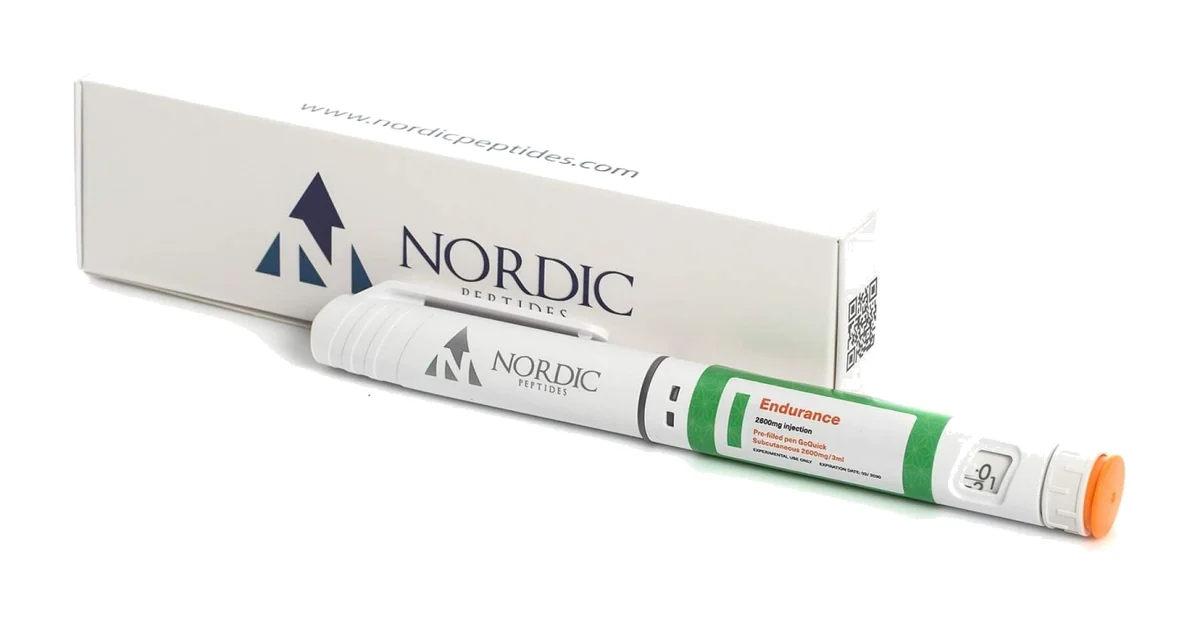
| Endurance pen (glutathione, NMN, resveratrol) | A formula rather than a compound, so it has no status of its own: all three components are in the table above, and all three fall under S0. | WADA 2026, S0 · Drugs@FDA |
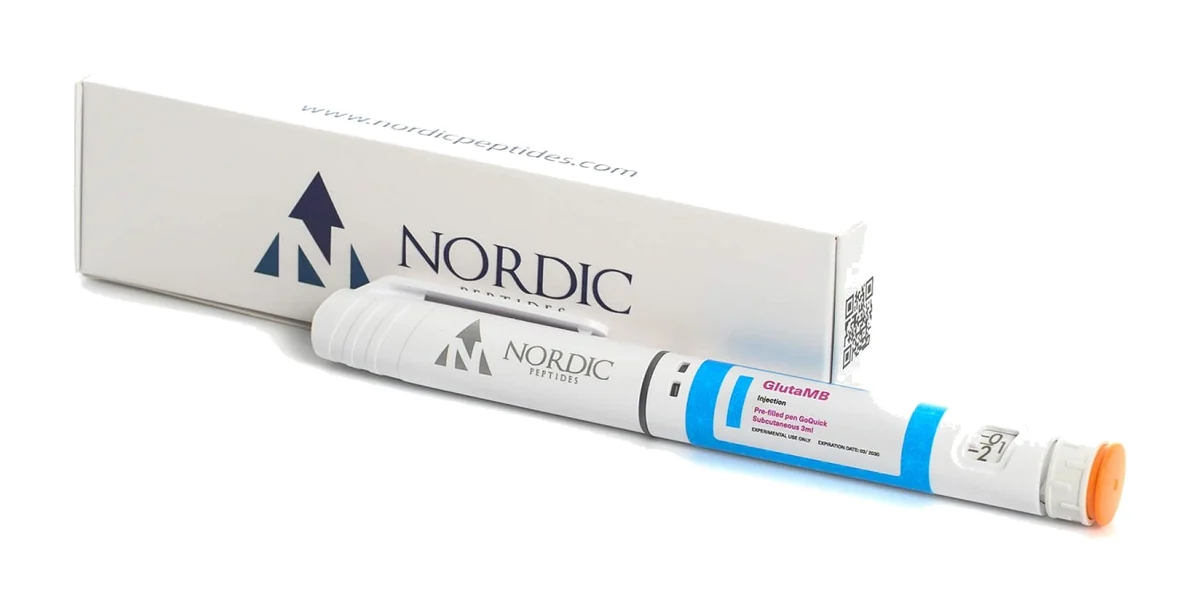
| GlutaMB (glutathione, methylene blue) | A formula of two of the compounds above — one caught by S0, one approved and unlisted. No status of its own. | WADA 2026, S0 · Drugs@FDA |
S0 covers “any pharmacological substance which is not addressed by any of the subsequent sections of the List and with no current approval by any governmental regulatory health authority for human therapeutic use”, with drugs in clinical development, discontinued drugs and veterinary-only drugs given as its own examples. It is the clause behind the first four rows, and the methylene blue row is what happens when its second condition does not apply: same year, same list, one row apart, decided entirely by whether an approval exists.
Two limits are worth stating plainly. A status is a fact about a list and a database: it says nothing about anyone’s plans, and it is not medical advice. And ‘not named’ is a statement about the 2026 list as published — these lists are rewritten every year, which is why the edition and the date are part of the answer rather than a footnote to it. Neither answer is evidence about what a compound does in a person; that is the table above, where the record for most of this page is thin enough to be said in one line.
What the data do not show
Seven things this page’s evidence does not show. It is a longer list than the other three protocol pages, because the longevity category generates more copy per gram of data than anything else we sell.
Nothing here has been shown to extend a human life. No lifespan, no mortality, no biological-age endpoint, in any of the five papers. Every endpoint is a blood chemistry value (24791752), a muscle glucose clamp (33888596), a count of cell divisions in a dish (12937682, 15455129), or a null result (33303422).
The Epithalon human evidence is cell culture. Both papers are in vitro, from the same group, published in the same journal. That is not a footnote about a limitation — it is the complete extent of the human dataset for the compound. The paper says a 10-division gain in fibroblasts and then says it indicates the possibility of prolonging life span. The first is measured; the second is an inference from it.
Biochemical endpoints are not clinical outcomes. A 30–35% rise in glutathione stores and a greater-than-twofold rise in natural killer cytotoxicity in a subset (24791752) are measurements of a molecule and a laboratory assay. They are not a person feeling better, and they are not a person living longer.
The glutathione effect reversed. Levels returned to baseline after a one-month washout — printed in the same abstract as the 30–35% rise, one sentence apart.
The NMN population is narrow. Postmenopausal women with prediabetes who were overweight or obese, ten weeks (33888596). It is not everyone, not men, and not people with normal blood sugar. The percentages widely quoted for this trial are not in the abstract, so they are not on this page.
And resveratrol failed its human replication. Eleven meta-analyses, no statistically significant effect on cognition, mood, grey matter volume or blood pressure (33303422). We sell it in three pens. That fact belongs on this page with the same weight as any positive result.
Five compounds lead this protocol. Glutathione is first because it is the only molecule on this shelf with a six-month human RCT that publishes effect sizes — and its card prints the washout in the same breath. NMN is second on the strength of the ten-week trial and its clamp endpoint. The blended pen is third for the reader who wants the shelf rather than a molecule, and its card says which two components have human RCTs and which does not. Epithalon is fourth, cheap and heavily searched, and its entire job is to say that the human data is a cell culture and name the PMID. Resveratrol is fifth because we sell it and because that systematic review is the most useful thing anyone has written about it.
Longevity & Cellular Support
Shelf
Read first
Research
Questions people ask about this
Answered with the same sources printed at the bottom of this page.
Is anything on this page shown to extend a human life?
No. No paper here reports lifespan, mortality or a biological-age endpoint. Every endpoint is a blood chemistry value, a muscle glucose clamp, a count of cell divisions in a dish, or a null result.
What did the glutathione trial actually find?
In 54 adults over six months, mean GSH rose 30–35% in erythrocytes, plasma and lymphocytes and 260% in buccal cells on the high dose, and natural killer cytotoxicity more than doubled in a subset. The same abstract records that levels returned to baseline one month after washout.
What is the human data for NMN?
A ten-week randomised trial in postmenopausal women with prediabetes who were overweight or obese, using a hyperinsulinaemic-euglycaemic clamp: insulin-stimulated glucose disposal and muscle AKT/mTOR phosphorylation rose on NMN and did not change on placebo.
What is the human evidence for epithalon?
There is none. Both epithalon papers are in vitro, from the same group in the same journal, in telomerase-negative fetal fibroblast culture. One reports ten extra cell divisions, the other telomerase activity and telomere elongation. Both are cells.
Does resveratrol do anything for the brain?
Not in people. A PRISMA systematic review and meta-analysis found that while most animal publications reported positive outcomes, 11 meta-analyses of human placebo-controlled trials identified no statistically significant effect on cognition, mood, grey matter volume or blood pressure.
So what does this category actually have?
One clean six-month randomised trial with published effect sizes (glutathione), one ten-week human trial with a real metabolic endpoint (NMN), two cell-culture papers (epithalon) and one null result across eleven human meta-analyses (resveratrol).
Sources
- Randomized controlled trial of oral glutathione supplementation on body stores of glutathione. — Eur J Nutr 2015 · PMID 24791752
- Nicotinamide mononucleotide increases muscle insulin sensitivity in prediabetic women. — Science 2021 · PMID 33888596
- Epithalon peptide induces telomerase activity and telomere elongation in human somatic cells. — Bull Exp Biol Med 2004 · PMID 12937682
- Peptide promotes overcoming of the division limit in human somatic cell. — Bull Exp Biol Med 2005 · PMID 15455129
- Resveratrol: A "miracle" drug in neuropsychiatry or a cognitive enhancer for mice only? A systematic review and meta-analysis. — Ageing Res Rev 2021 · PMID 33303422