Muscle growth.
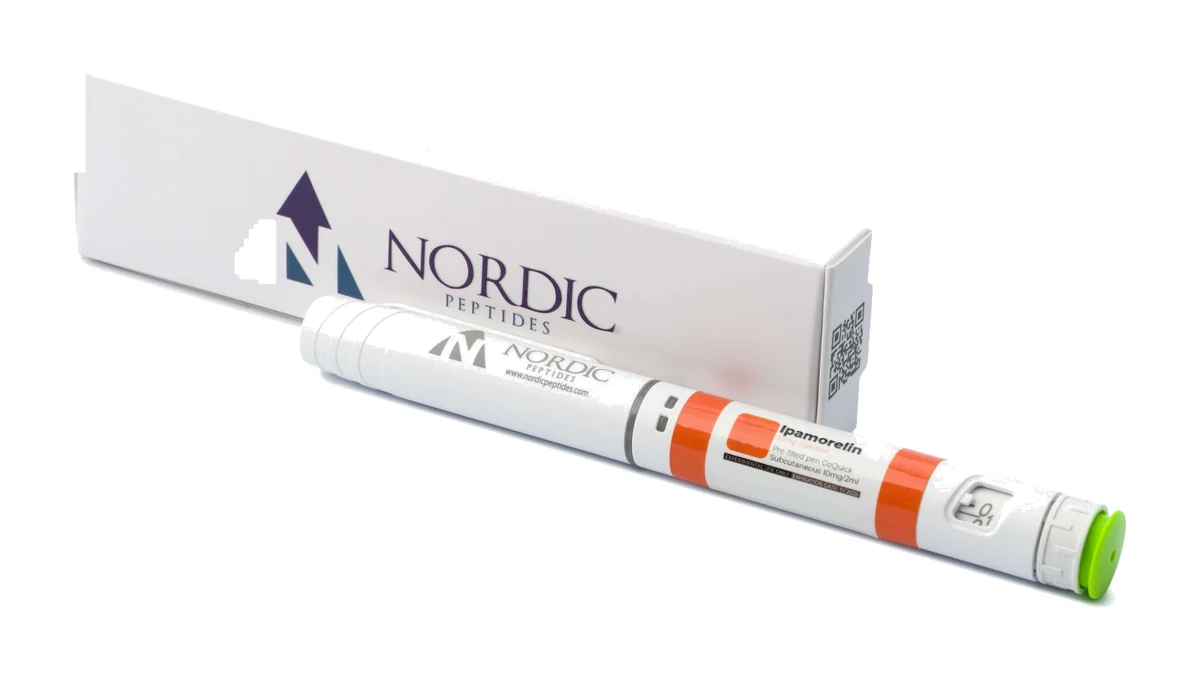
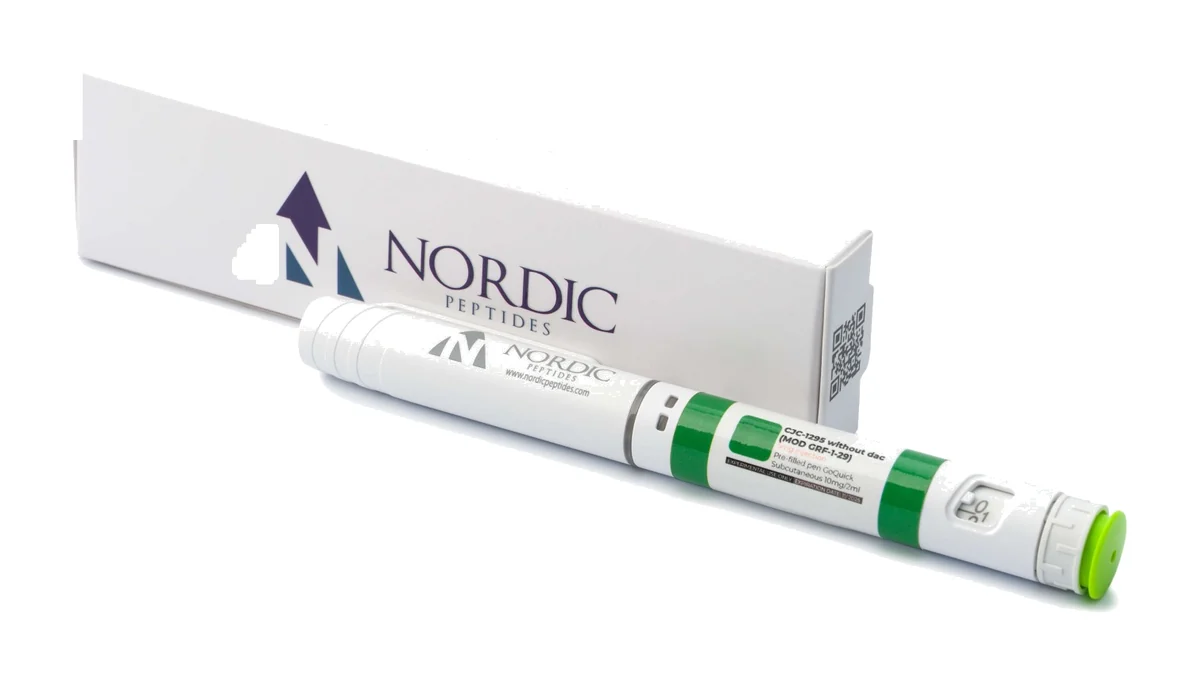
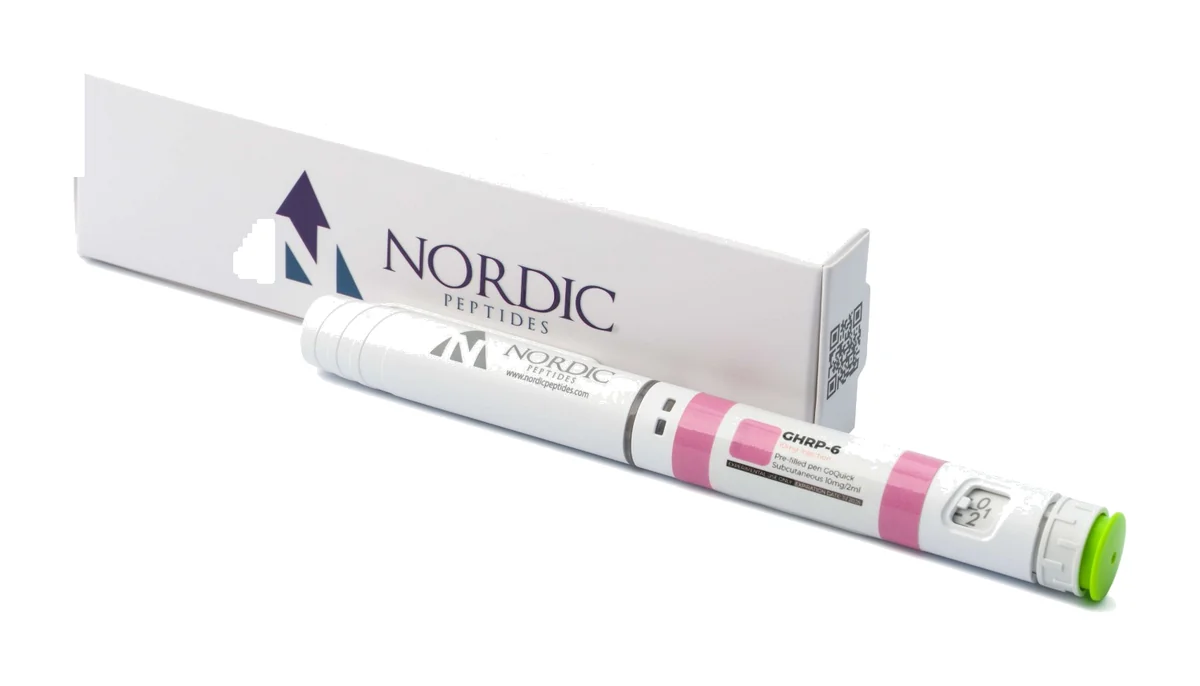
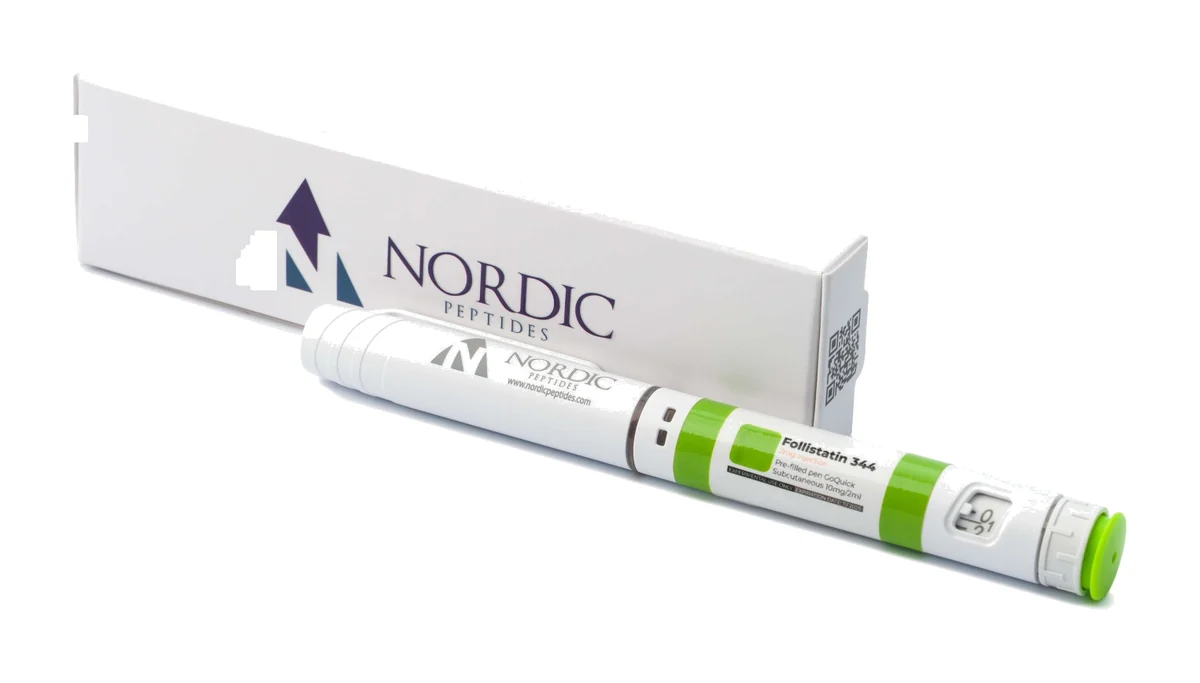
Growth-hormone secretagogues and growth-factor material: ipamorelin, CJC-1295, GHRP-2 and GHRP-6, IGF-1 LR3, follistatin and somatropin. The most confused corner of the market — which is why every page here names the exact molecule, DAC or no DAC included.
Sources checked 30 September 2026 · evidence graded from the abstracts cited on this page
Evidence, claim by claim
Every claim this category is sold on, next to the study that does or does not support it. A row graded “none” means no supporting source was found, and it is left in.
Grade: human RCT · small human · animal · in vitro · none (no source found)
| Claim | Source | Grade | What was actually measured |
|---|---|---|---|
| A GH-releasing peptide raises growth hormone for days after one injection | JCEM 2006 · PMID 16352683 | human RCT | Plasma GH 2–10× and IGF-I 1.5–3× above baseline for six to eleven days; estimated half-life 5.8–8.1 days. Concentrations in blood — no body-composition or strength outcome. |
| A GH-axis peptide adds lean mass over twelve months | Ann Intern Med 2008 · PMID 18981485 | human RCT | Fat-free mass +1.1 kg against −0.5 kg on placebo at one year (P < 0.001, n=65), with fasting glucose up 0.3 mmol/L, insulin sensitivity down and cortisol up 47 nmol/L. Isokinetic strength and function did not change. |
| MK-677 stops the muscle loss that dieting causes | JCEM 1998 · PMID 9467534 | small human | Nitrogen balance +0.31 g/day against −1.48 g/day over seven treatment days in eight calorically restricted volunteers. A protein-turnover endpoint, not a muscle endpoint. |
| Growth hormone rebuilds muscle in healthy adults over time | Ann Intern Med 2007 · PMID 17227934 | human RCT | Lean body mass +2.1 kg and fat −2.1 kg pooled over 220 participants and 107 person-years — of recombinant growth hormone, not a secretagogue. The review's own conclusion is that growth hormone cannot be recommended as an anti-ageing therapy. |
| Blocking the myostatin pathway grows muscle volume in people | J Cachexia Sarcopenia Muscle 2021 · PMID 33264516 | small human | Thigh muscle volume +5.3% and +6.1% against +0.5% on placebo at week 4 in 24 randomised older adults; muscle strength unchanged. The compound is a monoclonal antibody, so it says nothing about follistatin-344. |
| Growth-hormone secretagogues increase strength or power | — | none | Not measured in any published human trial. The two studies on this page that recorded strength recorded no change. |
Search volume for a muscle protocol is almost entirely about the growth hormone axis, and the human record on that axis is genuinely old and genuinely good — a 2006 pharmacokinetics study in healthy adults, a two-year trial in older adults, an eight-volunteer crossover under calorie restriction, and a systematic review pooling 220 people on growth hormone. The uncomfortable part is what those papers measured. Three of them measured blood hormones or nitrogen balance. The two that measured body composition both reported the mass gain and, in the same breath, reported that strength and function did not move. Nobody has published a human trial of a growth hormone secretagogue that measured a strength or power outcome. This page is the honest version of the query: what was measured, in whom, and where the evidence stops.
What the literature shows
PMID 16352683 — Two randomised, placebo-controlled, double-blind ascending-dose trials in healthy adults aged 21 to 61. The outcome measures were peak and area-under-the-curve hormone concentrations and standard pharmacokinetics. Body composition, strength and any other outcome a person would notice were not measured. The authors frame the result as support for the drug’s potential utility as a therapeutic agent, which is a statement about mechanism.
After a single injection, mean plasma GH rose 2- to 10-fold for six days or more and mean plasma IGF-I rose 1.5- to 3-fold for nine to eleven days. The estimated half-life of the compound was 5.8 to 8.1 days. After multiple doses, mean IGF-I remained above baseline for up to 28 days. No serious adverse reactions were reported.
PMID 18981485 — A two-year, double-blind, randomised, placebo-controlled modified-crossover trial in 65 healthy adults aged 60 to 81, with an oral ghrelin mimetic as the active arm. Fat-free mass and abdominal visceral fat were the primary endpoints after one year. Isokinetic strength, function and quality of life were measured as well — which is what makes this the most useful paper on the page, and what its conclusion says. The trial was not powered for functional endpoints; the authors say so themselves.
Mean fat-free mass changed by −0.5 kg (95% CI −1.1 to 0.2) on placebo against +1.1 kg (CI 0.7 to 1.5) on the active arm, P < 0.001. Body cell mass by intracellular water: −1.0 kg against +0.8 kg, P = 0.021. Body weight rose 0.8 kg on placebo and 2.7 kg on the active arm, P = 0.003. Fasting glucose rose 0.3 mmol/L (5 mg/dL) on the active arm, P = 0.015, and insulin sensitivity decreased. Limb fat rose more on the active arm, 1.1 kg against 0.24 kg, P = 0.001. Cortisol rose 47 nmol/L (CI 28 to 71), P = 0.020. The sentence that decides this page: increased fat-free mass did not result in changes in strength or function.
PMID 9467534 — A double-blind, randomised, placebo-controlled two-period crossover study in eight healthy volunteers aged 24 to 39, who were calorically restricted and then given the active compound or placebo during the second week of each 14-day period. The endpoint is nitrogen balance — a protein-turnover measure. It is not a muscle endpoint, and the paper is careful to say that its conclusion concerns reversing diet-induced nitrogen wasting in catabolic states.
In the second week, mean daily nitrogen balance was 0.31 ± 0.21 g/day on the active arm against −1.48 ± 0.21 g/day on placebo, P < 0.01. Integrated over the seven treatment days, the area under the curve of the nitrogen balance response was +2.69 ± 5.0 g·day against −8.97 ± 5.26 g·day, P < 0.001. Peak GH was 55.9 ± 31.7 µg/L after a single dose against approximately 9 µg/L on placebo.
PMID 17227934 — A systematic review of randomised controlled trials of growth hormone in the healthy elderly: 31 articles describing 18 unique populations, 220 participants who received growth hormone across 107 person-years, mean age 69. This is the broadest human dataset on the axis and it is a dataset about mass, not performance. Most included studies were small. The authors’ own conclusion is the one to quote.
Against no-GH controls, lean body mass rose 2.1 kg (95% CI 1.3 to 2.9) and fat mass fell 2.1 kg (CI −2.8 to −1.35), P < 0.001, while weight did not change significantly at +0.1 kg (CI −0.7 to 0.8), P = 0.87. Treated participants were significantly more likely to experience soft tissue oedema, arthralgia, carpal tunnel syndrome and gynaecomastia, and somewhat more likely to develop diabetes or impaired fasting glucose. The authors write that on this evidence growth hormone cannot be recommended as an anti-ageing therapy.
PMID 33264516 — A randomised, double-blind, placebo-controlled study of a myostatin-blocking monoclonal antibody in healthy older and obese adults — 24 randomised participants, with the older cohort aged 70 to 85. This is here because it is the only human proof on the page that the myostatin axis moves muscle volume in people. It is also the cleanest example of why a molecule matters more than a pathway: this is an antibody, not a peptide, and it says nothing about follistatin-344 or any other inhibitor in the same family. Muscle strength was measured and did not change.
In older adults at week 4, thigh muscle volume rose 5.3 ± 1.8% and 6.1 ± 2.2% on the two dose levels against 0.5 ± 2.1% on placebo, both P ≤ 0.02, and lean body mass rose 6.0 ± 3.2% and 2.4 ± 2.2% against 0.1 ± 2.4%. Total fat mass fell from baseline in older adults, −2.7 ± 2.9% and −1.6 ± 3.0% against −2.3 ± 3.2% on placebo, with no change in muscle strength. The authors report that hypertrophy and fat loss were sustained with extended drug exposure.
Where these compounds stand
All five compounds on this page are in the Prohibited List, across three different sections, and that is not the status the rest of the conversation gives them. The table below says which section, and whether any regulator has approved the compound as a medicine. Neither is a matter of opinion: one is a published list, the other a government database, and the third column gives the section number or the application number to check.
The list is the 2026 Prohibited List, in force since 1 January 2026. ‘Medicine status’ is the US position, read from FDA Drugs@FDA on 1 October 2026: an application number means a marketing authorisation exists in that database, and ‘no application’ means the database holds none under that name — a statement about the database, not a clearance for anything.
| Compound | Status | Source |
|---|---|---|
| Ipamorelin | Prohibited at all times in sport — S2.2.4 names ipamorelin among the growth hormone secretagogues and their mimetics. No application in Drugs@FDA. | WADA 2026, S2.2.4 · Drugs@FDA |
| CJC-1295 (no DAC) | Prohibited — S2.2.4 names CJC-1295 among the GHRH analogues. No application in Drugs@FDA. | WADA 2026, S2.2.4 · Drugs@FDA |
| GHRP-6 | Prohibited — S2.2.4 names GHRP-6 among the GH-releasing peptides. No application in Drugs@FDA. | WADA 2026, S2.2.4 · Drugs@FDA |
| Follistatin-344 | Prohibited — S4.3 lists myostatin-binding proteins, “e.g. follistatin, myostatin propeptide”. No application in Drugs@FDA. | WADA 2026, S4.3 · Drugs@FDA |
| IGF-1 LR3 | Prohibited — S2.3 covers “Insulin-like growth factor 1 (IGF-1, mecasermin) and its analogues”. Mecasermin, the drug form, is approved (Increlex, BLA021839); the LR3 fragment has no application. | WADA 2026, S2.3 · Drugs@FDA |
| Ibutamoren (MK-677) | Prohibited — S2.2.4 names ibutamoren (MK-677). No application in Drugs@FDA. One of the compounds in the evidence table above rather than one of the five on this page. | WADA 2026, S2.2.4 · Drugs@FDA |
| Bimagrumab | Prohibited — S4.3 lists anti-activin receptor IIB antibodies by name. No application in Drugs@FDA. Also evidence above, not one of the five on this page. | WADA 2026, S4.3 · Drugs@FDA |
One clause does the work for anything the list does not name. S0 covers “any pharmacological substance which is not addressed by any of the subsequent sections of the List and with no current approval by any governmental regulatory health authority for human therapeutic use” — drugs in clinical development, discontinued drugs and veterinary-only drugs are its own examples. A compound the list never names therefore falls under S0 unless it has such an approval; a compound the list does name sits in the section that names it.
That is also why each row carries two answers. Ibutamoren is named in S2.2.4 and has no application anywhere in Drugs@FDA; mecasermin, the drug form of the growth factor S2.3 covers, is approved as Increlex. Being on the list and being an approved medicine are two separate questions, and neither one answers the other. None of this says anything about what any of these compounds does in a person: that is the evidence table above, and for most of them the honest answer is a short one.
What the data do not show
Five things this page will not claim, and why.
No strength, power or functional outcome exists anywhere in this evidence set. Not one published human trial of a growth hormone secretagogue measured a performance endpoint as a primary result. The two studies that measured strength measured it and reported no change (18981485), or reported none at all (33264516). A gain in lean tissue that does not appear in a lift, a sprint or a stair climb is a different thing from a better athlete, and only the first one is in the record.
The size of the lean-mass gain is small and the confidence intervals are wide. +1.1 kg of fat-free mass over twelve months, with a confidence interval of 0.7 to 1.5 kg (18981485). +2.1 kg pooled across heterogeneous trials of two weeks or more (17227934). Those are the numbers, and nothing anywhere near them supports a promise of visible size.
A hormone rise is not an outcome. The 2-to-10-fold GH increase (16352683) is the mechanism being switched on. That paper measured concentrations in blood. It is a pharmacokinetics study, and reading it as a muscle study is the single most common misreading of this category.
The costs arrive with the mechanism, and they are printed in the same abstracts. Fasting glucose up and insulin sensitivity down (18981485). Cortisol up 47 nmol/L (18981485). Oedema, arthralgia, carpal tunnel syndrome and gynaecomastia more frequent, with somewhat more new diabetes or impaired fasting glucose (17227934). Those belong on the page with the same weight as the positives, and on a muscle page they are not a footnote — they are most of the risk.
One molecule with the cleanest human body-composition data in this category is deliberately not on this page. Recombinant growth hormone is the compound behind the 17227934 pooled analysis, and that same systematic review concludes it should not be used this way. Putting it on a page about building muscle invites exactly the claim its own citation refuses. It belongs on a page about what the data do not support, which is a different page.
And nothing here is a dosing instruction. The dose figures in the source abstracts belong to trial designs, they are not transferable to a person holding a pen, and this page does not reprint them.
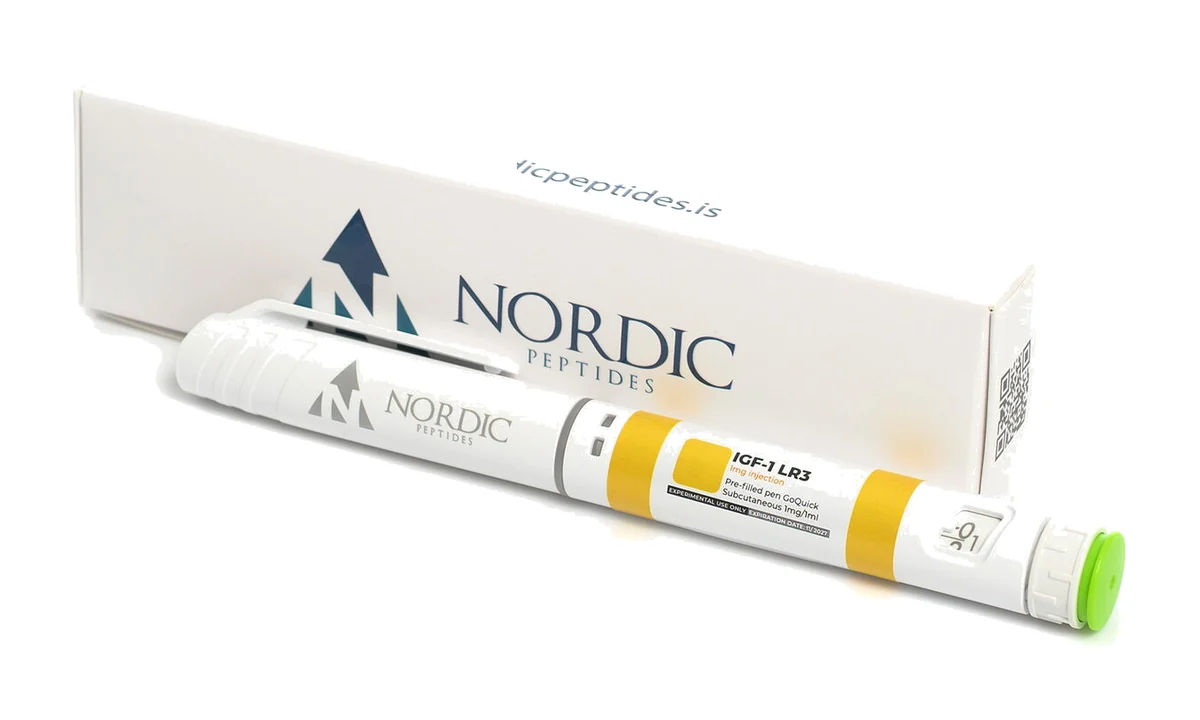
Five compounds sit on this protocol, ordered by how strong their human record is rather than by price: ipamorelin, CJC-1295 (no DAC), GHRP-6, follistatin-344 and IGF-1 LR3. CJC-1295 leads the GH pair because it is the one with a human pharmacokinetics paper in healthy adults. Follistatin-344 is on the page because the myostatin axis has human proof in a different molecule, and the card says which one. IGF-1 LR3 is on the page because people search for it by name, and this one is here to say plainly that its human record is thin rather than to let a competitor say it first.
Muscle & Performance
Shelf
Read first
Research
Questions people ask about this
Answered with the same sources printed at the bottom of this page.
Is there a human trial showing that a growth-hormone peptide builds muscle?
No. The human record on this axis measures hormones, nitrogen balance and lean mass. The one trial that measured strength and function alongside fat-free mass — 65 adults over two years — found fat-free mass up 1.1 kg and no change in strength or function.
Which of the compounds on this page has real human data?
CJC-1295, for pharmacokinetics in healthy adults; the oral ghrelin mimetic, for the two-year body-composition trial; and MK-677, for nitrogen balance in eight volunteers. Follistatin-344 and IGF-1 LR3 are listed because the category is searched for by name, not because either has human outcome data.
How large is the lean-mass gain, really?
+1.1 kg of fat-free mass over twelve months (95% CI 0.7 to 1.5), and +2.1 kg pooled across heterogeneous growth-hormone trials of two weeks or more. Neither number supports a promise of visible size.
What did the trials report as side effects?
On the active arm of the two-year trial: fasting glucose up 0.3 mmol/L, insulin sensitivity decreased, cortisol up 47 nmol/L. In the pooled review: soft-tissue oedema, arthralgia, carpal tunnel syndrome and gynaecomastia all significantly more frequent, and somewhat more new diabetes or impaired fasting glucose.
Does a hormone rise mean the muscle-building pathway is switched on?
It means the hormone rose. The CJC-1295 paper is a pharmacokinetics study — it measured concentrations in blood. Reading it as a muscle study is the most common misreading of this category.
Does this page contain a dosing protocol?
No. The dose figures in the source abstracts belong to trial designs, they are not transferable to a person holding a pen, and this page does not reprint them.
Sources
- Prolonged stimulation of growth hormone (GH) and insulin-like growth factor I secretion by CJC-1295, a long-acting analog of GH-releasing hormone, in healthy adults. — JCEM 2006 · PMID 16352683
- Effects of an oral ghrelin mimetic on body composition and clinical outcomes in healthy older adults: a randomized trial. — Ann Intern Med 2008 · PMID 18981485
- MK-677, an orally active growth hormone secretagogue, reverses diet-induced catabolism. — JCEM 1998 · PMID 9467534
- Systematic review: the safety and efficacy of growth hormone in the healthy elderly. — Ann Intern Med 2007 · PMID 17227934
- Safety and pharmacokinetics of bimagrumab in healthy older and obese adults with body composition changes in the older cohort. — J Cachexia Sarcopenia Muscle 2021 · PMID 33264516