CJC-1295 and ipamorelin: two mechanisms, one very common confusion
The pairing is the most requested combination in the GH-axis line. It is also the one where the label on the vial and the study people quote are frequently not the same molecule.
19 August 2026 · 3 min read
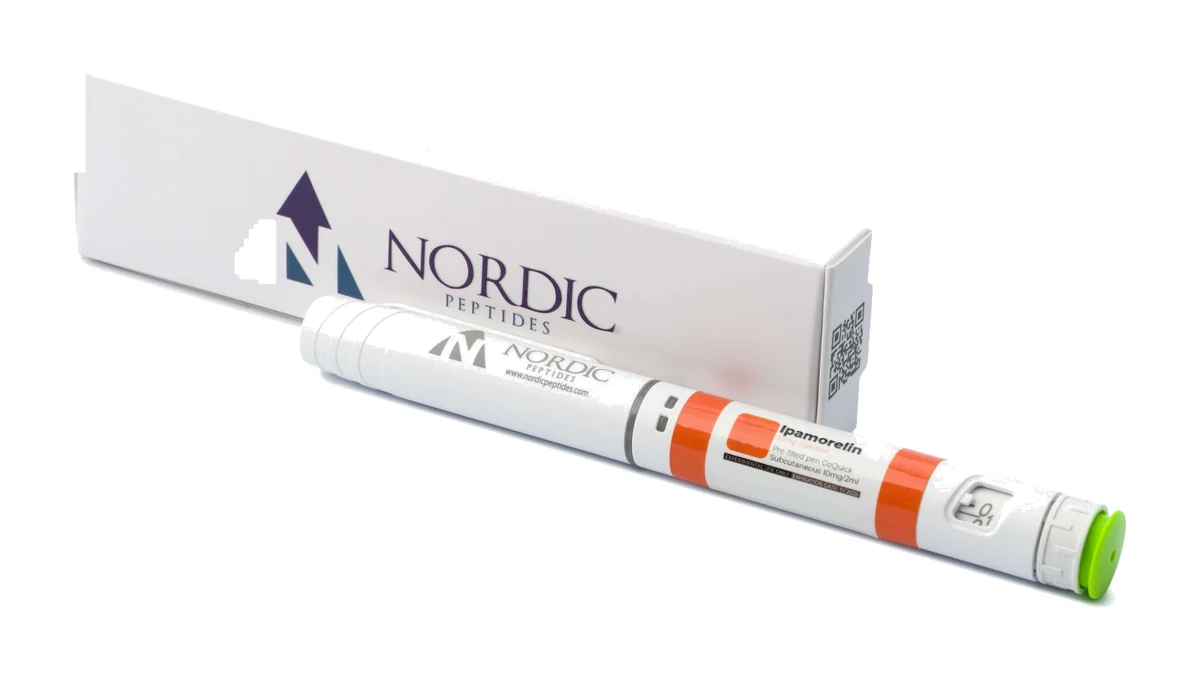 Ipamorelin - 10mg
Two peptides, two different receptors, and one naming problem that runs through most of what is written about them online. Worth untangling before anything else.
Two levers on the same axis
CJC-1295 is an analogue of growth hormone-releasing hormone. It acts on the GHRH receptor in the pituitary — the same door tesamorelin knocks on.
Ipamorelin is a pentapeptide (Aib-His-D-2-Nal-D-Phe-Lys-NH₂) that acts on the ghrelin receptor, the other pathway into GH release. Raun et al. described it in 1998 as the first selective GH secretagogue, and selectivity is the whole point of the molecule: in that work it released GH without raising ACTH or cortisol beyond what GHRH stimulation itself produced.
That is why the two are studied together. They pull the same output — GH release — through two independent inputs, which is a different proposition from doubling the dose of either one.
The confusion: DAC or no DAC
Here is the part that matters, and it is a labelling issue, not a biology one.
The 2006 study in the Journal of Clinical Endocrinology & Metabolism that everyone cites for “CJC-1295” tested the version with DAC — a Drug Affinity Complex that binds the peptide to serum albumin and stretches its half-life to days. In that trial, a single subcutaneous injection in healthy adults produced dose-dependent increases in mean plasma GH of 2- to 10-fold for six days or more, and in IGF-1 of 1.5- to 3-fold for 9–11 days.
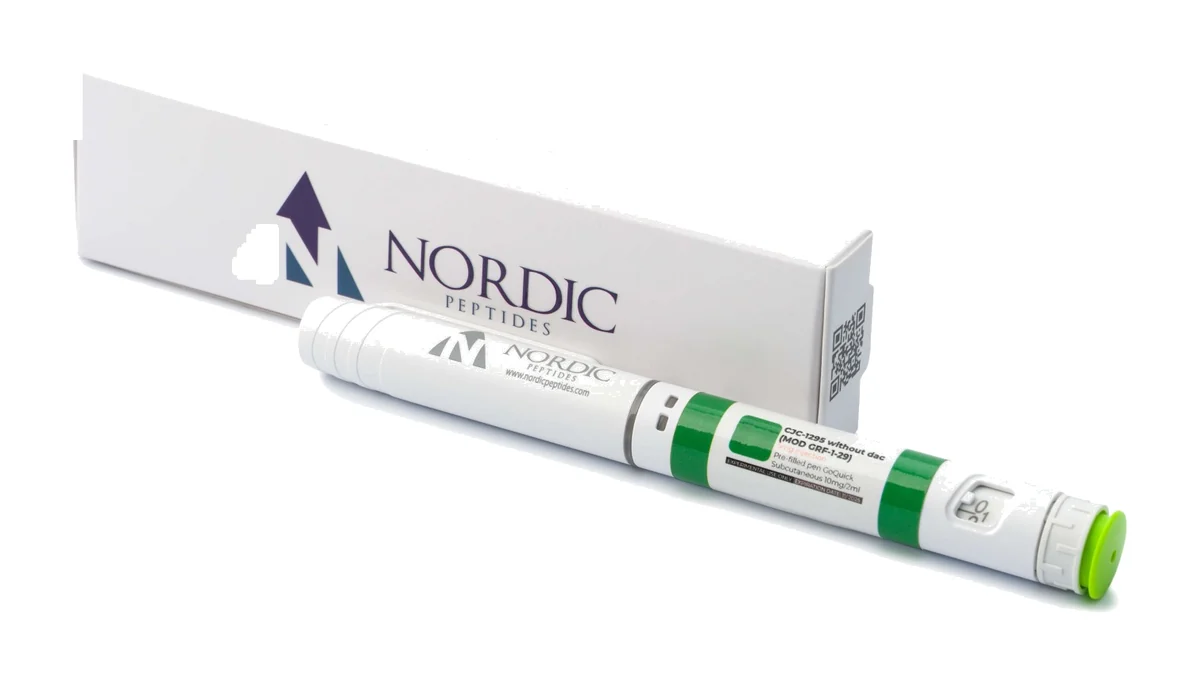
The product sold almost everywhere as “CJC-1295 no DAC” is a different molecule: modified GRF (1-29), with a half-life measured in minutes, not days. It is not the compound the six-day figure came from.
Both versions exist for legitimate reasons — a short-acting analogue produces a pulse, a long-acting one produces a plateau, and which is appropriate depends entirely on what is being studied. But a study on one is not evidence for the other, and any page quoting the DAC numbers beside a no-DAC vial is either careless or hoping you do not check. Ours says no-DAC on the label because that is what is in it.
What the human evidence actually covers
Set out plainly:
| Compound | Human data | Regulatory status |
|---|---|---|
| Tesamorelin (GHRH analogue) | Phase 3, n=412, published in NEJM | FDA-approved, narrow indication |
| CJC-1295 with DAC | Phase 1 in healthy adults (2006) | None |
| CJC-1295 no DAC (mod GRF 1-29) | No comparable published trial | None |
| Ipamorelin | Preclinical characterisation; small early-phase work | None |
The honest summary: the mechanism is well described, the pharmacokinetics of the DAC version are documented in humans, and the efficacy question — does any of this change a clinical outcome in a healthy person — has not been answered by a trial for either compound. Tesamorelin is the only one in this family that got that far.
Practical notes for a research setting
- Ipamorelin’s selectivity is the reason to pick it over older secretagogues like GHRP-6, which also drive appetite and prolactin. If a protocol needs GH release without those confounders, that difference is the point.
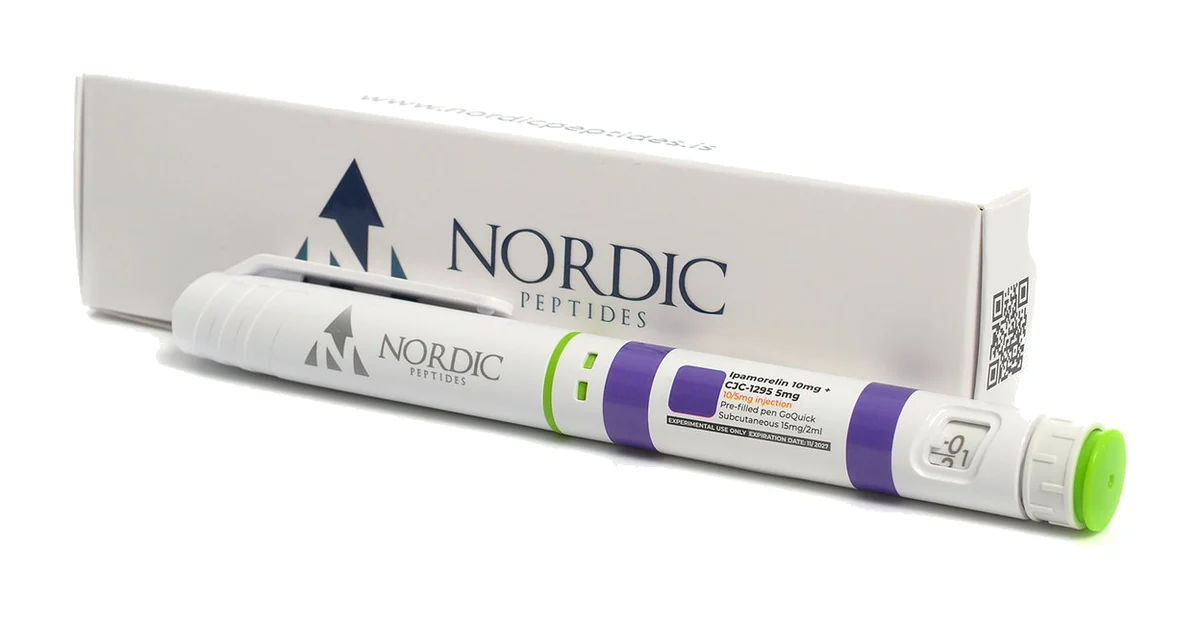
- Blends remove attribution. Our ipamorelin + CJC-1295 blend is convenient and cannot tell you which peptide produced which effect. Two separate vials can.
- IGF-1 is the readable output. GH itself is pulsatile and awkward to measure; IGF-1 integrates it. That is what both of the trials above tracked.
What we supply
Ipamorelin 10 mg, CJC-1295 (no DAC) 5 mg and the ipamorelin + CJC-1295 blend, all Nordic Peptides, shipped as supplied by the manufacturer, batch documentation on request. Research use only — not for human or veterinary use.
References.
- Teichman SL, Neale A, Lawrence B, et al. Prolonged stimulation of growth hormone (GH) and insulin-like growth factor I secretion by CJC-1295, a long-acting analog of GH-releasing hormone, in healthy adults. J Clin Endocrinol Metab 2006;91(3):799–805.
- Raun K, Hansen BS, Johansen NL, et al. Ipamorelin, the first selective growth hormone secretagogue. Eur J Endocrinol 1998;139(5):552–561.
- Falutz J, Allas S, Blot K, et al. Metabolic Effects of a Growth Hormone–Releasing Factor in Patients with HIV. N Engl J Med 2007;357(23):2359–2370.