Sleep & Recovery.
The repair shelf: BPC-157, TB-500, the two of them in one pen, plus KPV, ARA-290, cartalax and thymalin. Read the evidence pages before ordering — the animal literature here is substantial and the human literature is thin, and both facts belong on the same page.
Sources checked 30 September 2026 · evidence graded from the abstracts cited on this page
Evidence, claim by claim
Every claim this category is sold on, next to the study that does or does not support it. A row graded “none” means no supporting source was found, and it is left in.
Grade: human RCT · small human · animal · in vitro · none (no source found)
| Claim | Source | Grade | What was actually measured |
|---|---|---|---|
| Thymosin β-4 helps an inflamed eye | Cornea 2015 · PMID 25826322 | small human | Ocular discomfort −35.1% and total corneal fluorescein staining −59.1% against vehicle at day 56 (P = 0.0141 / 0.0108) in nine patients, given as eye drops six times daily. |
| A repair peptide restores nerve fibre density in people | Invest Ophthalmol Vis Sci 2017 · PMID 28475703 | human RCT | Placebo-corrected corneal nerve fibre area +697 µm² (95% CI 159 to 1 236; P = 0.012) at the middle dose at day 28 in 64 subjects with sarcoidosis; the top dose reached +431 µm² with a confidence interval crossing zero. |
| BPC-157 heals tendon, ligament and muscle injury | Cell Tissue Res 2019 · PMID 30915550 | animal | The 2019 critical review reports consistently positive healing effects across injury types — and states in the same abstract that the majority of studies were performed on small rodent models and that efficacy is yet to be confirmed in humans. |
| KPV reduces intestinal inflammation | Gastroenterology 2008 · PMID 18061177 | in vitro | Nanomolar concentrations inhibited NF-κB and MAP kinase signalling and cut pro-inflammatory cytokine secretion in human intestinal epithelial cells and T cells via PepT1; colitis incidence fell in two mouse models. |
| BPC-157 or TB-500 heals a tendon in people | — | none | No human trial of any compound on this page measured a tendon, a ligament, a muscle or a wound. Both human trials measured the cornea. |
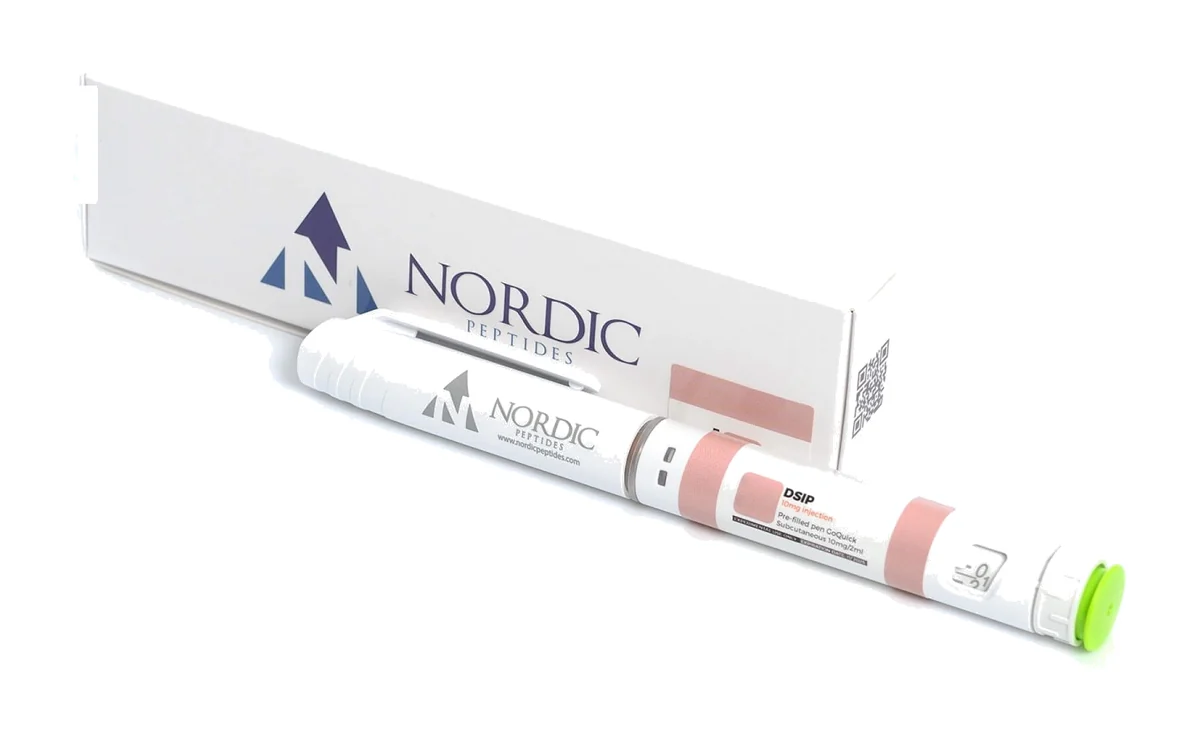
| DSIP improves sleep | J Neurochem 2006 · PMID 16539679 | none | The 2006 mini-review calls the sleep hypothesis extremely poorly documented and still weak, and attributes the sleep-promoting activity to artificial structural analogues in rabbits and rats rather than to the peptide itself. |
The slug for this page is recovery-and-repair, because that is what the evidence supports. The search term people type is usually sleep, so the heading answers both — and then this page does the honest thing and splits them, because the evidence is not the same on the two halves. There are two human randomised trials of compounds we sell in this category. One enrolled nine people and measured an eye. The other enrolled 64 people with sarcoidosis and measured nerve fibre density in the cornea. There is no human trial of any compound on this page that measured a tendon, a ligament, a muscle, a wound, or a night’s sleep. Both halves of the query get answered below; one of them has no answer to give, and that is stated rather than padded.
What the literature shows
PMID 25826322 — A small, multicentre, randomised, double-masked, placebo-controlled 56-day phase 2 trial with a 28-day follow-up, at two US sites, in nine patients with severe dry eye. The intervention was an eye drop given six times daily — the route is part of what this trial measured and cannot be transferred to a subcutaneous pen. Endpoints were ocular discomfort by questionnaire and corneal fluorescein staining. The trial also reports tear film breakup time and tear volume.
At day 56, the treated group (12 eyes) showed a 35.1% reduction in ocular discomfort against vehicle control (6 eyes), P = 0.0141, and a 59.1% reduction in total corneal fluorescein staining, P = 0.0108. Nine patients. NCT01393132.
PMID 28475703 — A phase 2b, 28-day, randomised trial in 64 subjects with sarcoidosis-associated small nerve fibre loss and neuropathic pain, comparing the active compound at three dose levels against placebo. The primary endpoint was change in corneal nerve fibre area. This is the largest human randomised trial of a repair peptide we sell, and the reading is hard for two reasons: the population is a sarcoidosis cohort, and the dose response is not monotonic.
The placebo-corrected mean change from baseline in corneal nerve fibre area at day 28 was 109 µm² (95% CI −429 to 647) in the lowest level, 697 µm² (159 to 1236; P = 0.012) in the middle level, and 431 µm² (−130 to 992) in the highest level. Intraepidermal GAP-43+ fibres increased in the middle level (P = 0.035). The middle dose worked, the top dose did not, and the confidence interval on the top dose crosses zero.
PMID 30915550 — A critical review of the BPC-157 literature focused on tendon, ligament and skeletal muscle healing. The authors report consistently positive healing effects across injury types and soft tissues, and then state the limitation themselves in the abstract. This is the most-cited characterisation of the compound and it is the sentence that belongs on the page.
The authors write that all studies investigating the compound have shown consistently positive and prompt healing effects for various injury types, but that to date the majority of studies have been performed on small rodent models and its efficacy is yet to be confirmed in humans. Over the past two decades only a handful of research groups have performed in-depth studies on this peptide.
PMID 16539679 — A mini-review of delta sleep-inducing peptide, the compound named after the effect. It was isolated from rabbit cerebral venous blood in 1977 and regarded as a candidate sleep-promoting factor. The authors examine why that candidate status has never been resolved.
The link between the peptide and sleep has never been further characterised, in part because the gene, the protein and a possible related receptor have not been isolated. The authors describe the sleep hypothesis as extremely poorly documented and still weak, and note that significant slow-wave-sleep promoting activity was seen with certain artificial structural analogues — but not the peptide itself — in rabbits and rats.
PMID 18061177 — A mechanistic study of the tripeptide KPV in human intestinal epithelial cells and human T cells in vitro, plus two mouse models of colitis. It is included because it shows what a real mechanistic paper looks like — a named transporter, a signalling pathway, nanomolar concentrations — and because it makes the contrast obvious: this is a mechanism paper in cells and mice, not a human outcome trial.
Nanomolar concentrations of KPV inhibited activation of the NF-κB and MAP kinase inflammatory signalling pathways and reduced pro-inflammatory cytokine secretion. The effect acted via PepT1 expressed in immune and intestinal epithelial cells. Oral administration reduced the incidence of DSS- and TNBS-induced colitis in mice, indicated by decreased pro-inflammatory cytokine expression.
Where these compounds stand
The two compounds this page is built around are named outright in the Prohibited List, which is not the status the rest of the conversation gives them, and neither has an application in the US medicines database. The last two rows get there the other way: absent from the list, and caught by its opening clause anyway.
The list is the 2026 Prohibited List, in force since 1 January 2026. ‘Medicine status’ is the US position, read from FDA Drugs@FDA on 1 October 2026: an application number means a marketing authorisation exists in that database, and ‘no application’ means the database holds none under that name — a statement about the database, not a clearance for anything.
| Compound | Status | Source |
|---|---|---|
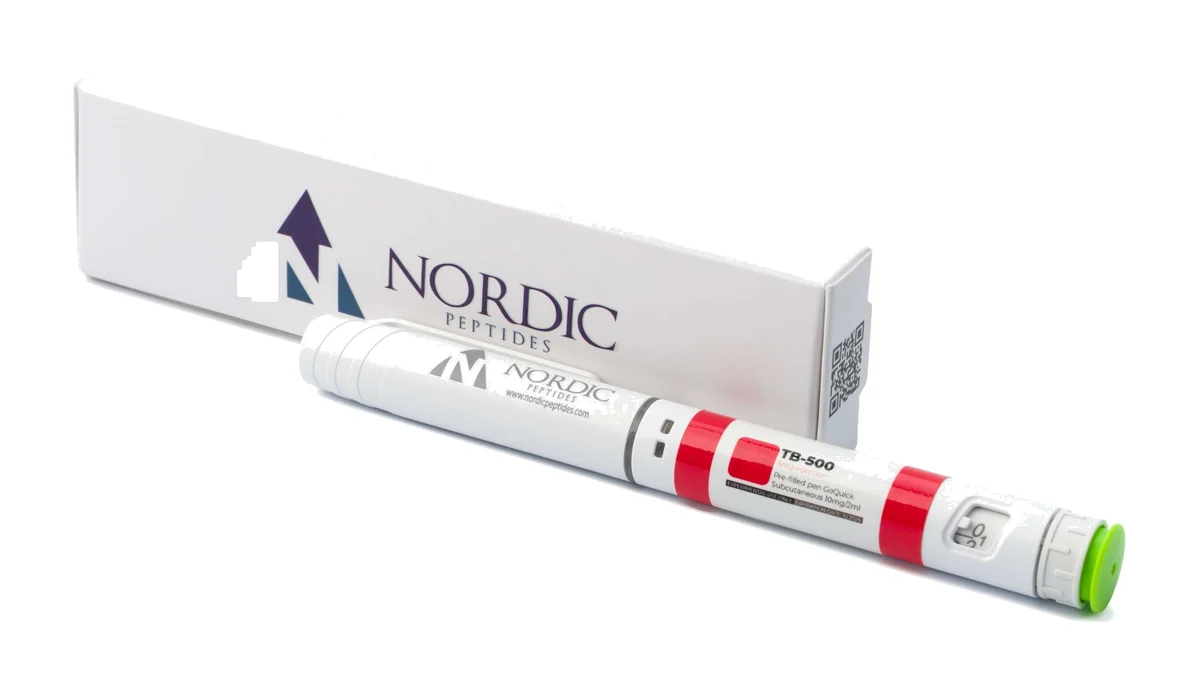
| TB-500 (thymosin beta-4) | Prohibited — S2.3 names “Thymosin-ß4 and its derivatives e.g. TB-500”. No application in Drugs@FDA. | WADA 2026, S2.3 · Drugs@FDA |
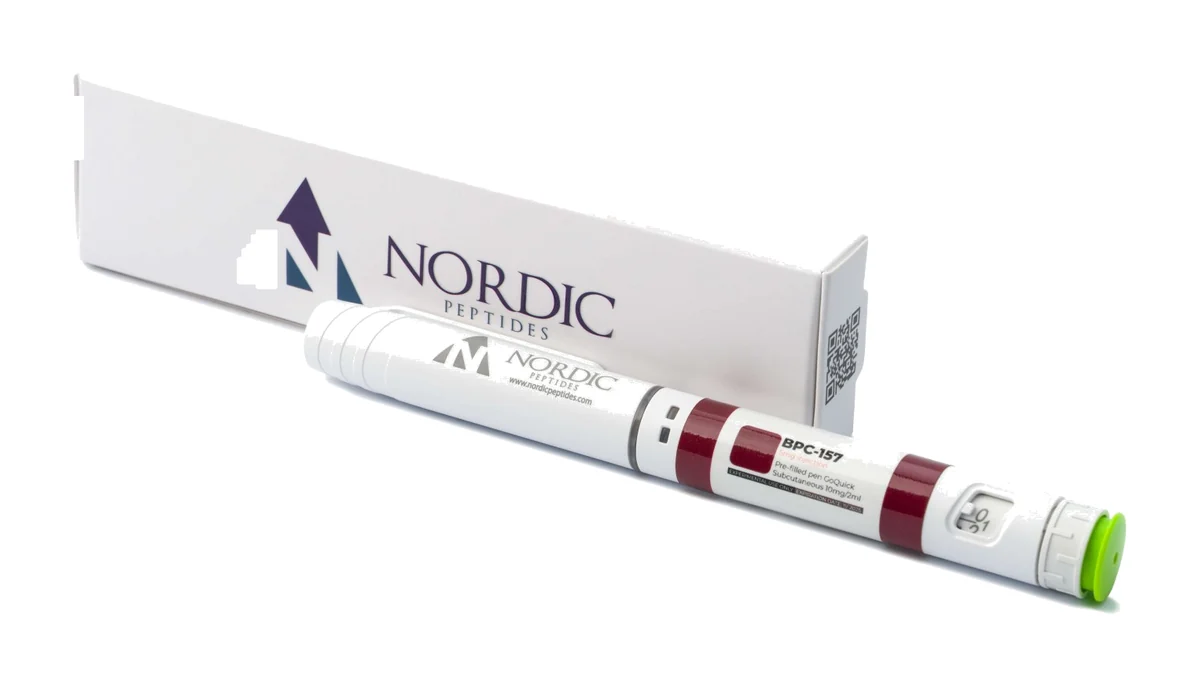
| BPC-157 | Prohibited at all times — named in S0’s own text among the substances the class covers. No application in Drugs@FDA. A 2025 systematic review identified 544 articles from 1993 to 2024 and included 36 studies: 35 preclinical and 1 clinical, with no clinical safety data found. | WADA 2026, S0 · PMID 40756949 |
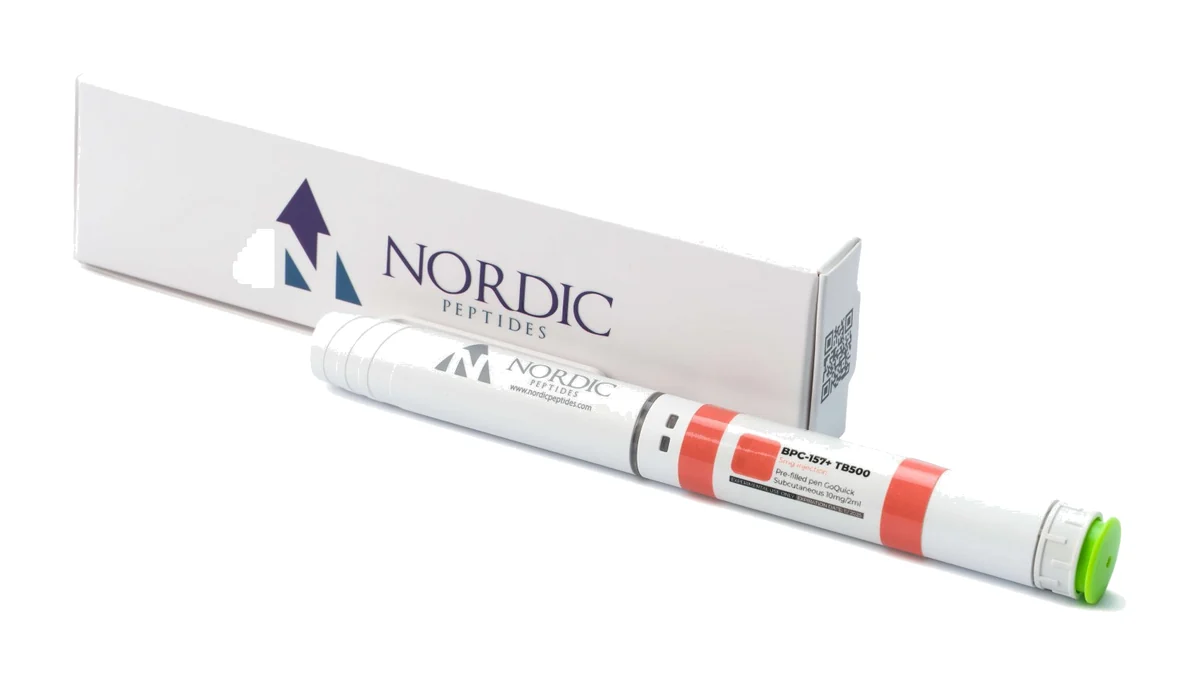
| BPC-157 + TB-500 blend | A formula of two named compounds, so it carries both statuses: BPC-157 in S0, TB-500 in S2.3. No application in Drugs@FDA under that name. | WADA 2026, S0 and S2.3 · Drugs@FDA |
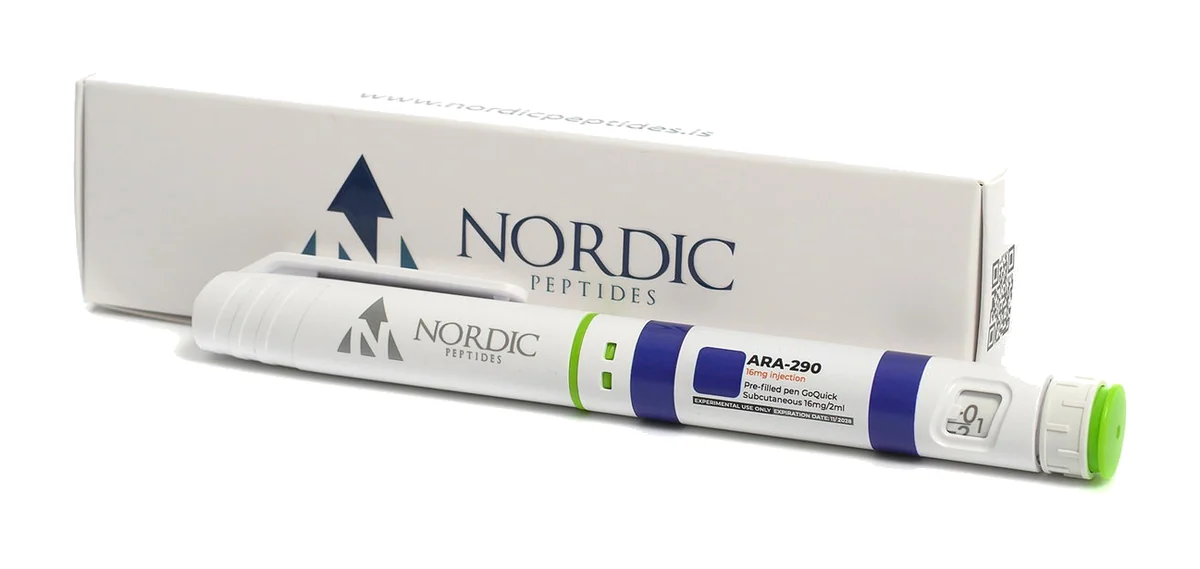
| ARA-290 | Not named in the list and no application in Drugs@FDA, so S0’s catch-all covers it. | WADA 2026, S0 · Drugs@FDA |
| DSIP | Not named in the list and no application in Drugs@FDA, so S0’s catch-all covers it. | WADA 2026, S0 · Drugs@FDA |
The last two rows are on the list without appearing in it. S0 is the clause that does it, and it is the whole of it: “any pharmacological substance which is not addressed by any of the subsequent sections of the List and with no current approval by any governmental regulatory health authority for human therapeutic use”, with drugs in clinical development, discontinued drugs and veterinary-only drugs given as its own examples. Unnamed plus unapproved is the combination, and ARA-290 and DSIP are both halves of it.
The BPC-157 row is worth a second read, because its two halves come from different kinds of source and agree. The 2025 systematic review in the evidence table above says in its own background that the compound lacks US Food and Drug Administration approval and is banned in professional sports. That is a peer-reviewed sentence, published independently of the list, saying what the list and the database say. It is still an answer about a list, not a judgement about what the compound does in a person; the limits section below is where that other question is answered.
What the data do not show
Five things this page’s evidence does not contain, and the first one is the reason the page is named the way it is.
No human trial of any compound here measured a musculoskeletal endpoint. Not a tendon, not a ligament, not a muscle, not a wound. The dry-eye trial measured eyes in nine people (25826322). The nerve trial measured corneal nerve fibre density in a sarcoidosis population (28475703). The BPC-157 review is rodent work (30915550). The KPV study is cells and mice (18061177). Recovery, as an endpoint, does not appear in any of them.
A corneal nerve fibre area is not a healed tendon. It is tempting to let the word repair carry from one to the other, and this page will not do it. Nerve fibre density is a surrogate endpoint, and the trial that measured it says so — it describes the measure as a surrogate for disease modification, pain severity and functional capacity, with functional capacity assessed separately by a six-minute walk test.
The route changes what the trial was about. The TB-500 human trial used eye drops, not a subcutaneous injection. Reading an eye-drop trial in severe dry eye as evidence about an injectable pen is the single most likely false claim this page could carry, so the card says it every time.
DSIP does not do what its name says, on the review’s own account. The hypothesis is extremely poorly documented and still weak, and the sleep-promoting activity in the original work came from artificial analogues rather than the peptide itself (16539679). It is on this page because omitting it hands the query to a competitor with worse evidence.
And the two real sample sizes are nine and 64. Both are printed above. A nine-patient trial with 12 treated eyes is a signal worth further study, not a result to generalise from.
Five compounds are on this protocol. TB-500 leads because it is the only one with a human randomised trial behind it, and its card says eye drops and nine patients in the same line. BPC-157 is second because the name is what people type, and the review that says outright it is unconfirmed in humans travels with it. The blend is third for the buyer who has already decided to buy two pens and one, and it hides nothing by combining them. ARA-290 is fourth and is genuinely the strongest human RCT of a repair peptide on our shelf — the reading is just hard, because the cohort is a sarcoidosis population and the dose response is not monotonic. DSIP closes the loop on the sleep half of the query with the review’s own sentence as the card body.
Recovery & Repair
Shelf
Read first
Research
Questions people ask about this
Answered with the same sources printed at the bottom of this page.
Is there a human trial of BPC-157 or TB-500 on a tendon or a ligament?
No. The human trials in this category measured an eye in nine people (thymosin β-4 eye drops in severe dry eye) and corneal nerve fibre density in 64 people with sarcoidosis (cibinetide). No human trial of any compound on this page measured a tendon, a ligament, a muscle, a wound or a night's sleep.
What does the BPC-157 review actually conclude?
That all studies investigating the compound have shown consistently positive and prompt healing effects for various injury types — and that the majority of those studies were performed on small rodent models, with efficacy yet to be confirmed in humans.
Does a nerve-fibre result mean a tendon heals?
No. Corneal nerve fibre area is a surrogate endpoint, and the trial that measured it describes it as a surrogate for disease modification, pain severity and functional capacity — with functional capacity assessed separately by a six-minute walk test.
Does the route the trial used matter?
It is part of what the trial measured. The thymosin β-4 trial used eye drops six times daily in severe dry eye; that result cannot be transferred to a subcutaneous pen, and the product cards say so.
What is the strongest human result in this category?
The cibinetide trial: 64 subjects, placebo-corrected corneal nerve fibre area +697 µm² at the middle dose at day 28. The top dose did not reach significance and its confidence interval crosses zero.
What about sleep?
The evidence is the weakest here, and it is the compound named after the effect that is the reason. DSIP's sleep hypothesis is, on the review's own account, extremely poorly documented and still weak.
Sources
- Thymosin β4 significantly improves signs and symptoms of severe dry eye in a phase 2 randomized trial. — Cornea 2015 · PMID 25826322
- Cibinetide Improves Corneal Nerve Fiber Abundance in Patients With Sarcoidosis-Associated Small Nerve Fiber Loss and Neuropathic Pain. — Invest Ophthalmol Vis Sci 2017 · PMID 28475703
- Gastric pentadecapeptide body protection compound BPC 157 and its role in accelerating musculoskeletal soft tissue healing. — Cell Tissue Res 2019 · PMID 30915550
- Emerging Use of BPC-157 in Orthopaedic Sports Medicine: A Systematic Review. — HSS J 2025 · PMID 40756949
- Delta sleep-inducing peptide (DSIP): a still unresolved riddle. — J Neurochem 2006 · PMID 16539679
- PepT1-mediated tripeptide KPV uptake reduces intestinal inflammation. — Gastroenterology 2008 · PMID 18061177