The recovery stack: BPC-157 and TB-500, and why they ship in one pen
The most requested pairing in the repair category, in a single pre-filled pen. What each peptide is doing, what the published work actually reports, and why laboratories keep ordering the two together.
27 August 2026 · 4 min read
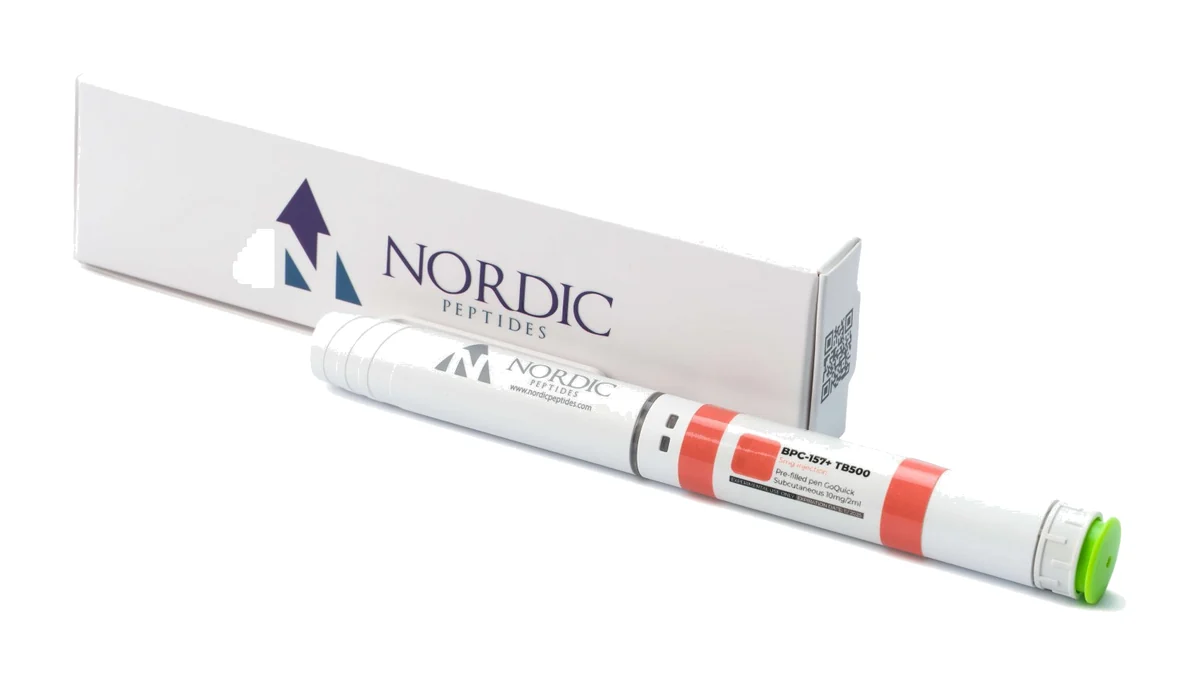 BPC-157 + TB-500 (Blend) - 5/5mg
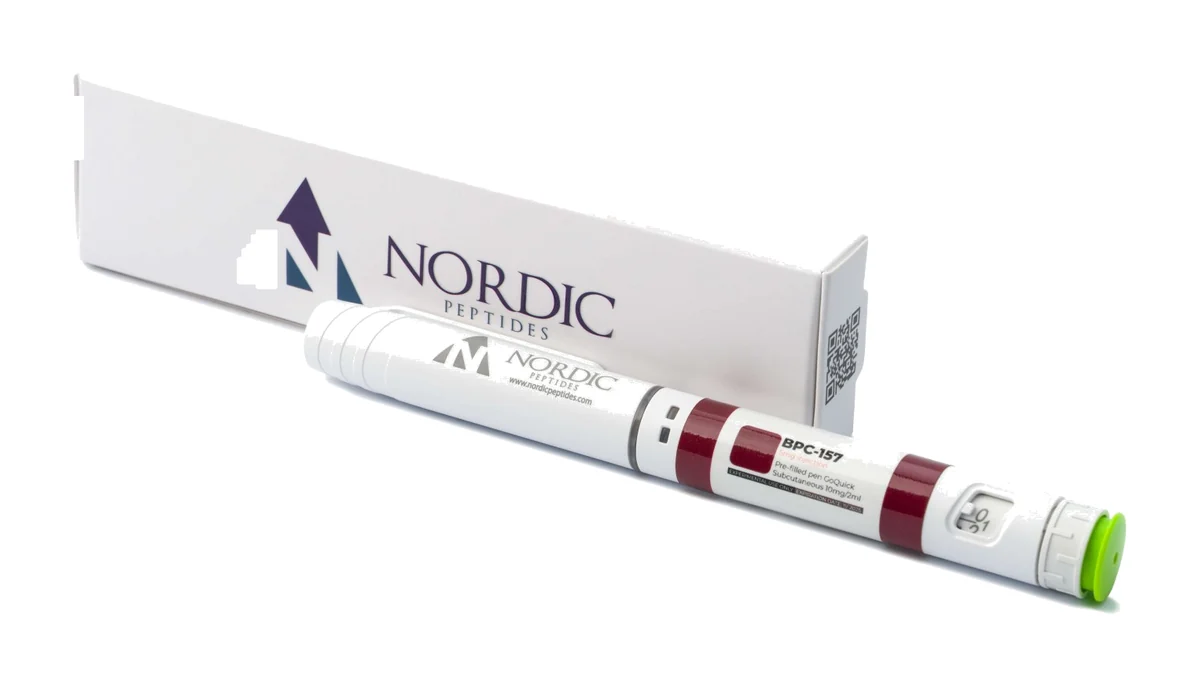
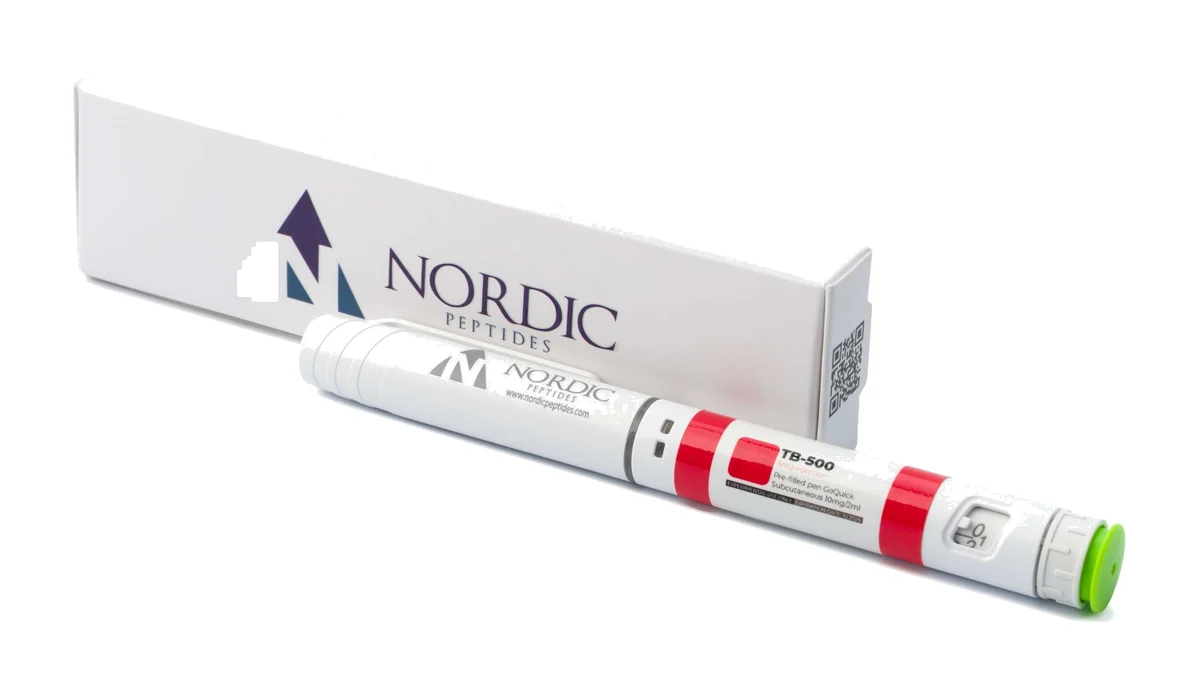
If you sorted our order history by “what gets bought together”, one pairing would be at the top by a distance: BPC-157 and TB-500. It has been the most requested combination in the repair category since we opened, and Nordic Peptides make it as a single pre-filled pen precisely because nobody wanted to handle two.
Here is the case for it, made properly — mechanism, evidence, and the parts that are still open.
Two peptides that work on different halves of the same problem
They are not two versions of the same idea, which is the reason the pairing exists at all.
BPC-157 is a 15-amino-acid sequence derived from a protein found in human gastric juice, and it is unusually stable in acid. The mechanism described across the literature is pleiotropic rather than receptor-clean: angiogenesis, fibroblast migration, growth-factor signalling, the nitric oxide system. In plain terms, it is studied where blood supply and connective tissue are the limiting factors — tendon, ligament, bone.
TB-500 is a synthetic fragment of thymosin β4, the actin-binding region. Thymosin β4 is present in nearly every cell type and its best-characterised job is regulating the actin polymerisation that drives cell migration — the mechanism behind wound closure and tissue remodelling.
Repair needs both: cells that move into the site, and the vascular and matrix support to keep them there. That is the whole logic of the stack, and it is why the manufacturer describes the combination as covering wound, bone and tendon healing on one side and muscle repair and regeneration on the other.
What the published work actually reports
This is where most shops stop talking and start making promises. We would rather give you the real file, because it is more useful.
BPC-157 has a large, remarkably consistent animal literature. A 2025 systematic review in orthopaedic sports medicine found improved functional, structural and biomechanical outcomes across muscle, tendon, ligament and bone injury models — reproducible across injury types and research groups, which is more than most compounds in this market can claim. The same review counted 35 preclinical studies and 1 clinical study. That ratio is the honest headline, and we wrote a whole page about it.
Thymosin β4 is the opposite shape: genuinely randomised human trials, in a form nobody expected. The clinical programme is ophthalmic. In a phase 3 trial in neurotrophic keratopathy, 60% of treated participants achieved complete corneal healing by day 29 against 12.5% on placebo, with a phase 2 dry-eye trial behind it. Real results — and run on the full protein, applied topically to an eye, not on an injected fragment. The full version is here.
So: strong mechanistic and preclinical support on one side, real human trials in a different route of administration on the other, and no trial anywhere that has tested this pairing as a stack in people. That is what “research use only” means here in practice, and it is why the pen is sold as laboratory material rather than as a solution to your shoulder.
Why the blend pen, and not two of them
Three reasons buyers keep coming back to the combined pen:
One device, one dial. Two compounds handled as one. No second cartridge, no second set of arithmetic, no second thing to store. Pens exist for exactly this reason — pen injectors were measured at roughly half the small-dose error of syringes, and every step you remove is a step that cannot go wrong.
Fixed ratio, straight from the manufacturer. 5 mg of each in a factory-filled cartridge, mixed by Nordic Peptides rather than by whoever is holding the vial. That means every unit is the same as the last one — the thing that makes a series of measurements comparable.
It is the cheaper way to run both. One cartridge, one shipment, one shelf slot. Our flat delivery fee is per order, so the whole thing lands as a single line.
The trade-off is real and we will name it: a blend cannot tell you which component produced which effect. If attribution is the point of your work, buy BPC-157 and TB-500 separately and run them apart. If convenience is the point, the blend is the better product. Our piece on blends lays out that trade in full.
Two things worth knowing before you order
Both are on the WADA Prohibited List. BPC-157 sits under S0 (non-approved substances) and thymosin β4 is prohibited at all times. Anyone in tested sport should treat that as decisive.
Neither is an approved medicine anywhere. No dosing guidance from us, no protocol, no “typical cycle” — the manufacturer’s own published text is on the product page in full, and what it says is theirs, not ours.
What we supply
The BPC-157 + TB-500 blend pen (5/5 mg), plus both compounds on their own, all Nordic Peptides pre-filled pens, shipped exactly as they leave the manufacturer, in a plain box, tracked, from inside the EU. Batch documentation on request against your order number.
The rest of the repair shelf — KPV, ARA-290, Thymalin — sits alongside it in the catalog, and the front page is the fastest way in. If your interest is inflammation rather than tendon and wound repair, the KPV page is the closer read: different mechanism, different evidence shape, gut rather than connective tissue.
Research use only. Not for human or veterinary use, and nothing on this page is medical advice.
References.
- Vasireddi N, Hahamyan H, Salata MJ, et al. Emerging Use of BPC-157 in Orthopaedic Sports Medicine: A Systematic Review. HSS J 2025.
- 0.1% RGN-259 (Thymosin β4) Ophthalmic Solution Promotes Healing and Improves Comfort in Neurotrophic Keratopathy Patients — randomized, placebo-controlled, double-masked Phase III trial (SEER-1).
- Sosne G, Dunn SP, Kim C. Thymosin beta 4 ophthalmic solution for dry eye: a randomized, placebo-controlled, Phase II clinical trial. Cornea 2015 (PMID 26056426).
- World Anti-Doping Agency — Prohibited List (BPC-157 and thymosin β4 are both prohibited).