Blends: when a combined pen is the right call, and when it costs you the answer
Klow, MitoBoost, Retabolic — three compounds in one pen, at a lower price than buying the parts. Here is the honest trade you are making when you take it.
23 August 2026 · 2 min read
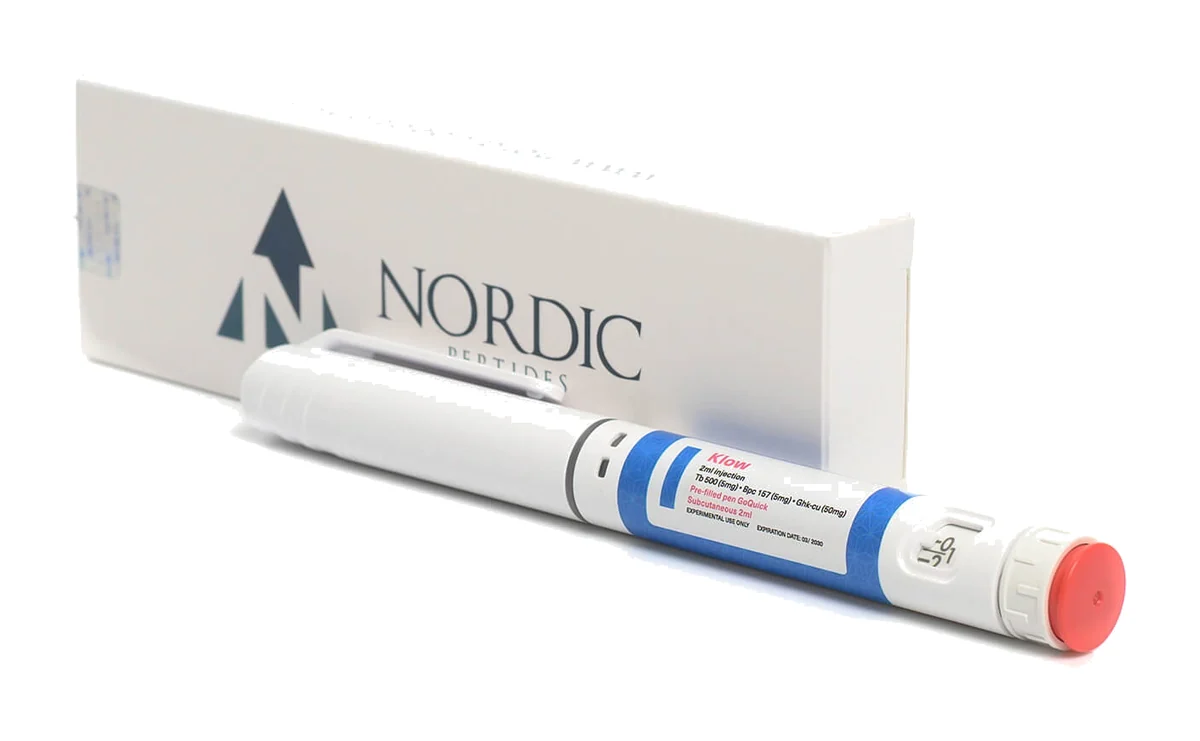 Klow (TB500 - 5mg + BPC157 - 5mg + GHK-CU - 50mg) - 60mg/2ml
Combined pens are among the best-selling items in this catalog, and the reason is not mysterious: one pen costs less than the components bought separately, and it is one thing to store, one thing to handle, one thing to log.
That is a real advantage. It also has a price that is not printed on the label, and we would rather name it than let you find it later.
What is in ours
Klow — TB-500 5 mg + BPC-157 5 mg + GHK-Cu 50 mg. Three repair-associated peptides in a single 60 mg/2 ml pen. The two peptides have the deepest preclinical literature in the repair category; both are covered in detail in our pieces on BPC-157 and TB-500.
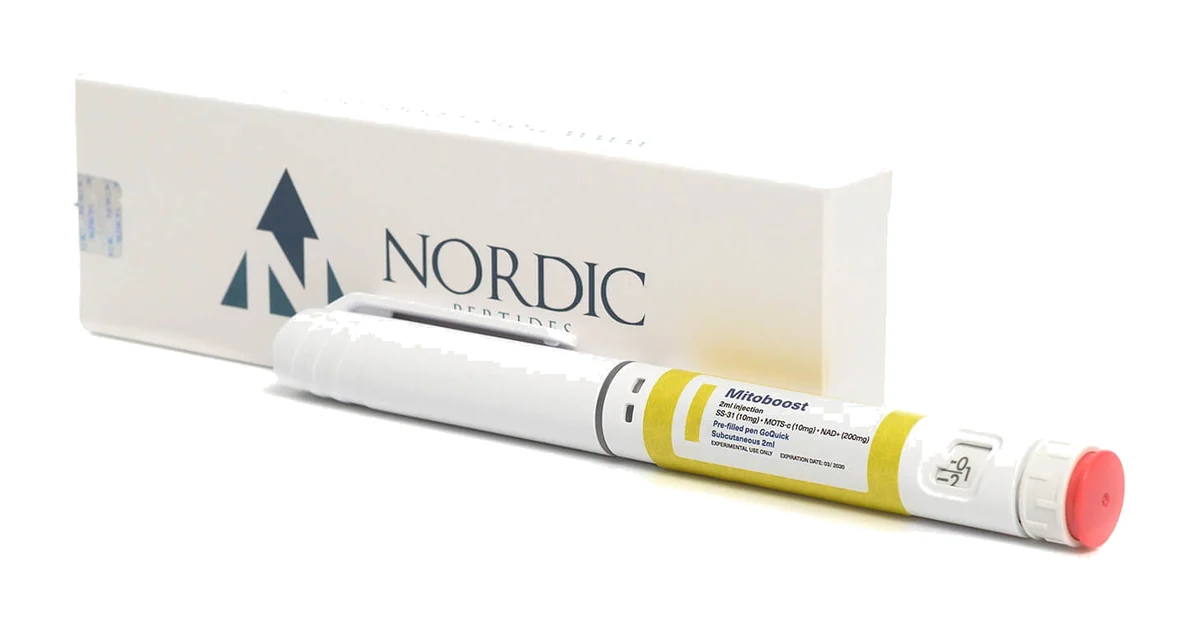
MitoBoost — SS-31 10 mg + MOTS-c 10 mg + NAD+ 200 mg. A mitochondria-directed grouping: an antioxidant peptide targeted to the inner mitochondrial membrane, an AMPK-linked mitochondrial-derived peptide and an NAD component.
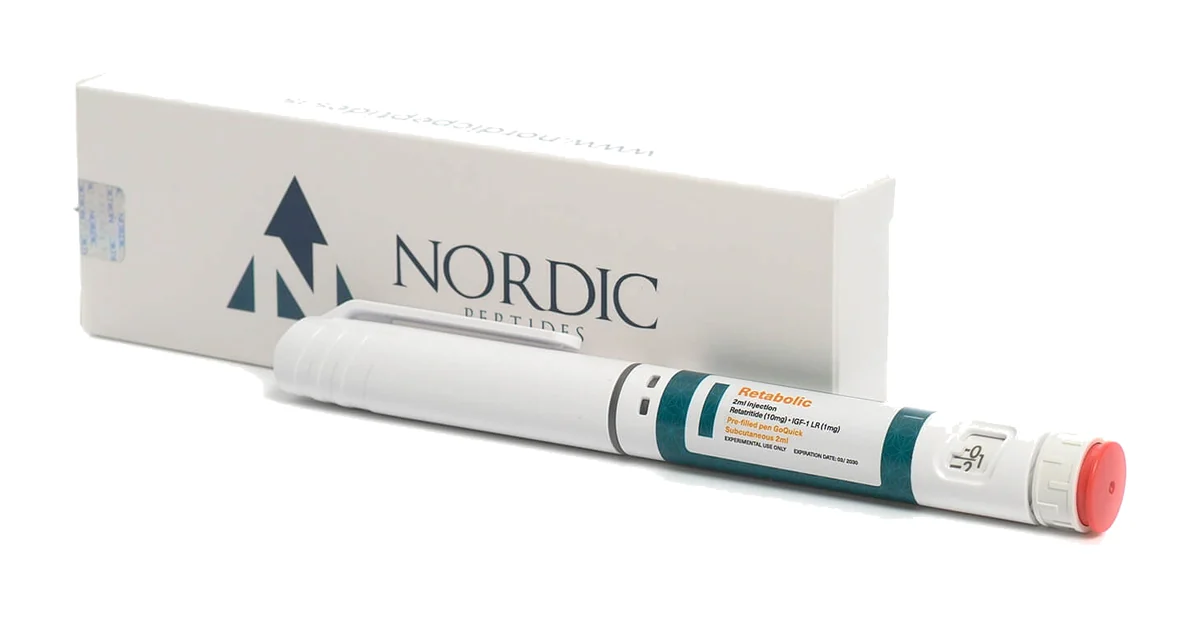
Retabolic — Retatrutide 10 mg + IGF-1 LR3 1 mg, pairing the triple agonist with a long-acting IGF-1 analogue.
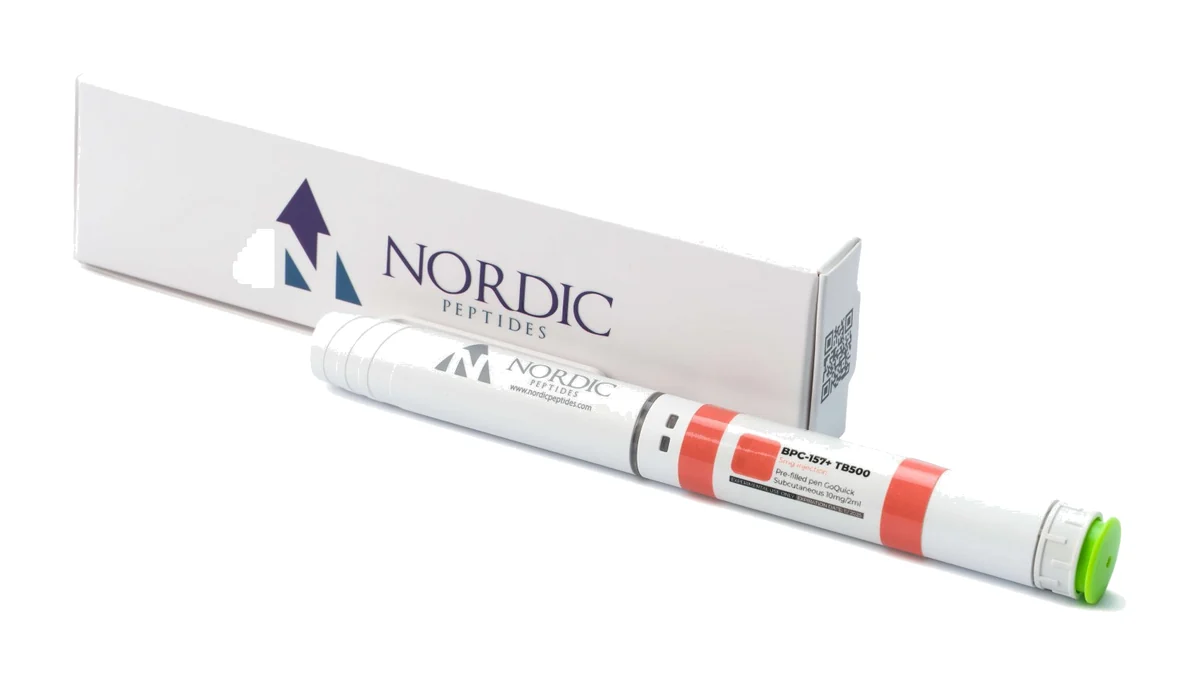
BPC-157 + TB-500 — the classic two-component repair pairing, 5 mg each.
Every one of them is a Nordic Peptides pre-filled pen, at a price below buying the same quantities separately.
The trade
A blend cannot tell you which component produced which effect.
That sounds obvious written down, and it is routinely ignored. If a three-component preparation produces a result, the result belongs to the preparation — not to BPC-157, not to GHK-Cu, not to the combination of two of them. To attribute it you would need the components separately, which is exactly what the blend saved you from buying.
The published literature makes this worse rather than better: the trials and preclinical work cited across this site were run on single compounds. There is no published trial of Klow, or of MitoBoost, or of Retabolic. Their components have literature; the combinations do not.
So when is a blend the right call?
Reasonable:
- the components are established in your protocol individually and you are running the combination deliberately
- you want fewer handling steps and fewer opened cartridges — a genuine reduction in the variables that actually degrade material
- cost per milligram matters more than attribution for this particular piece of work
Not reasonable:
- as a cheaper way to “try several things at once” — that is the scenario where a result cannot be interpreted at all
- as a substitute for deciding what you are actually studying
- when a component in the mix is one you would not have bought on its own
The pricing, plainly
The blends are the best value per milligram in the catalog, and we are not going to pretend that is an accident — combined pens are how the manufacturer packages more compound at a lower unit cost, and we pass that through the same way we do everything else: priced below the maker’s own European retail, with a flat delivery fee per order however much you buy.
Buy the blend when the blend is what you want. Buy the parts when you need to know which part did it.
The same trade, stretched over four months and three compounds at a time, is what a peptide program asks you to make.
Research use only. Nothing we ship is for human or veterinary use, and nothing here is a protocol or medical advice.
References.
- Vasireddi N, et al. Emerging Use of BPC-157 in Orthopaedic Sports Medicine: A Systematic Review. HSS J 2025.
- 0.1% RGN-259 (Thymosin β4) Ophthalmic Solution in Neurotrophic Keratopathy — Phase III trial.
- Lee C, et al. The mitochondrial-derived peptide MOTS-c promotes metabolic homeostasis and reduces obesity and insulin resistance. Cell Metab 2015;21(3):443–454.
- Jastreboff AM, et al. Triple–Hormone-Receptor Agonist Retatrutide for Obesity — A Phase 2 Trial. N Engl J Med 2023;389(6):514–526.