Retatrutide: what the phase 2 data actually show
A triple receptor agonist that produced the largest weight reductions yet published for a single obesity drug — 24.2% at 48 weeks. Here is what the trial measured, and what it did not.
21 August 2026 · 3 min read
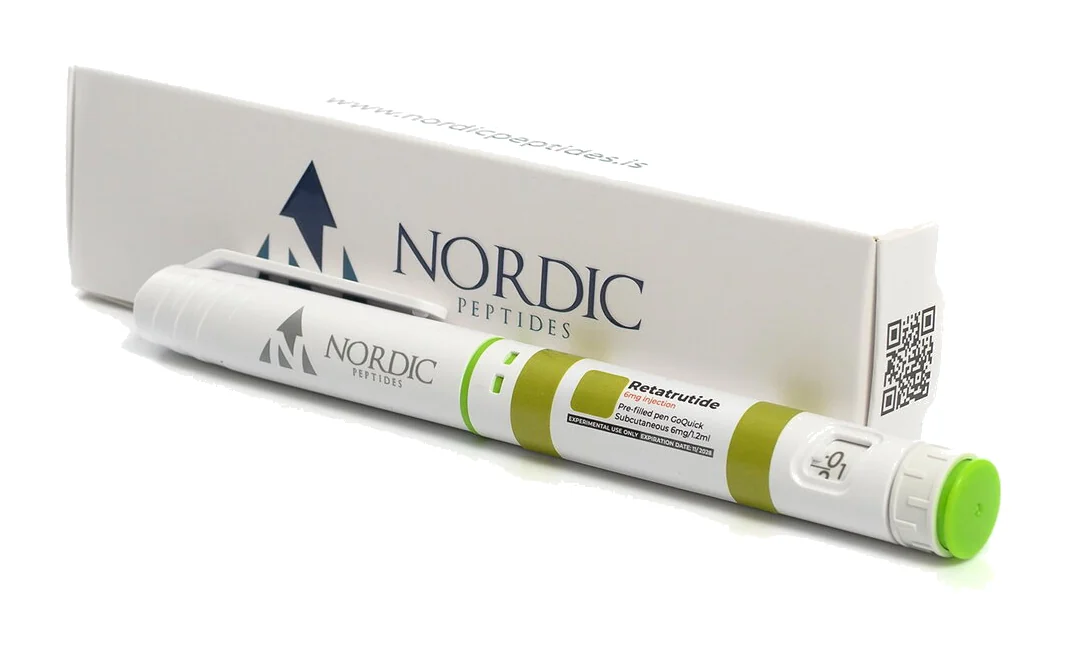 Retatrutide - 6mg
Retatrutide is the compound that made the obesity field stop and re-read the table. Where the drugs before it hit one or two gut hormone receptors, retatrutide hits three — GIP, GLP-1 and glucagon — and the phase 2 numbers came in higher than anything published for a single agent before it.
That is the reason it is the most requested item in our GLP-1 line. It is also the reason it deserves a page that says exactly what was measured, by whom, and over how long, instead of the usual adjectives.
What it is
Retatrutide (development code LY3437943) is an agonist of three receptors at once: the glucose-dependent insulinotropic polypeptide receptor, the glucagon-like peptide-1 receptor and the glucagon receptor. The first two are familiar from tirzepatide; the third is the new part. Glucagon receptor agonism raises energy expenditure, which is a different lever from the appetite and gastric-emptying effects that carry semaglutide and tirzepatide.
Three levers, three mechanisms, one molecule. That is the whole design idea.
The trial
The pivotal published work is a phase 2, double-blind, randomised, placebo-controlled trial in 338 adults with obesity, run over 48 weeks and published in The New England Journal of Medicine in June 2023 (Jastreboff et al.). Participants were assigned to placebo or to retatrutide at 1, 4, 8 or 12 mg once weekly, with different escalation schedules.
The headline result: mean weight reduction of 22.8% at 8 mg and 24.2% at 12 mg at 48 weeks. For context, in the same journal, tirzepatide 15 mg produced 20.9% at 72 weeks in SURMOUNT-1 — a longer trial. Retatrutide reached a larger number in two-thirds of the time.
The response rates are the part worth reading twice. At 48 weeks:
| Dose | ≥5% loss | ≥10% loss | ≥15% loss |
|---|---|---|---|
| 4 mg | 92% | 75% | 60% |
| 8 mg | 100% | 91% | 75% |
| 12 mg | 100% | 93% | 83% |
| Placebo | 27% | 9% | 2% |
Every single participant on 8 and 12 mg lost at least 5% of body weight. In obesity pharmacology, a 100% response rate on any threshold is unusual enough to be worth naming.
The weight curve had also not flattened by week 48 — the authors note it was still descending when the trial ended, which is why phase 3 (TRIUMPH) runs longer.
What else was measured
The same trial reported improvements in glycaemic measures and blood pressure, and a separate phase 2a trial published in Nature Medicine in 2024 looked at retatrutide in metabolic dysfunction-associated steatotic liver disease (MASLD), reporting substantial reductions in liver fat content. Different endpoint, different patient group, same compound — and worth knowing about if your interest is metabolic rather than purely weight-related.
The side of it that gets skipped
Adverse events in the retatrutide groups were predominantly gastrointestinal — nausea, diarrhoea, vomiting, constipation. They were dose-related, mostly mild to moderate, and partially mitigated by starting at 2 mg rather than 4 mg. That last detail is the practical one: the escalation schedule, not just the target dose, changed the tolerability profile.
Dose-dependent increases in heart rate were also observed, peaking at 24 weeks and declining afterwards.
And the limits, stated plainly: this is phase 2 data. 338 people, 48 weeks, no cardiovascular outcome data, no long-term safety record, and no regulatory approval anywhere in the world at the time of writing. Retatrutide is not an approved medicine. Everything above describes what happened to trial participants under medical supervision in a controlled study — it is not a protocol, and it is not transferable to anything else.
Why the dose numbers on our shelf look the way they do
The trial escalated: 2 mg starting doses, 4 mg, 8 mg, 12 mg targets. That is why research material is supplied in the strengths it is — 6, 12, 20 and 30 mg pens exist because the published work spans a wide range of quantities and reconstitution volumes, not because any one number is “the” number. Which strength suits a given laboratory protocol is a question for the protocol, not for us.
What we supply
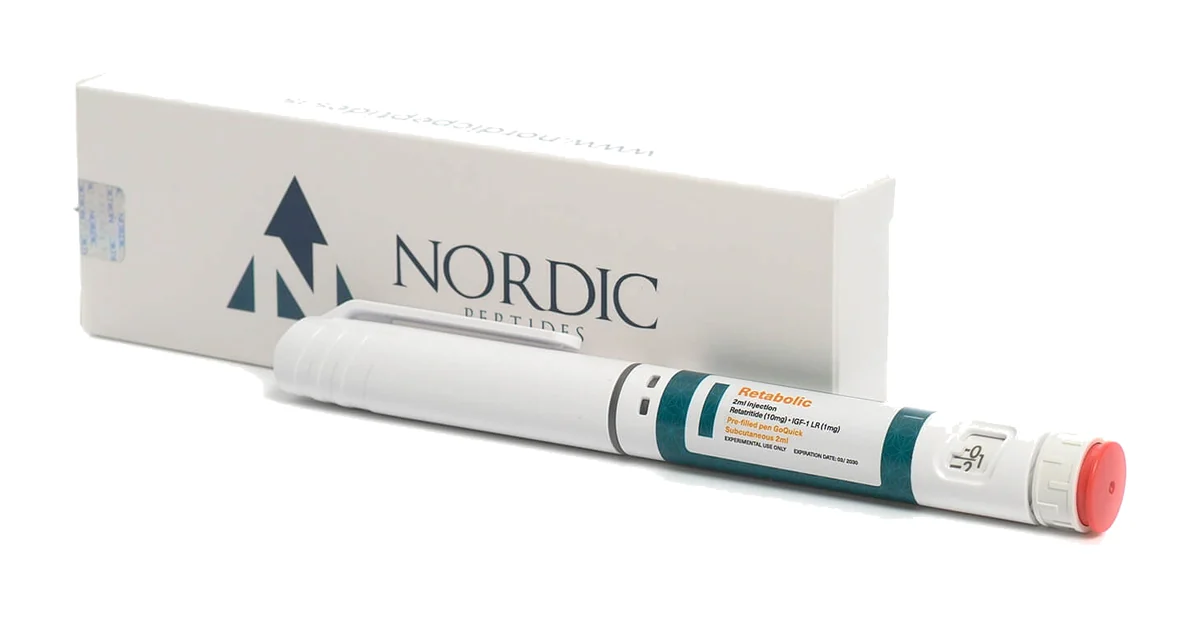
Every retatrutide item in our catalog is a Nordic Peptides pen, shipped as supplied by the manufacturer, with the batch documentation the maker publishes available on request. Research use only — nothing we ship is for human or veterinary use.
If you want the underlying paper rather than our summary of it, the references below are the primary sources, and all of them are freely readable at least in abstract.
References.
- Jastreboff AM, Kaplan LM, Frías JP, et al. Triple–Hormone-Receptor Agonist Retatrutide for Obesity — A Phase 2 Trial. N Engl J Med 2023;389(6):514–526.
- PubMed record for the phase 2 obesity trial (PMID 37366315).
- Sanyal AJ, Kaplan LM, Frías JP, et al. Triple hormone receptor agonist retatrutide for metabolic dysfunction-associated steatotic liver disease: a randomized phase 2a trial. Nat Med 2024.
- Jastreboff AM, Aronne LJ, Ahmad NN, et al. Tirzepatide Once Weekly for the Treatment of Obesity. N Engl J Med 2022;387(3):205–216.