MOTS-c: the peptide your mitochondria write themselves
A 16-amino-acid peptide encoded inside mitochondrial DNA, released by exercise, and falling with age. The mechanism is elegant and well documented — in mice.
19 August 2026 · 2 min read
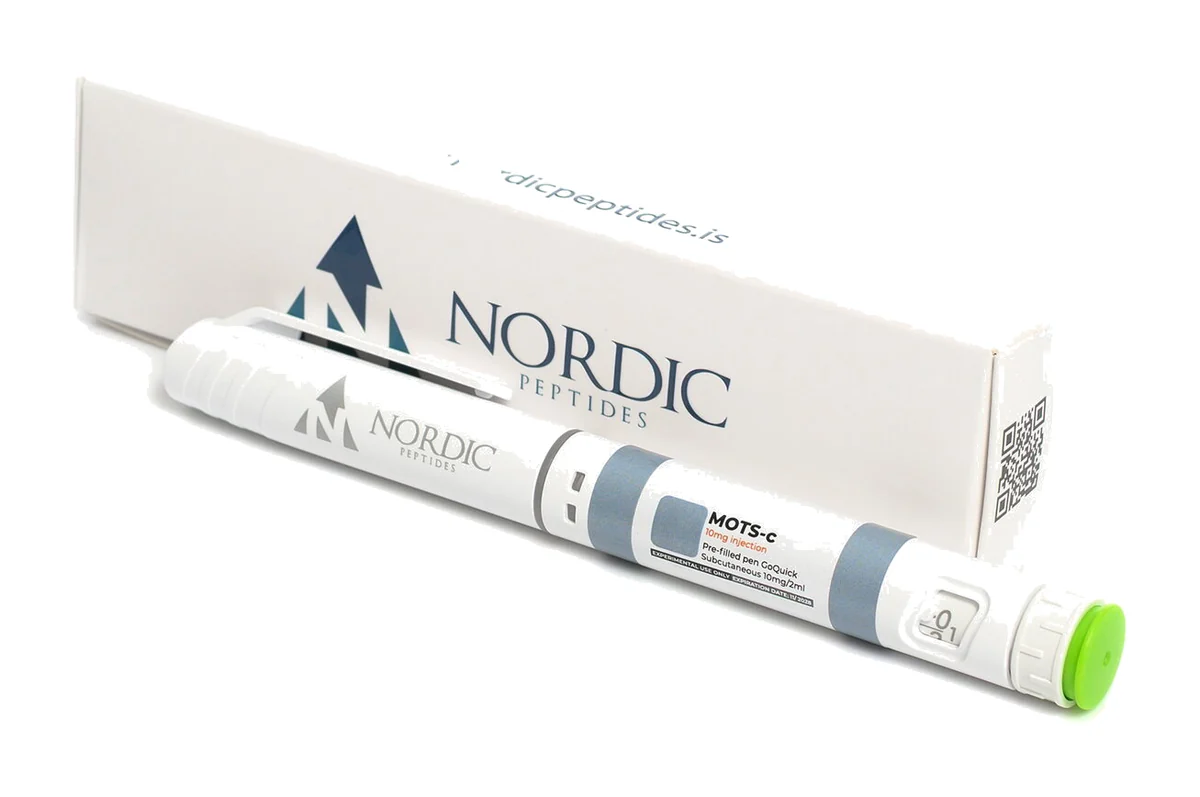 MOTS-c - 10mg
Most peptides in this catalog are analogues of something the body makes in the usual place — the pituitary, the gut, the thymus. MOTS-c is stranger than that: it is encoded inside the mitochondrial genome, in a short open reading frame within the 12S rRNA gene. The mitochondria write it themselves.
That is not a marketing line. It is why the compound got a Cell Metabolism paper in 2015 and a research field of its own afterwards.
What was found
Lee et al. identified MOTS-c as a 16-amino-acid mitochondrial-derived peptide and characterised what it does: it acts through the AMPK pathway — the same energy-sensing hub that metformin and exercise converge on — and in their models it regulated insulin sensitivity and metabolic homeostasis.
In mice, MOTS-c administration prevented both age-dependent and high-fat-diet-induced insulin resistance, and prevented diet-induced obesity. Later work reported effects on plasma metabolites and on insulin sensitivity along the same lines.
The exercise connection
The 2021 paper in Nature Communications (Reynolds et al.) is the one that made the compound interesting outside metabolism labs. It reported that MOTS-c is exercise-induced — levels rise with physical activity — and that in aged mice, administering it improved physical capacity and muscle homeostasis. That is the origin of the “exercise mimetic” label the compound now carries everywhere.
Circulating MOTS-c also declines with chronological age, in rodents and in humans, and lower levels track with metabolic dysfunction.
Where the evidence stops
Bluntly: at the species line.
The mechanistic work is strong and reproducible. The metabolic and physical-capacity results are in mice. What exists in humans is observational — measurements of endogenous MOTS-c levels across ages, populations and metabolic states, plus genetic association work on mitochondrial variants that affect the peptide.
There is no randomised controlled trial of administered MOTS-c in people. Nobody has established a human dose, a human safety profile or a human effect size. Anyone presenting the mouse numbers as human outcomes is skipping the step that matters.
Why it appears in blends
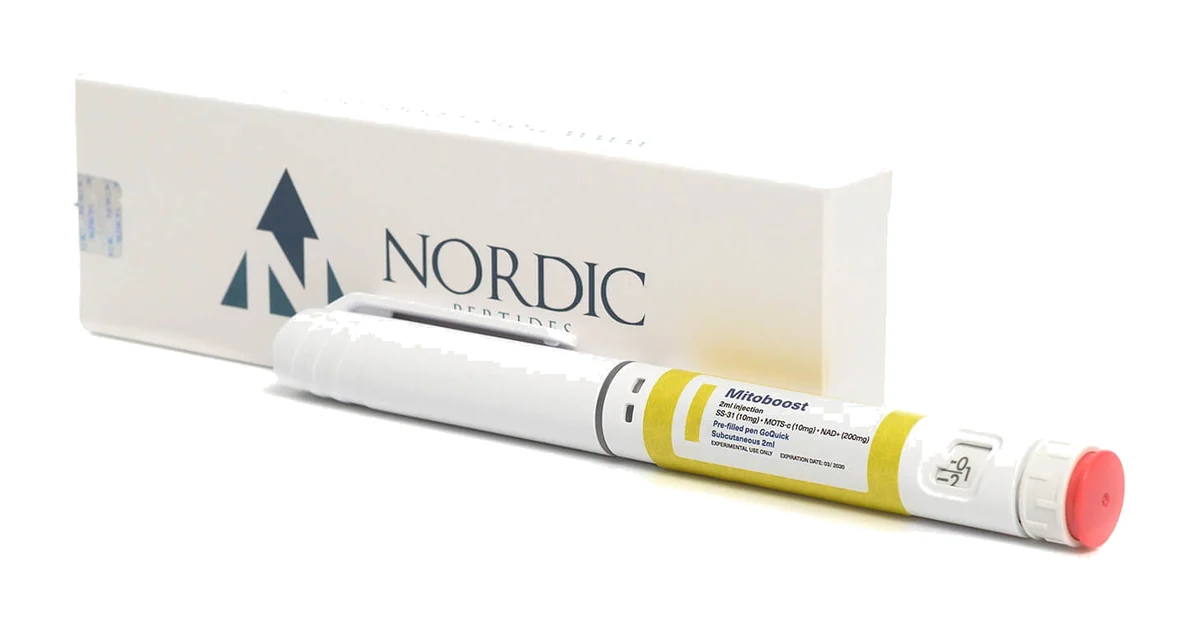
MOTS-c shows up in our catalog on its own and inside MitoBoost, alongside SS-31 and NAD+. The logic of that grouping is mitochondrial: an AMPK-linked peptide, a mitochondria-targeted antioxidant peptide and an NAD precursor all address the same organelle from different angles.
The usual caution applies — a three-component preparation cannot tell you which component did what, and for a compound with no human dataset at all, attribution matters more, not less.
Handling
Nordic Peptides specify room-temperature storage between 15 °C and 30 °C for the sealed product, away from light and moisture; after reconstitution, follow the manufacturer’s own instruction on the product page.
What we supply
MOTS-c 10 mg and the MitoBoost blend, Nordic Peptides pens, shipped as supplied by the manufacturer, batch documentation on request. Research use only — not for human or veterinary use, and nothing here is medical advice.
References.
- Lee C, Zeng J, Drew BG, et al. The mitochondrial-derived peptide MOTS-c promotes metabolic homeostasis and reduces obesity and insulin resistance. Cell Metab 2015;21(3):443–454.
- Reynolds JC, Lai RW, Woodhead JST, et al. MOTS-c is an exercise-induced mitochondrial-encoded regulator of age-dependent physical decline and muscle homeostasis. Nat Commun 2021;12:470.
- Mitochondrial-Encoded Peptide MOTS-c, Diabetes, and Aging-Related Diseases. Diabetes Metab J (review).
- The mitochondrial-derived peptide MOTS-c is a regulator of plasma metabolites and enhances insulin sensitivity.