BPC-157: what the evidence actually says
Thirty-five preclinical studies, one clinical study. That ratio is the whole story of BPC-157 — a compound with a large and fairly consistent animal literature and almost no human data behind it.
21 August 2026 · 3 min read
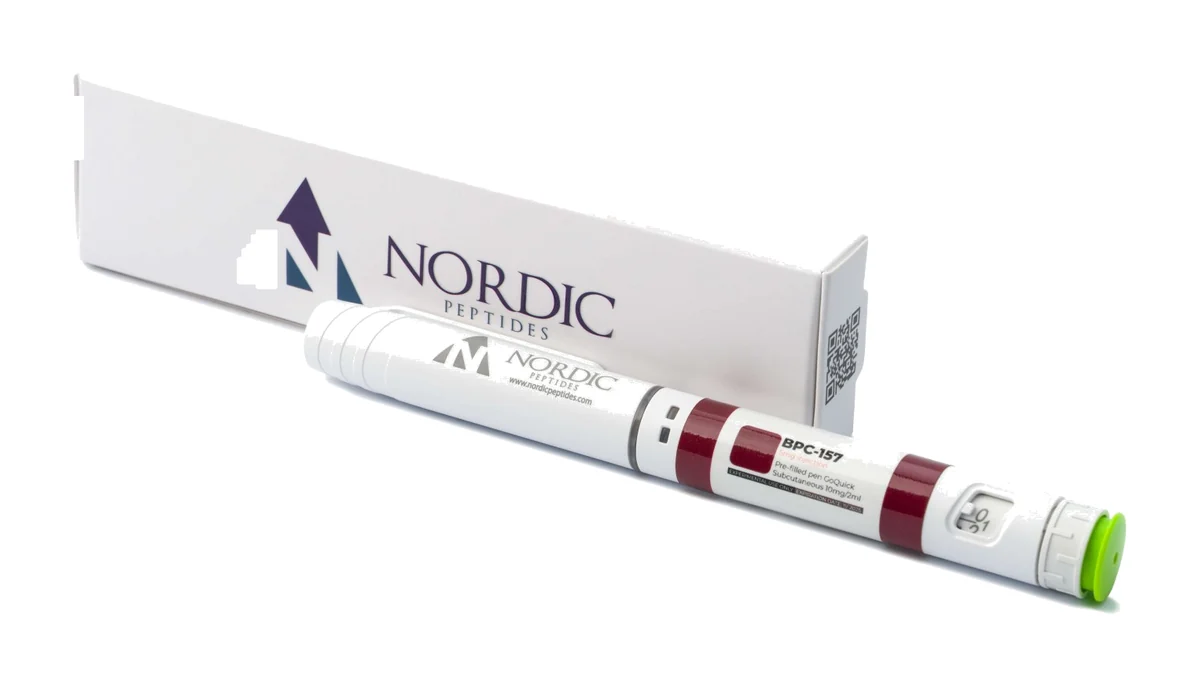 BPC-157 - 5mg
BPC-157 occupies a strange position: it is one of the most searched-for research peptides in Europe, and one of the least studied in humans. Both things are true at once, and the honest version of this page has to hold them together.
What it is
BPC-157 is a synthetic 15-amino-acid sequence derived from a fragment of body protection compound, a protein identified in human gastric juice. It is stable in gastric acid — unusual for a peptide, and the property that made it interesting to gastroenterology researchers in the first place.
The mechanism proposed across the literature is described as pleiotropic and cytoprotective: effects on angiogenesis (new blood vessel formation), fibroblast migration, growth factor signalling and the nitric oxide system, rather than one clean receptor interaction. “Pleiotropic” is a fair word here, but it is also a warning sign — a compound with no identified single receptor is harder to study, harder to dose rationally and harder to predict.
What the animal literature shows
This is the part that is genuinely substantial. A 2025 systematic review in orthopaedic sports medicine (Vasireddi et al.) collected the field and found that in preclinical models BPC-157 improved functional, structural and biomechanical outcomes across muscle, tendon, ligament and bone injuries — tendon rupture, ligament tear, muscle tear and fracture models all reported recovery effects.
That consistency across injury types and research groups is why the compound has not been dismissed outright. Reproducibility in animal models is not proof of human effect, but it is more than most of what circulates in this market has behind it.
What the human literature shows
Almost nothing, and this is the number that matters:
The same 2025 systematic review identified 35 preclinical studies of BPC-157 for musculoskeletal injury — and 1 clinical study.
Beyond that, only a handful of small pilot studies exist in humans at all, covering intra-articular knee pain, interstitial cystitis and an intravenous safety/pharmacokinetics assessment. The reviewers’ conclusion is unambiguous: no clinical safety data were found, and although no adverse effects were reported in the preclinical work, the in-human safety profile is simply unknown.
The recommendation the authors reach — that until well-designed clinical trials exist, BPC-157 should be considered investigational and approached with caution — is the accurate summary of the evidence base as it stands in 2026.
Regulatory status
BPC-157 is not an approved medicine in the EU or the US. It has been on the WADA Prohibited List since January 2022 under S0 (non-approved substances), and bans followed at the NFL, UFC and NCAA. Anyone in tested sport should treat it as a positive test waiting to happen; that is not a grey area.
What this means for a research setting
Three practical points, and none of them is a protocol:
- The literature is preclinical. If you are designing work with BPC-157, the comparable published methods are animal-model methods. Reading them is more useful than reading any vendor’s page, including this one.
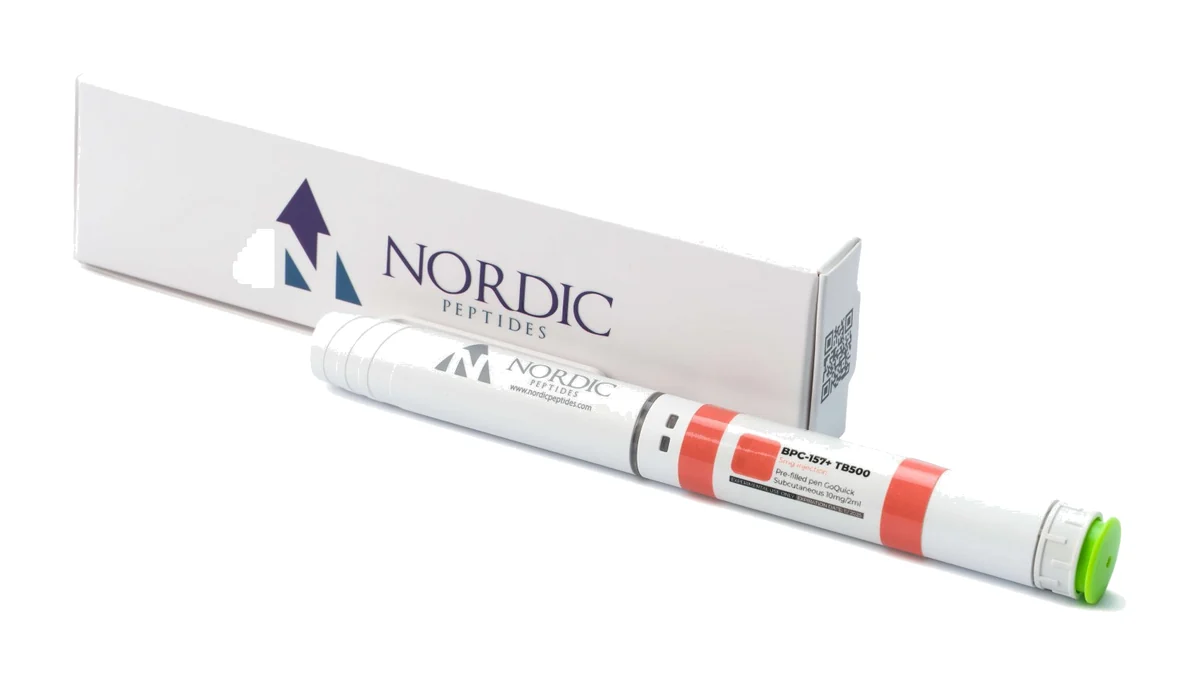
- Handling matters. Nordic Peptides specify room-temperature storage between 15 °C and 30 °C, away from light and moisture, for the sealed product; the manufacturer’s own instruction on the product page is the one to follow after reconstitution.
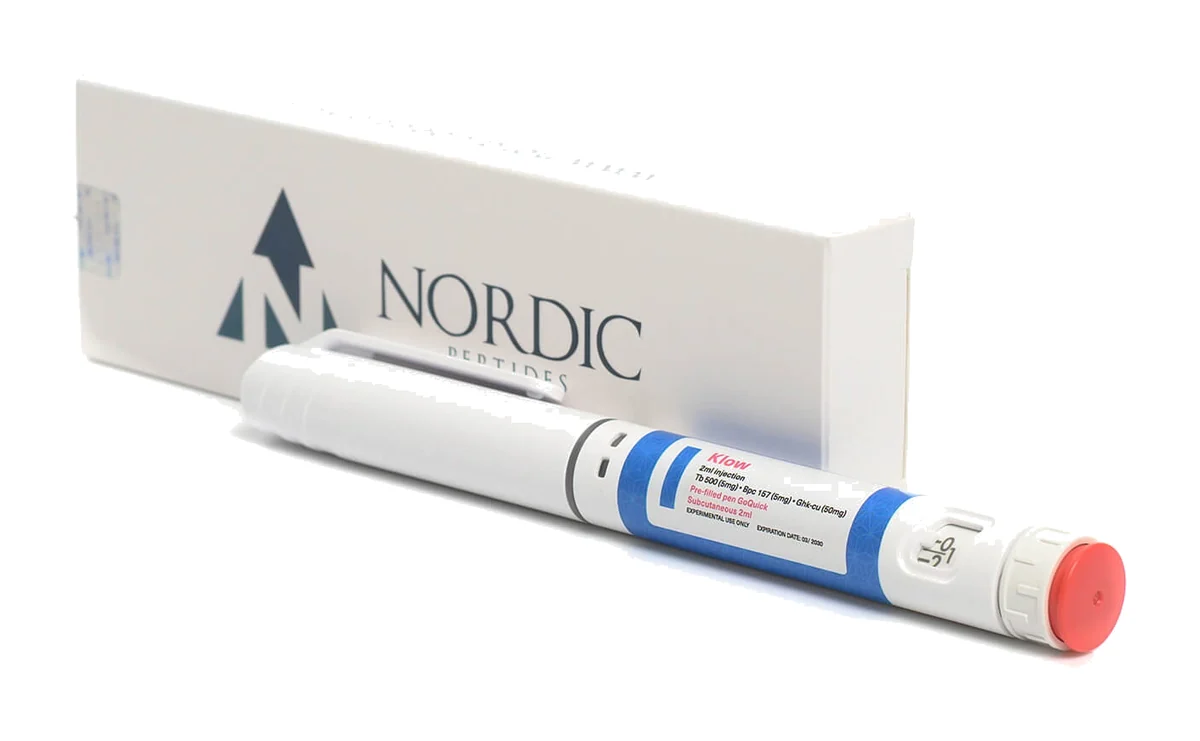
- Blends complicate attribution. BPC-157 is often supplied combined with TB-500, and in our catalog also as part of a three-component blend. A combined preparation cannot tell you which component did what — worth deciding before, not after.
What we supply
BPC-157 5 mg, the BPC-157 + TB-500 blend and the Klow blend, all Nordic Peptides pens, shipped as supplied by the manufacturer, with the batch documentation the maker publishes available on request.
Research use only. Nothing we ship is for human or veterinary use, and nothing on this page is medical advice or a suggestion to use it in people — the literature above does not support that, and we are not going to pretend otherwise.
References.
- Vasireddi N, Hahamyan H, Salata MJ, et al. Emerging Use of BPC-157 in Orthopaedic Sports Medicine: A Systematic Review. HSS J 2025.
- Systematic review, publisher's record (doi:10.1177/15563316251355551).
- Regeneration or Risk? A Narrative Review of BPC-157 for Musculoskeletal Healing. PubMed record (PMID 40789979).
- World Anti-Doping Agency — Prohibited List (BPC-157 named under S0, non-approved substances, since 2022).