How to check whether a research peptide supplier is worth ordering from
Nine checks you can run on any peptide vendor in ten minutes, what a refusal to answer means, and how this shop answers each one — including the two it cannot.
1 October 2026
Get this checklist by email
One email when a new hub goes up. Research use only; nothing else, and one click to leave.
Every shop in this market says the same three words. Very few will show you the document behind them, and of those that do, a good share are showing you something that cannot survive a closer look. This page is the checklist, and at the end it is our own answers — including the two we cannot give you.
It is worth knowing what is actually at stake. In 2024 a team at the University of Pécs bought semaglutide from six online pharmacies selling it without a prescription, at the lowest prices, and analysed the vials by liquid chromatography coupled with mass spectrometry. Of 1,080 links collected from search results, 134 (42.3%) led to 59 unique illegal online pharmacy sites, and the top 30 domains involved accumulated over 4.7 million visits between July and September 2023. The three vials that actually arrived failed in ways no label could have predicted: measured purity between 7.7% and 14.37% against 99% claimed, semaglutide content 28.56% to 38.69% above the labelled amount, and endotoxin in every sample, between 2.1645 and 8.9511 EU/mg. Not one of the three prefilled pens arrived at all — those orders were non-delivery scams.
A separate screening by the Scientific Institute of Public Health in Belgium took a different angle: instead of comparing a label to a measurement, it screened the ten most frequently encountered falsified peptide drugs on the Belgian market for impurities of every class — active-substance related, small-molecule contaminants, elemental impurities and residual solvents. Purity ranged from 5% to 75% for cysteine-containing peptides, and the samples carried arsenic and lead, with several up to ten times the ICH toxicity limit for parenteral drugs. Speciation confirmed all the arsenic was in the more toxic inorganic form.
Nobody is arguing that every seller is selling this. The point of quoting it is narrower: the failure modes are measurable, they are common, and every one of them is visible in a document before you order — if you know which document fields to look at.
The nine checks
1. Is the issuing laboratory named, and findable? A certificate that says “our in-house QC” has told you nothing you could verify with a third party.
2. Is there a lot or batch number? This is the field that carries the most weight and the one most often missing. A COA describes one batch. Without a lot number it describes nothing in particular — including the batch in your parcel.
3. Is there an assay date? Peptides degrade; a report from four years ago is a historical document about a product that may no longer exist in that form.
4. What was measured, and by what method? “Purity” alone is not a measurement. HPLC and mass spectrometry answer different questions, and a report that names neither cannot be checked by anybody.
5. Is the result a number? “Passed” is not a result. “99.1%” is. This one check separates most documents from decoration.
6. Does the salt form on the report match the vial? Peptides are sold as the hydrochloride salt or the acetate salt; they are different substances with different masses and different behaviour. A report for the wrong salt form says nothing about what is in the tube.
7. Does the report’s verification key resolve at the lab’s own verification page? This is the fastest test available to a buyer. Janoshik Analytical, the lab behind most of the reports circulating in this sector, publishes a verification page where the key printed on the report is typed in and the lab’s own record comes back. A key that does not resolve is a document somebody edited.
8. Does the lot number on the report match the lot number printed on your vial? If the shop will not tell you the lot number before you order, that is the answer.
9. Does the vendor say what it does not publish? This is the check almost nobody runs, and it is the one that separates a seller from a mirror. Every honest supplier in this market has a documented gap: they do not manufacture, or they do not have a report for that product, or they cannot test what they did not make. A seller with no gaps has not answered the question.
Our own answers
We are a reseller. We do not manufacture anything, we do not repack anything, and every item ships in its maker’s sealed packaging with the maker named on the product page. That also means the batch documentation we can offer is exactly the batch documentation our makers publish — no more.
- Nine products have a published batch report. They are Med Care Pharma’s, issued by Janoshik Analytical, transcribed with the laboratory, the lot number, the date and the measured values on each product page. They are the only nine.
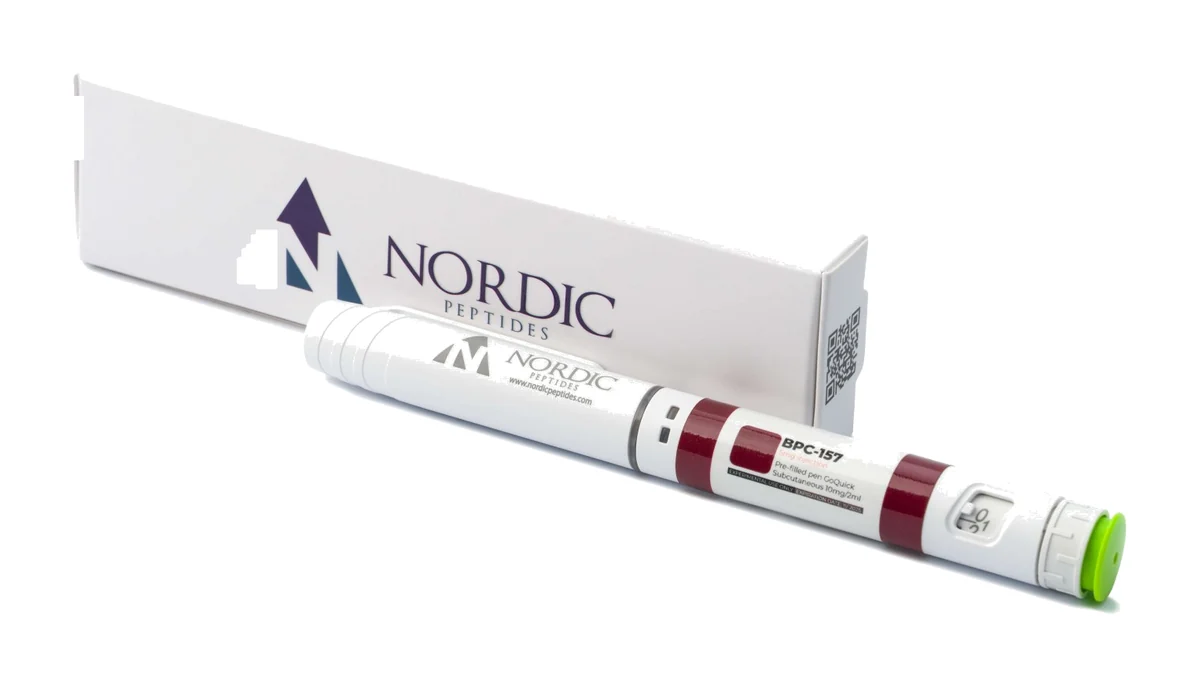
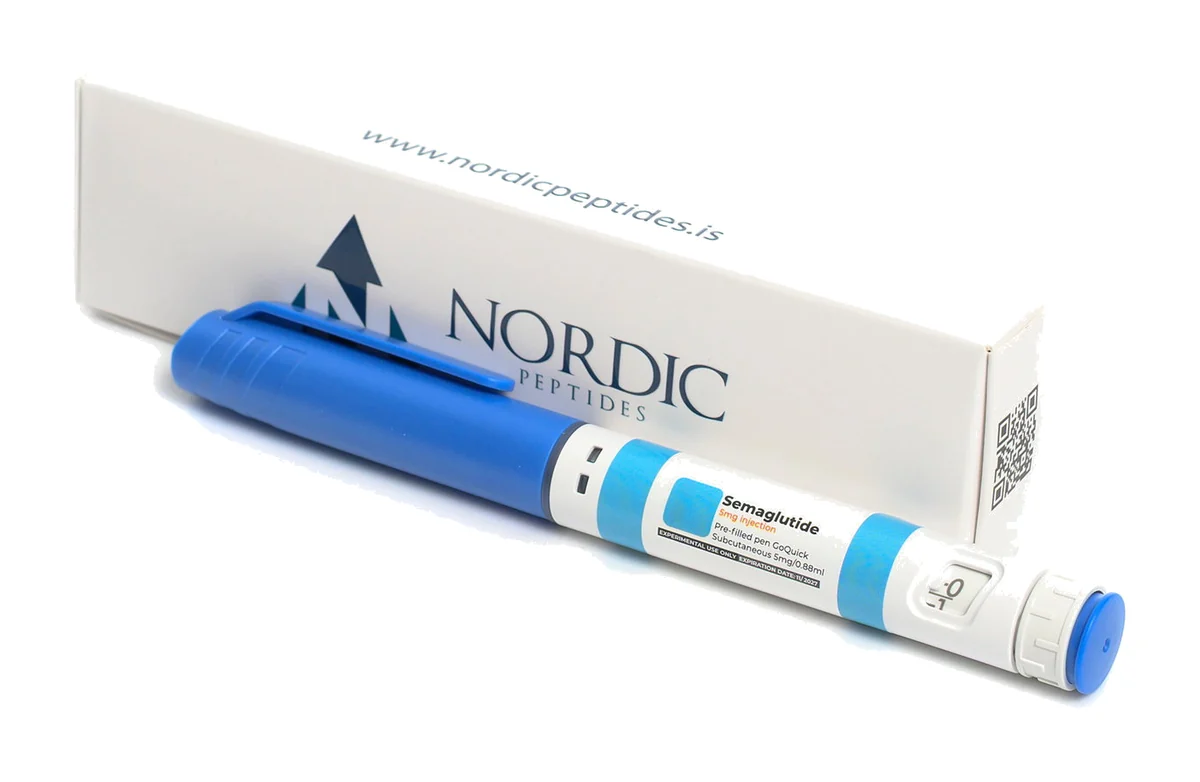
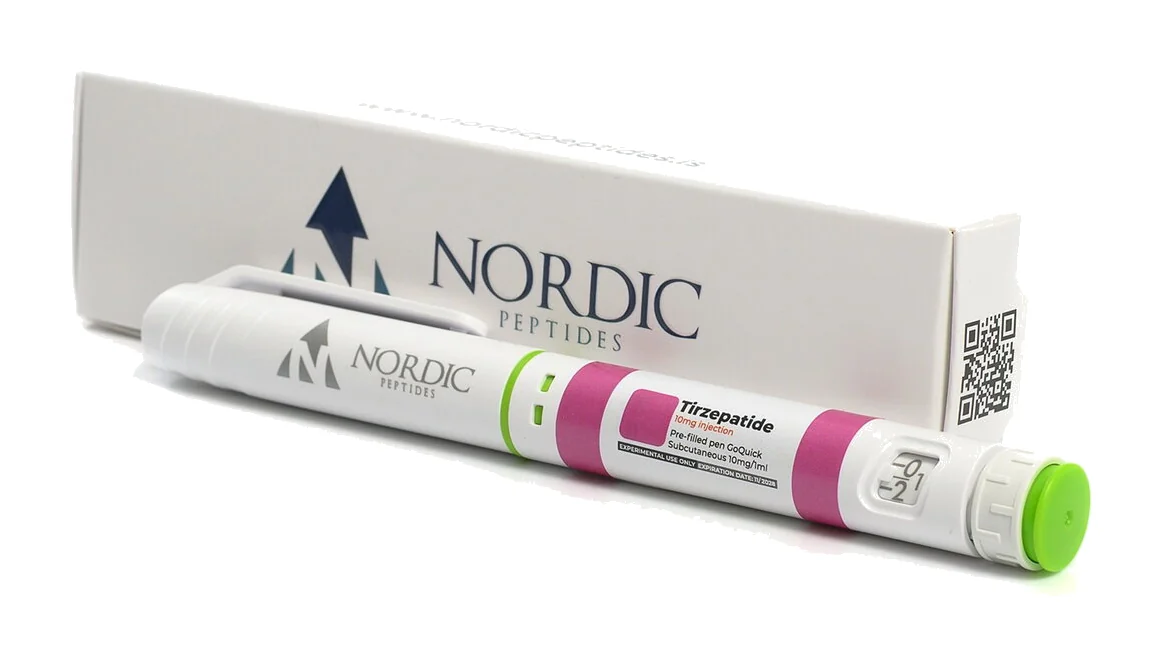
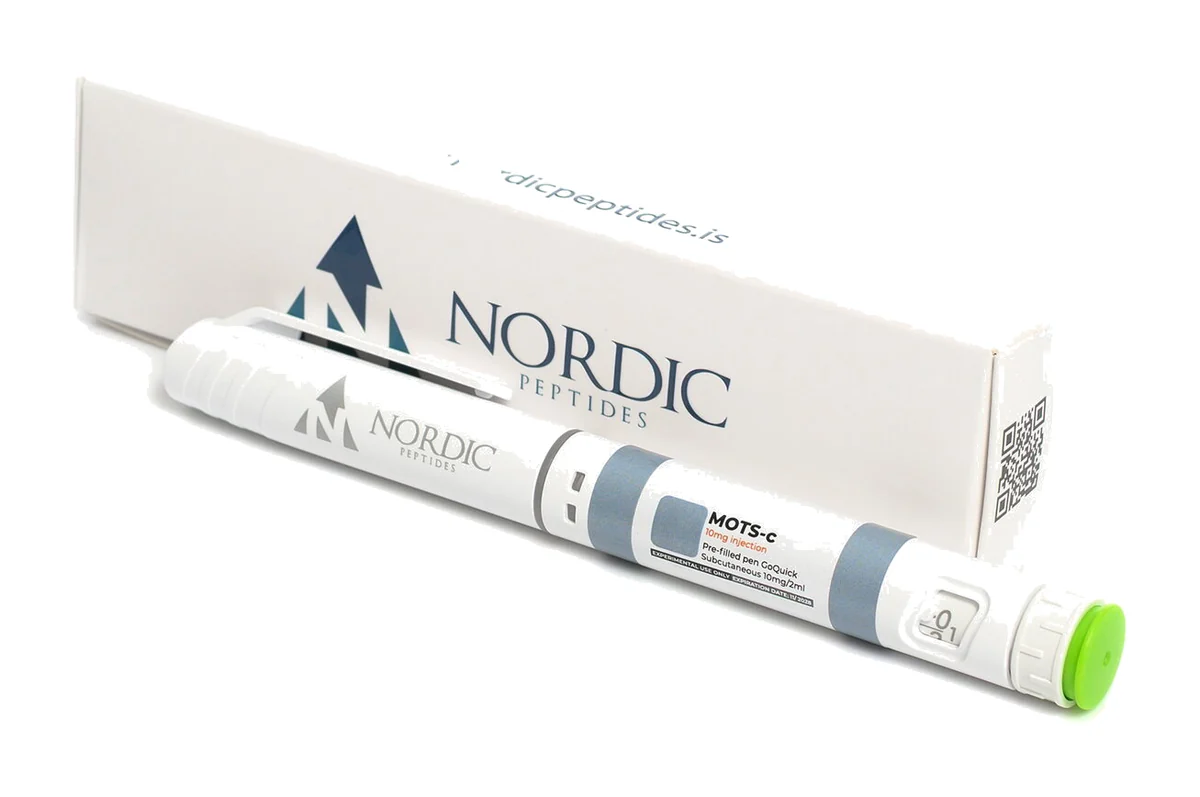
- The other 101 products have no report, because their manufacturers publish none. Nordic Peptides, Marvel Nutrition and PharmaRx publish no public batch documentation. Those products carry the neutral label
Original packaging / no repacking · tracked. We would rather say that than print a number we cannot stand behind. - We do not sell a report we did not receive, and we do not relabel another laboratory’s report as our own QC.
- We do not write dosing protocols. Product descriptions are the manufacturers’ own text, published as written; the purity and effect claims inside that text are the maker’s, not ours.
- The rest of the checklist you can run on us. Ask for the lot number, ask for the salt form, ask which lab ran the assay, and ask what we do not publish. If we duck one, that is worth knowing.
The deeper version of this question — what a manufacturer, a lab and a reseller each do differently, and which of the three is accountable for what — is the subject of how a peptide order moves inside the EU, and the measurement side is in how to read a certificate of analysis.
What we cannot promise
We cannot tell you that a product is pure, safe to use, or effective. Nobody can, including the laboratories: purity is a measurement of a sample, not a guarantee about a person. We cannot promise delivery times we do not control beyond the courier’s own commitment. And we make no claim about how we compare to other vendors — we have no way to substantiate that, and a page which did claim it would be quoting marketing.
⚠ Everything sold here is for in-vitro laboratory research only. Not for human or veterinary use. Nothing on this page is medical advice.
What each kind of vendor can actually show you
| What | Batch report | Who runs the assay | What you can verify yourself | What it means for you |
|---|---|---|---|---|
| The manufacturer itself | Publishes reports for its own batches | Its own quality system, or a contracted lab it names | The lot number on your vial matches the report | The only vendor type where the report and the packaging come from the same organisation. |
| A reseller carrying a named manufacturer | Only if the manufacturer published one — most do not | The manufacturer's lab, named on the report | The report's own verification key, if it has one | A named maker is worth asking about; a report that exists only because the seller typed it is worth nothing. |
| A reseller relabelling as its own brand | Whatever it chooses to print | Usually unnamed, or 'our laboratory' | Nothing — the lab cannot be asked | This is the case the Belgian lab screening below was written about. Treat the document as decoration. |
| A marketplace listing you found by searching | A file on the product page, no lot number | Unnamed | Nothing | A report with no lot number describes no batch, including the one in your parcel. |
Questions this page answers
What is the single fastest test I can run on a certificate of analysis?
Type the report's verification key into the issuing laboratory's own verification page. A lab that publishes verification is telling you it expects to be checked; a report whose key does not resolve was edited after the assay.
If a vendor says they test every batch, what should I ask to see?
Ask for one recent report with its lot number and its assay date, then ask for the same lot number on the vial you received. If the two disagree, or if the report covers a different salt form than the vial says, the rest of the claim does not hold either.
Does a purity percentage on a label tell me anything on its own?
No. Purity is a measurement of one sample on one day by one method. A label reading 99% is a manufacturer's claim about a batch you have not seen; the measured purities of products bought unverified from sellers without prescriptions ranged from 7.7% to 14.37%, against the 99% claimed on the labels.
What does this shop publish, and what does it not?
We publish the batch documentation that Med Care Pharma itself publishes — nine Janoshik Analytical reports, transcribed with the lab, the lot, the date and the measured values on the relevant product pages. Nordic Peptides, Marvel Nutrition and PharmaRx publish none, so their products carry the neutral label 'Original packaging / no repacking · tracked' rather than a claim we cannot support. We do not repack anything, and we do not sell a report we did not receive.
Sources
- Multifactor Quality and Safety Analysis of Semaglutide Products Sold by Online Sellers Without a Prescription: Market Surveillance, Content Analysis, and Product Purchase Evaluation Study. J Med Internet Res. 2024 Nov 7;26:e65440. (PMID 39509151)
- Janvier S, Cheyns K, Canfyn M, et al. Impurity profiling of the most frequently encountered falsified polypeptide drugs on the Belgian market. Talanta. 2018 Oct 1;188:795-807. (PMID 30029448)
- Ashraf AR, Mackey TK, Vida RG, et al. J Med Internet Res 2024;26:e65440 — publisher record, DOI 10.2196/65440.
- Janoshik Analytical — public report verification page (the verification key printed on each report resolves here).
- Full method record for the Belgian screening: impurity profiling, elemental impurities (As, Pb) and residual solvents across ten falsified peptide drugs from three suspected illegal internet pharmacies.