How to read a certificate of analysis (and how to catch a fake one)
A COA is a document about one batch, on one day, from one lab. Most of what circulates as 'lab tested' in this market fails that sentence in at least two places.
23 August 2026 · 3 min read
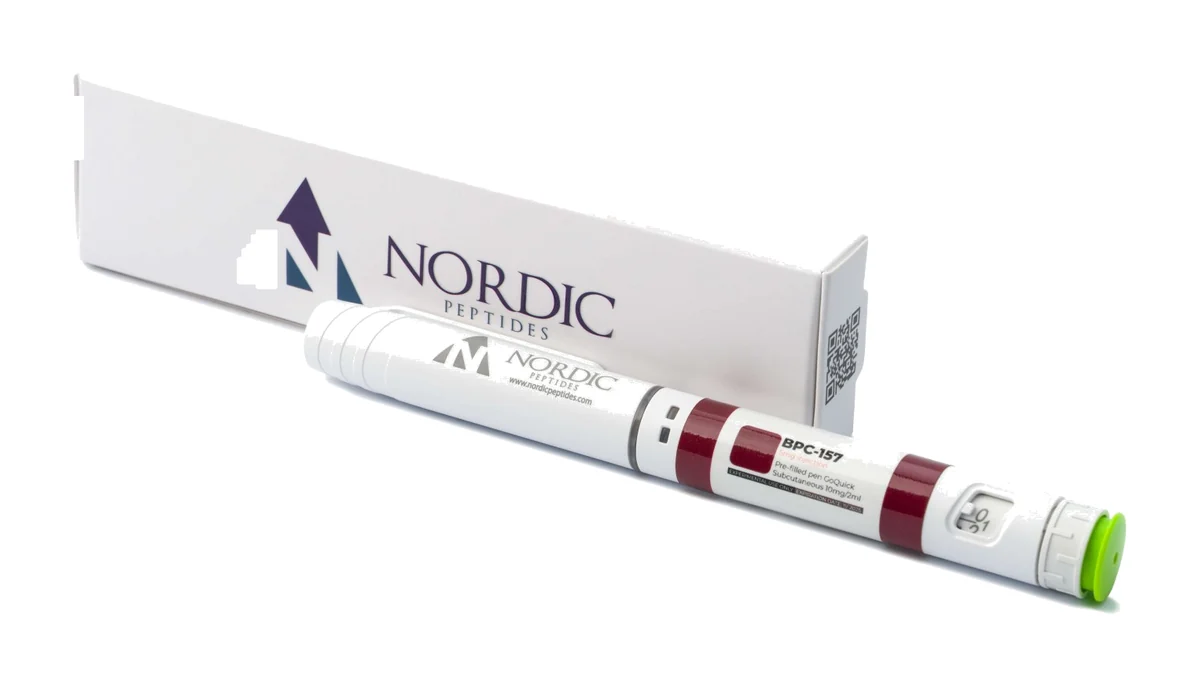 BPC-157 - 5mg
Every shop in this market says “lab tested”. Very few will show you the document, and of those that do, a good share are showing you a PDF that proves nothing at all. Here is how to tell the difference in about ninety seconds.
What a real certificate contains
Six fields. If any of them is missing, the document is decoration:
- The laboratory that issued it. A named, findable third-party lab — not “our in-house QC”.
- The batch or lot number. A COA describes one batch. Without a lot number it describes nothing.
- The date of analysis. Peptides degrade; a report from four years ago is a historical document.
- The analyte and the method. What was measured, and how — HPLC, mass spectrometry, or both.
- The result, as a number. “Passed” is not a result. “99.1%” is.
- A verification key. The good labs let anyone re-check the report on their own site.
That last one is the fastest test available to a buyer. Janoshik, the lab behind most reports circulating in this sector, publishes a verification page: type in the key printed on the report and the lab’s own record comes back. A PDF whose key does not verify is a PDF somebody edited.
Why this matters more than it should
In 2024 the Journal of Medical Internet Research published what happens when someone actually tests the grey market. Researchers bought semaglutide from six online sellers operating without prescriptions and analysed it:
- purity measured at 7.7%–14.37% against 99% claimed on the label
- content 28.6%–38.7% above the labelled amount
- endotoxin in every sample
Every one of those products was, presumably, “lab tested” according to its seller.
The caveat we print on every report
Here is the part that most vendors quietly skip, and that we state on every product page carrying documentation:
A report covers the batch printed on it. It does not certify the box you were sent unless the batch numbers match.
That is the honest limit of published documentation. A manufacturer publishes reports for the batches it chooses to test; your parcel carries whatever batch was current when it was packed. Anyone implying otherwise is selling the document, not the product.
If you want the paperwork for the specific batch you received, send us the order number and we request it from the manufacturer. That path is slower and less impressive than a wall of PDFs, and it is the only one that answers the actual question.
What we publish, and what we do not
On product pages where the manufacturer publishes lab reports, we host them and transcribe every printed field — lab, batch, analysed-on, analyte, value, verification key — so it is readable before you download anything. Nothing on those cards is inferred; if a field is not on the document, it is not on the page.
At the time of writing, the published reports in our catalog are the nine Janoshik analyses that Med Care Pharma publishes for its own products, all with live verification keys. For the manufacturers who publish nothing, we say so rather than filling the space with a generic certificate.
We also attach documents a manufacturer sends us directly, per product, from the admin. Same rule: transcribed, not summarised.
The ninety-second check, condensed
- Is there a named third-party lab? → if not, stop.
- Is there a lot number and a date? → if not, stop.
- Does the verification key check out on the lab’s site (not the seller’s)? → if not, stop.
- Does the lot number match the box you were sent? → if not, it is context, not proof.
Apply that to us as readily as to anyone else. A supplier that objects to being checked is telling you something.
Research use only — everything we ship is supplied strictly for in-vitro laboratory research.