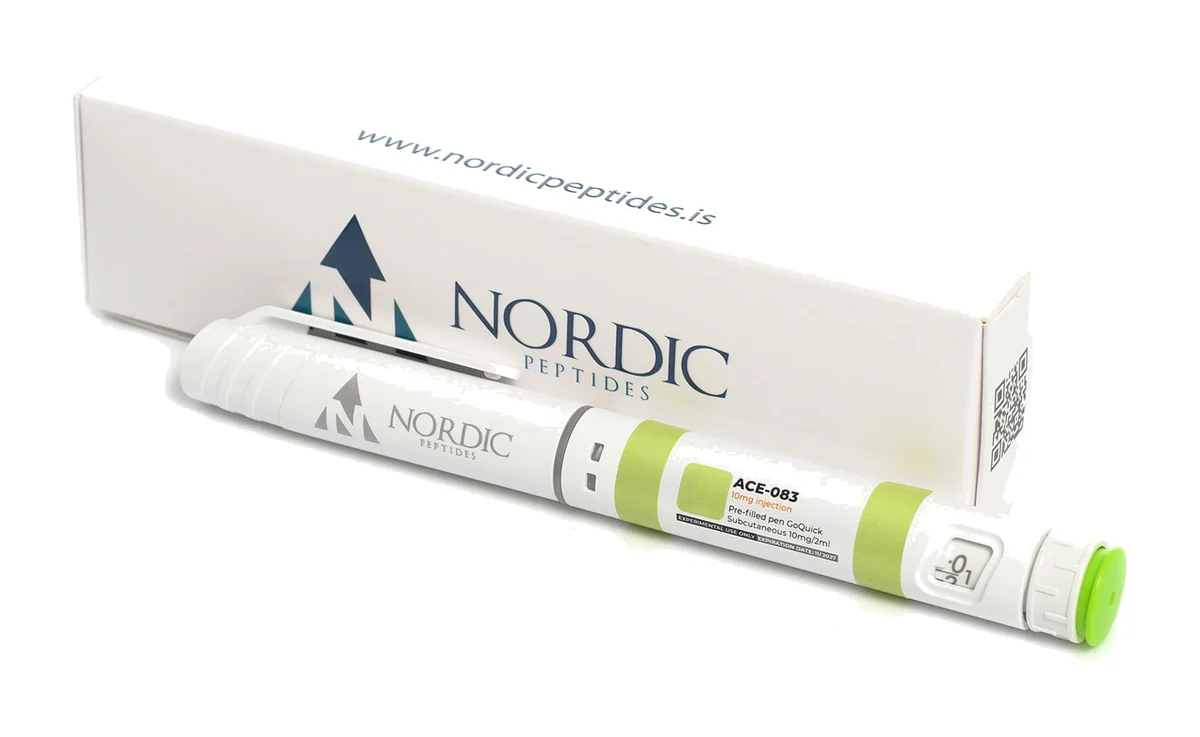
PT-141 (bremelanotide): the melanocortin that got an approval — for one indication only
Two phase 3 trials, an FDA-approved product and a published critique of its own endpoints. This is the rare compound where the human data exists, and where reading it carefully changes what you can claim.
1 September 2026 · 3 min read
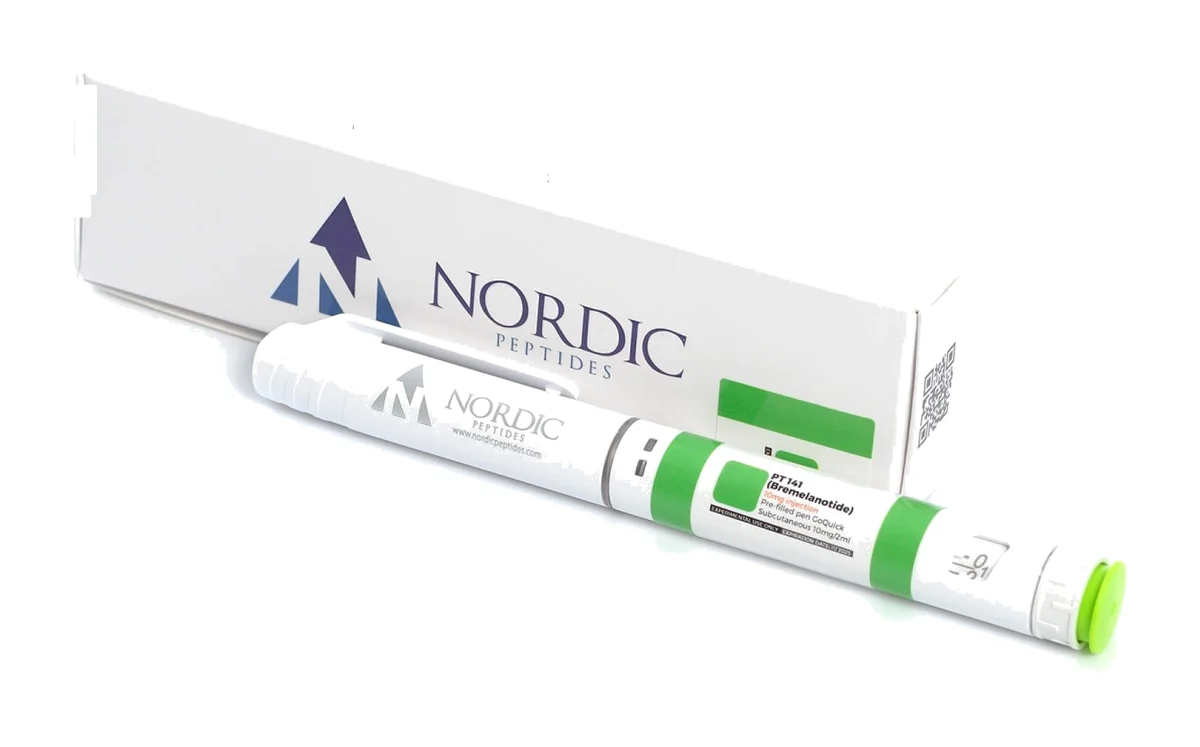 PT-141 (Bremelanotide) - 10mg
Most compounds on this catalog are supported by animal work and a hopeful extrapolation. PT-141 is not one of them. It went through two randomised phase 3 trials, it became an approved medicine, and its trial endpoints were then picked apart in a peer-reviewed critique. All three of those facts belong on the same page.
What the molecule is
PT-141 is a synthetic analogue of α-melanocyte-stimulating hormone and an agonist at melanocortin receptors, including MC3R and MC4R, which are expressed primarily in the central nervous system. That is the mechanistic point: it does not act on blood vessels the way a PDE5 inhibitor does. Molinoff et al. reported that systemic administration in rats activated hypothalamic neurons, in the same region reached by tracer virus injected into the penis.
Under the name bremelanotide it is marketed as Vyleesi.
What the approved label says
The label is narrow, and the narrowness is the information. Vyleesi is indicated for premenopausal women with acquired, generalised hypoactive sexual desire disorder (HSDD). It is a 1.75 mg subcutaneous autoinjector, taken at least 45 minutes before anticipated activity, with one dose per 24 hours and no more than eight doses per month.
It is contraindicated in uncontrolled hypertension or known cardiovascular disease. The label records transient blood-pressure increases of at most 6 mmHg systolic and 3 mmHg diastolic with heart rate falling up to 5 beats per minute, generally resolving within 12 hours, and focal hyperpigmentation in 1% of patients receiving up to eight monthly doses — with resolution not confirmed in every case.
And it states plainly that it is not indicated in postmenopausal women or in men.
The trial numbers
RECONNECT was two identically designed phase 3, randomised, double-blind, placebo-controlled trials. 1,267 women were randomised; 1,247 were in the safety population and 1,202 in the modified intent-to-treat population. Treatment ran 24 weeks. Mean age was 39; 85.6% of participants were white and 96.6% were at US sites.
Against placebo, the change from baseline in the Female Sexual Function Index desire domain was 0.30 in study 301 and 0.42 in study 302 (integrated 0.35, all P<.001). On the distress item, the change was −0.37 and −0.29 (P=.005), integrated −0.33.
Adverse reactions, from the label: nausea 40.0% versus 1.3% on placebo, flushing 20.3% versus 0.3%, injection-site reactions 13.2% versus 8.4%, headache 11.3% versus 1.9%, vomiting 4.8% versus 0.2%.
The published criticism
Spielmans and Ellefson examined the measurement properties of those endpoints and concluded that the instruments have, at best, questionable validity evidence in women with HSDD. They also noted that results for 8 of the 11 efficacy outcomes registered on clinicaltrials.gov had not been published, analysed them, and found effect sizes ranging from nil to small.
That does not undo the approval. It does mean the honest summary is: statistically significant, clinically modest, and measured on scales whose validity is contested. Anyone quoting “clinically proven” without that second clause is quoting half of the file.
The male data is older and thinner
The male work was intranasal and early-phase. Diamond et al. reported a statistically significant erectile response versus placebo above 7 mg, with first erection at roughly 30 minutes, flushing and nausea the most common adverse events, and no maximum tolerated dose identified. A later crossover study in 19 men found intranasal PT-141 plus 25 mg sildenafil produced a greater response than sildenafil alone.
Those are small, early studies of a different route. The approved product is subcutaneous and its label excludes men outright.
Two catalog notes
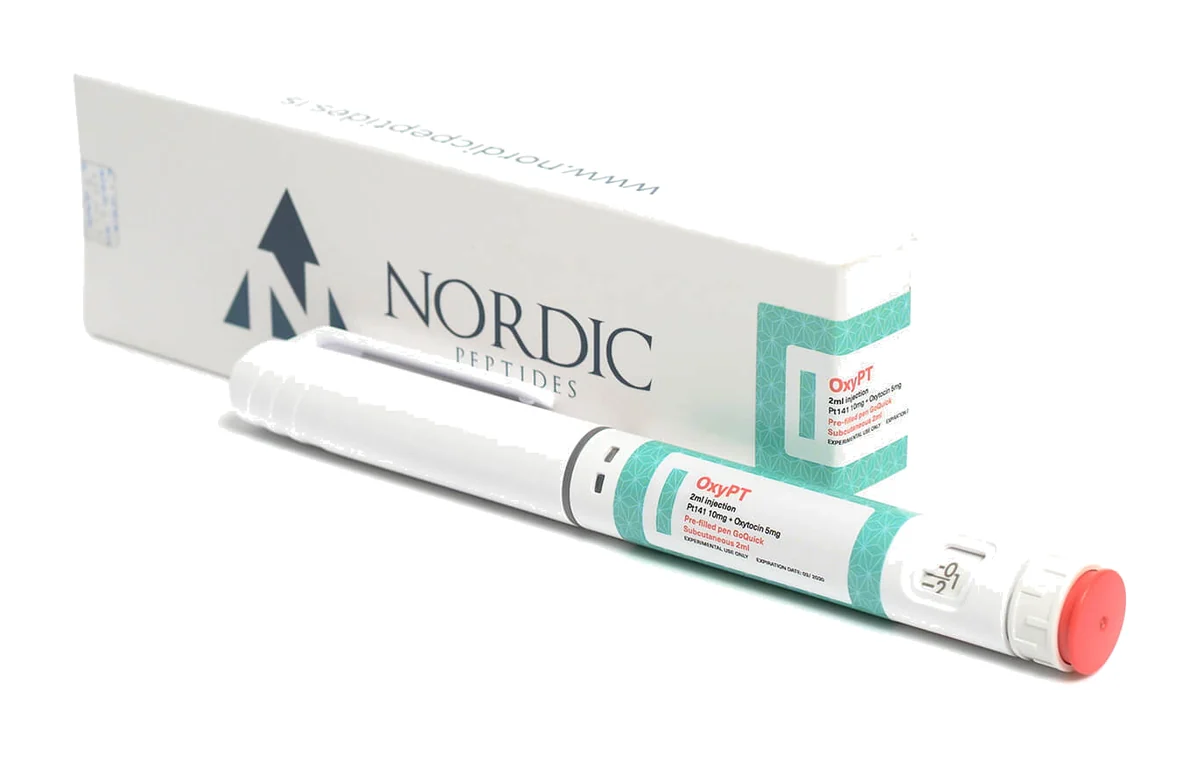
OxyPT pairs PT-141 with oxytocin. No trial of that combination exists — the phase 3 programme ran on bremelanotide alone. A two-component preparation cannot tell you which component did what, and here only one of the two has a controlled dataset behind it.
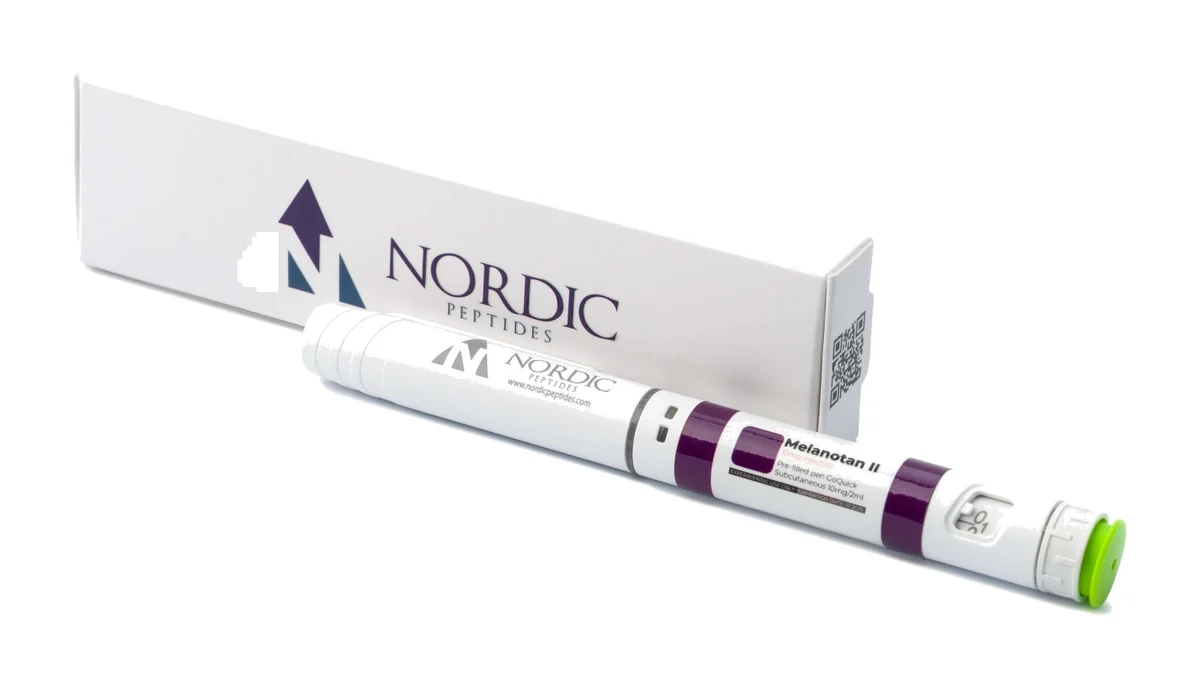
Melanotan 2 is the other melanocortin agonist on the shelf. It shares the receptor family and nothing else: no approval anywhere, no phase 3 programme, no label. The two should not be discussed interchangeably because they sit at the same receptors.
What we supply
PT-141 (bremelanotide) and the OxyPT preparation, Nordic Peptides pens, shipped as supplied by the manufacturer, batch documentation on request. Research use only — not for human or veterinary use, and nothing here is medical advice.
References.
- Kingsberg SA, Clayton AH, Portman D, et al. Bremelanotide for the Treatment of Hypoactive Sexual Desire Disorder: Two Randomized Phase 3 Trials. Obstet Gynecol 2019;134(5):899–908 (PMID 31599840).
- Spielmans GI, Ellefson EM. Small Effects, Questionable Outcomes: Bremelanotide for Hypoactive Sexual Desire Disorder. J Sex Res 2024;61(4):540–561 (PMID 36809187).
- Simon JA, Kingsberg SA, Portman D, et al. Prespecified and Integrated Subgroup Analyses from the RECONNECT Phase 3 Studies of Bremelanotide. J Womens Health 2022;31(3):391–400 (PMID 35230162).
- Molinoff PB, Shadiack AM, Earle D, et al. PT-141: a melanocortin agonist for the treatment of sexual dysfunction. Ann N Y Acad Sci 2003;994:96–102 (PMID 12851303).
- Diamond LE, Earle DC, Rosen RC, et al. Double-blind, placebo-controlled evaluation of intranasal PT-141 in healthy males and patients with mild-to-moderate erectile dysfunction. Int J Impot Res 2004;16(1):51–9 (PMID 14963471).
- VYLEESI (bremelanotide injection) — US prescribing information, DailyMed.