Ibutamoren (MK-677): the oral secretagogue with a two-year human trial
Most compounds in this catalog have no human data at all. This one has three randomised trials: a pulse study from 1996, an obesity study from 1998, and a two-year trial in 65 older adults that added fat-free mass without moving visceral fat. The numbers, exactly as published.
30 September 2026 · 3 min read
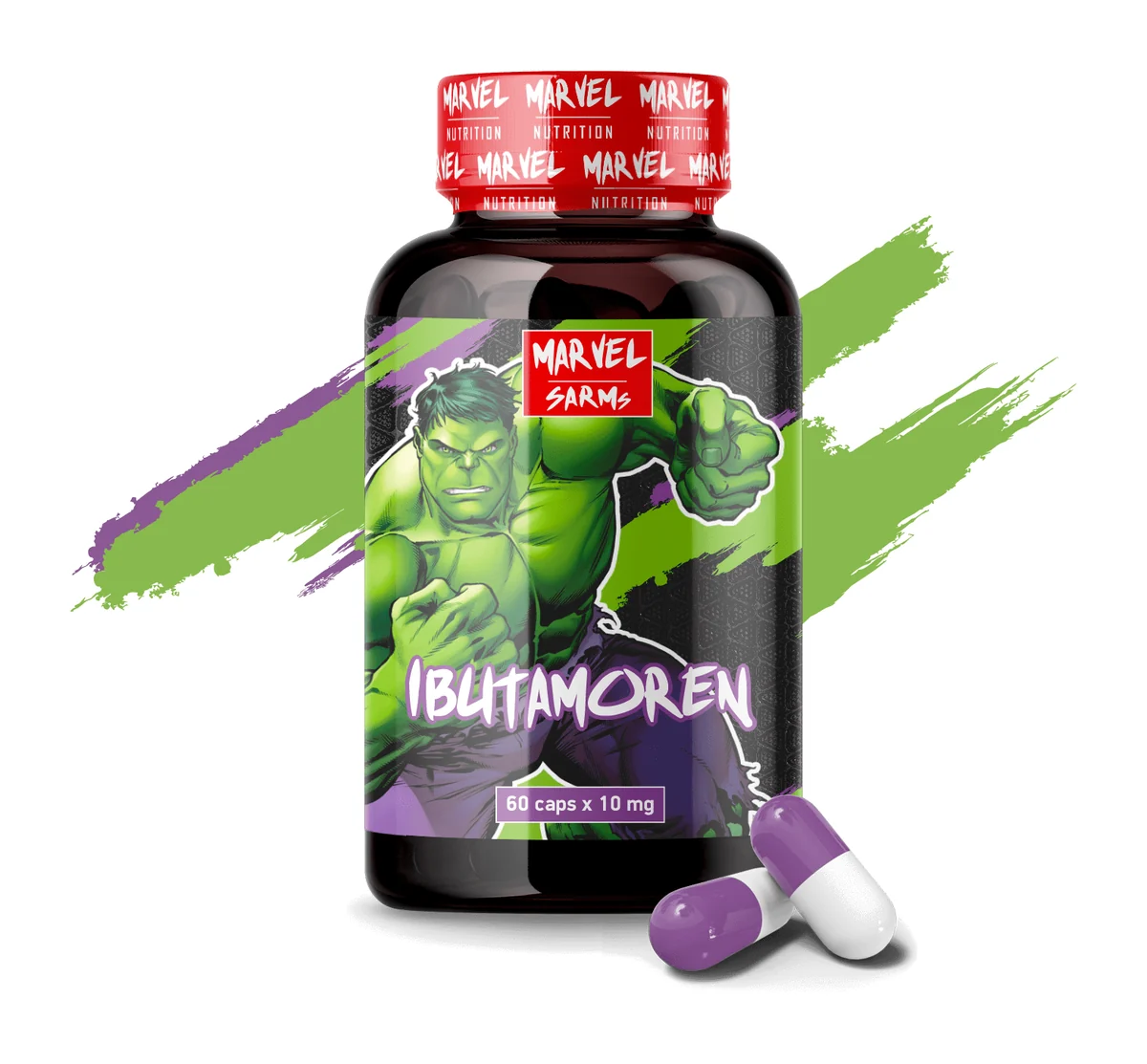 Ibutamoren
Growth hormone falls with age, and muscle follows it down. One response is to inject the hormone. Another is to coax the body into releasing more of its own, and the oral version of that idea has a name that has been in the literature for thirty years: MK-677, published as ibutamoren, a ghrelin mimetic taken by mouth. The preparation on this page is Ibutamoren. What follows is what three randomised trials actually recorded, because this is one of the few research compounds where such a record exists.
The 1996 pulse study: more hormone, same rhythm
Chapman and colleagues enrolled 32 healthy subjects, 15 women and 17 men aged 64 to 81, in a randomised, double-blind, placebo-controlled trial. Each received placebo or one of three ascending amounts of MK-677, taken orally once daily, over two study periods of 14 and 28 days. On day 14 of each period, blood was drawn every 20 minutes for a full 24 hours, and the pulses of growth hormone release were scored by three independent algorithms.
Two weeks of the highest tested amount raised mean 24-hour growth hormone concentration by 97 percent, plus or minus 23, against baseline. The increase came from taller pulses, not more of them: pulse height and the concentrations between pulses rose, while pulse number did not change. Insulin-like growth factor I rose in parallel. The finding matters for how researchers read everything that came later. The molecule does not invent a new rhythm. It amplifies the existing one.
The 1998 obesity study: fat-free mass moves, cortisol does not
Svensson and colleagues tested the compound where growth hormone secretion is already blunted: 24 otherwise healthy obese men, aged 18 to 50, body mass index above 30, randomised to one daily tablet or placebo for eight weeks. Serum IGF-I rose by approximately 40 percent against placebo. Growth hormone and prolactin rose after the first administration, and the increases were still present at weeks two and eight, though smaller than on day one.
Body composition moved in the direction the axis predicts: fat-free mass and energy expenditure increased. Serum and urinary cortisol, the stimulant nobody wants from this pathway, were not increased at weeks two and eight. Eight weeks in 24 men cannot carry much weight on its own. It reads better as a bridge between the pulse study and the trial that followed a decade later.
The two-year trial: 65 older adults, fat-free mass up, visceral fat still
Nass and colleagues ran the longest test this molecule has ever had: a two-year, double-blind, randomised, placebo-controlled, modified-crossover trial in 65 healthy adults aged 60 to 81, each taking one daily tablet or placebo. Fat-free mass and abdominal visceral fat were the primary endpoints at one year. Growth hormone and IGF-I rose into the range seen in healthy young adults, with no serious adverse effects recorded.
At 12 months, mean fat-free mass had fallen by 0.5 kg in the placebo group and risen by 1.1 kg in the treated group, a separation the authors put at P under 0.001. Body cell mass, tracked through intracellular water, moved the same way. Then the qualifications begin, and they are the most useful part of the paper. Abdominal visceral fat did not differ between groups. Total fat mass did not differ either. Limb fat rose more on treatment than on placebo, 1.1 kg against 0.24 kg, and body weight rose 2.7 kg against 0.8 kg. Fasting glucose crept up by 0.3 mmol/L on treatment while insulin sensitivity fell. Appetite rose and then subsided over a few months; mild transient ankle swelling and muscle pain were the most frequent complaints.
The authors closed with the sentence that frames the whole record: study power was insufficient to evaluate functional endpoints in healthy elderly persons. Fat-free mass is a scan result, not a staircase climbed.
What the data do not show
An approval, a performance trial in young healthy adults, or a single measured gain in strength, function, or quality of life across all three studies. The longest trial improved a body-composition readout while leaving visceral fat, total fat, and every functional question exactly where they were, and it logged a glucose and insulin sensitivity signal that cuts against casual reading. Nothing here describes a finished preparation, an amount, or a protocol, and the male obesity and elderly data do not transfer to any other population.
What we supply
Ibutamoren, as supplied by the manufacturer, tracked, from inside the EU. Batch documentation for every product that carries any is explained in the COA guide linked from the product page.
Research use only. Not for human or veterinary use, and nothing on this page is medical advice.
References.
- Chapman IM, et al. Stimulation of the growth hormone (GH)-insulin-like growth factor I axis by daily oral administration of a GH secretagogue (MK-677) in healthy elderly subjects. J Clin Endocrinol Metab 1996;81(12):4249-4257 (PMID 8954023).
- Svensson J, et al. Two-month treatment of obese subjects with the oral growth hormone (GH) secretagogue MK-677 increases GH secretion, fat-free mass, and energy expenditure. J Clin Endocrinol Metab 1998;83(2):362-369 (PMID 9467542).
- Nass R, et al. Effects of an oral ghrelin mimetic on body composition and clinical outcomes in healthy older adults: a randomized trial. Ann Intern Med 2008;149(9):601-611 (PMID 18981485).