Liver support pens: reading the label against the literature
Two multi-ingredient liver pens, opened up component by component. Silymarin has a Cochrane review that reads against it, NAC has a poisoning antidote trial that does not transfer, and the finished blends have no trial at all.
29 September 2026 · 5 min read
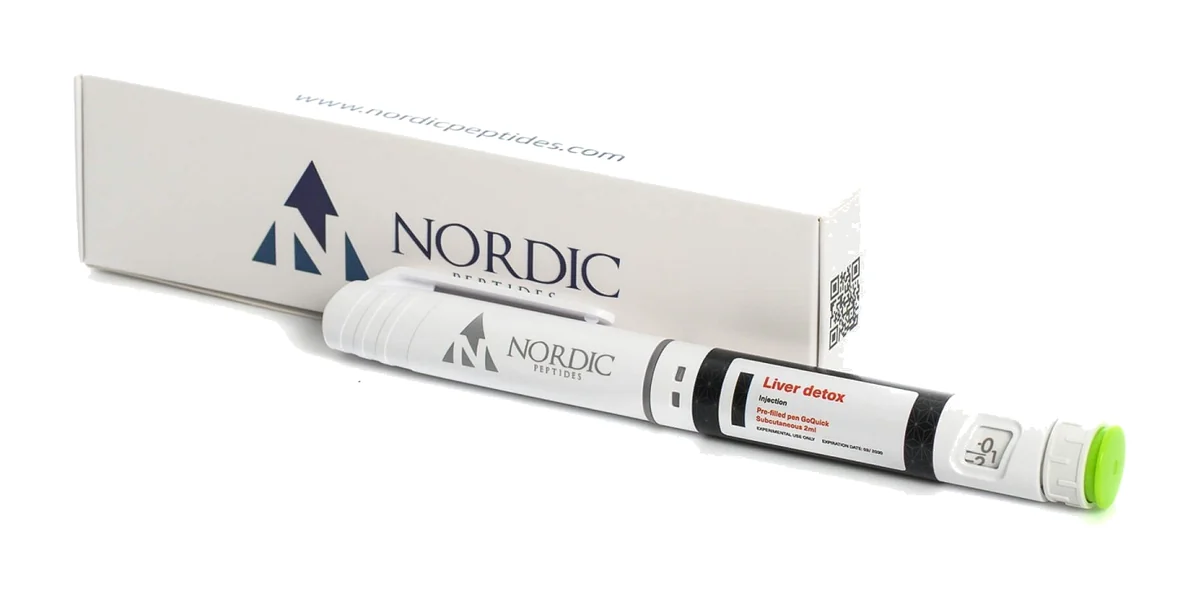 Liver Detox - 20mg/2ml
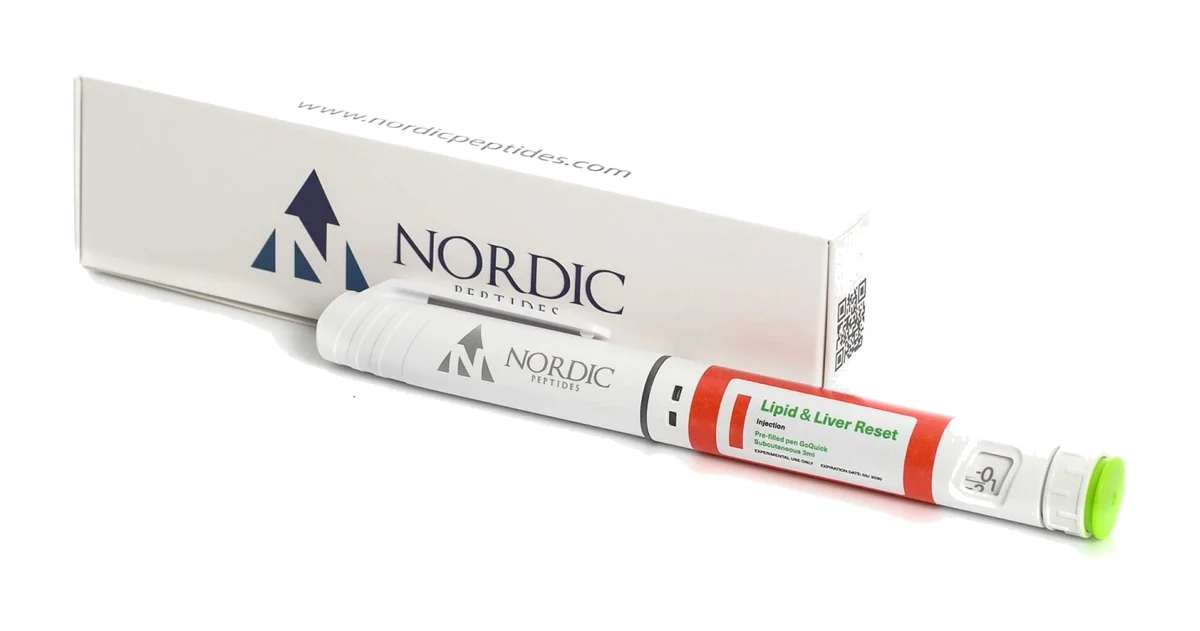
Two pens in the catalog make the broadest promises of anything we sell. Liver Detox lists detoxification, antioxidant defense, cellular protection and metabolic balance. Lipid and Liver Reset adds cholesterol handling, bile flow and a full metabolic reset. Between them they name eleven actives, and every one of them sounds like it belongs near a liver.
This page does what the label cannot do for itself: check each named ingredient against the trial record, and say plainly where the record stops.
What the two pens contain
The manufacturer prints both compositions in full, which is to their credit. Liver Detox is built on silymarin, NAC, glutathione, alpha-lipoic acid, L-carnitine, inositol, taurine and choline. Lipid and Liver Reset keeps most of that base, then adds berberine, resveratrol, coenzyme Q10 and artichoke. Their words, printed in full on the product pages.
Five of these have a human trial record worth describing. The rest do not, and that sentence is doing real work below.
Silymarin: the one with a Cochrane review, and it reads against it
Milk thistle extract is the flagship ingredient of both pens, and it is also the most studied: eighteen randomised trials in 1,088 patients with alcoholic liver disease or viral hepatitis, pooled by the Cochrane Hepato-Biliary Group in 2007.
The pooled result is not what the label implies. Against placebo or no intervention, milk thistle had no significant effect on mortality (relative risk 0.78, 95% confidence interval 0.53 to 1.15), no significant effect on complications of liver disease, and no effect on liver histology. A reduction in liver-related mortality appeared across all trials (relative risk 0.50), but it did not hold in the high-quality trials (relative risk 0.57, confidence interval 0.28 to 1.19), and only 28.6% of the included trials met the high-quality bar. The authors’ conclusion is blunt: their results question the beneficial effects of milk thistle for these patients and highlight the lack of high-quality evidence for it.
That is the entire evidence base for the lead ingredient of a liver pen, in one paragraph, with the numbers the reviewers printed.
NAC: a genuine antidote trial in a setting that does not transfer
N-acetylcysteine has one of the strongest trials of any molecule in this catalog. Between 1976 and 1985, a US multicenter study tracked 11,195 suspected acetaminophen overdoses and reported outcomes for 2,540 treated patients in the New England Journal of Medicine in 1988. When oral NAC started within 10 hours of ingestion, hepatotoxicity developed in 6.1% of at-risk patients; started 10 to 24 hours after, in 26.4%. Started within 8 hours it protected regardless of the initial paracetamol concentration. Eleven of the 2,540 patients died, and no death was clearly caused by acetaminophen when treatment began within 16 hours.
Read that again and notice the setting. This is an antidote given in hospital after a poisoning, measured against liver injury from one drug. It says nothing about what NAC does in a healthy liver, in a blend, over weeks. The trial is real, large and positive, and it belongs to a different question than the one on the label.
Glutathione: it does raise stores, then they fall back
Oral glutathione spent years under the assumption that digestion destroys it before it can matter. A 6-month randomised, double-blinded, placebo-controlled trial in 54 non-smoking adults, published in 2015, tested that directly at two intakes. At the higher intake, glutathione levels after 6 months were up 30 to 35% in erythrocytes, plasma and lymphocytes, and 260% in buccal cells. Natural killer cell cytotoxicity more than doubled at 3 months in the higher-intake group.
Two qualifiers come with the same paper. The increases were dose and time dependent, and levels returned to baseline after a 1-month washout, so whatever supplementation achieves, it does not persist after stopping. And the trial measured stores and immune markers in healthy adults, not liver outcomes. The antioxidant pens page covers this trial in more detail, alongside the resveratrol record, which is four negative trials and deserves no repetition here: the antioxidant pens, ingredient by ingredient.
Alpha-lipoic acid: a neuropathy trial, not a liver trial
The best alpha-lipoic acid trial is SYDNEY 2, published in Diabetes Care in 2006: oral treatment over 5 weeks in patients with diabetic polyneuropathy. Total symptom scores fell by 4.9 points (51%) at the low intake, 4.5 (48%) and 4.7 (52%) at the higher ones, against 2.9 points (32%) on placebo, all differences significant. Responder rates, defined as at least 50% symptom reduction, were 62, 50 and 56% against 26% on placebo. The authors judged the lowest intake, taken once daily, the best risk-to-benefit ratio, noting dose-dependent nausea, vomiting and vertigo above it.
It is a clean, positive, short trial. It is also a trial about nerve symptoms in diabetes. Nothing in it concerns the liver, and citing it for a liver pen would be borrowing credibility across indications. We cite it here so nobody else has to borrow it quietly.
Berberine: the lipid numbers exist, with the usual shape
Berberine appears only in Lipid and Liver Reset, and it brings the largest patient count on this page: a 2015 meta-analysis of 27 randomised trials in 2,569 patients with type 2 diabetes, hyperlipidemia or hypertension. Berberine with lifestyle intervention beat lifestyle alone, and berberine added to lipid-lowering drugs beat the drugs alone, lowering total and LDL cholesterol and raising HDL. Against lipid-lowering drugs head to head, there was no significant difference on total or LDL cholesterol, though berberine looked better on triglycerides.
That is a genuine lipid signal, not a liver signal. The trials measured blood lipids and glucose, not hepatic endpoints, and most came from one country, which the reviewers flagged. It supports the “lipid” half of the pen’s name more than the “liver” half.
The rest of the label
L-carnitine, taurine, inositol, choline, coenzyme Q10 and artichoke complete the two compositions. None of them has a published liver-outcome trial that the manufacturer cites, because the manufacturer cites no trials at all. Some are essential nutrients with deficiency literature, some are food extracts with small pilot studies in other indications. Listing them is honest labelling. Treating them as evidence would not be honest writing, so this page does not.
What the data do not show
No trial has tested either finished pen. None of the five trials above studied a blend, none studied healthy users taking a liver complex over time, and the two strongest results on this page belong to other indications entirely: poisoning antidote, diabetic nerve symptoms. The silymarin review, the ingredient with the most direct liver literature, concludes against its own case. These are research materials with published parts and an unpublished whole, and the whole is what is in the pen.
What we supply
Liver Detox and Lipid and Liver Reset, Nordic Peptides factory-filled pens, shipped as supplied by the manufacturer, tracked, from inside the EU. Batch documentation for every product that carries any is explained in how to read a COA.
Research use only. Not for human or veterinary use, and nothing on this page is medical advice.
References.
- Rambaldi A, Jacobs BP, Gluud C. Milk thistle for alcoholic and/or hepatitis B or C virus liver diseases. Cochrane Database Syst Rev 2007;(4):CD003620 (PMID 17943794).
- Smilkstein MJ, Knapp GL, Kulig KW, Rumack BH. Efficacy of oral N-acetylcysteine in the treatment of acetaminophen overdose. Analysis of the national multicenter study (1976 to 1985). N Engl J Med 1988;319(24):1557–1562 (PMID 3059186).
- Richie JP Jr, Nichenametla S, Neidig W, et al. Randomized controlled trial of oral glutathione supplementation on body stores of glutathione. Eur J Nutr 2015;54(2):251–263 (PMID 24791752).
- Ziegler D, Ametov A, Barinov A, et al. Oral treatment with alpha-lipoic acid improves symptomatic diabetic polyneuropathy: the SYDNEY 2 trial. Diabetes Care 2006;29(11):2365–2370 (PMID 17065669).
- Lan J, Zhao Y, Dong F, et al. Meta-analysis of the effect and safety of berberine in the treatment of type 2 diabetes mellitus, hyperlipemia and hypertension. J Ethnopharmacol 2015;161:69–81 (PMID 25498346).