HGH vs peptides: somatropin and the secretagogues, compared on the evidence
One is the hormone itself, approved since the 1980s for defined deficiency states. The others ask the pituitary to release more of it — and have one small trial, one PK study, or a single approval between them. The comparison searchers want has never actually been run.
28 September 2026 · 3 min read
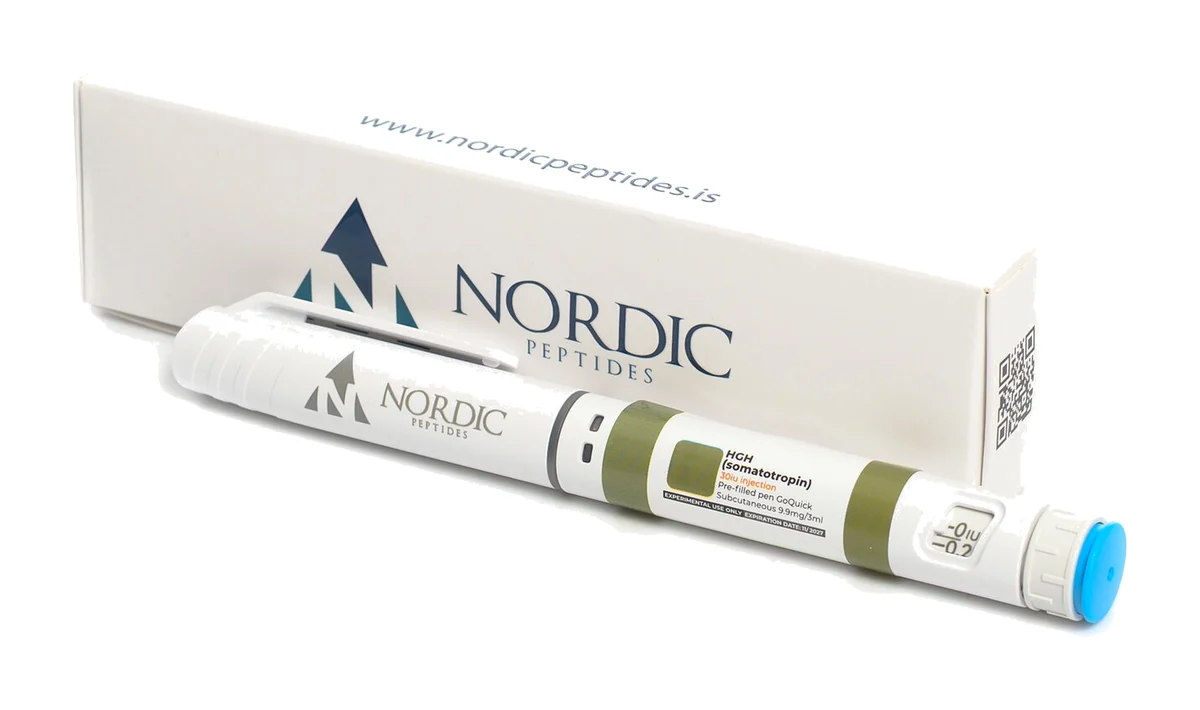 HGH Somatropin (Human Growth Hormone) - 30 IU (9.9mg)
“HGH vs ipamorelin” and “HGH vs CJC-1295” are among the highest-intent searches in this catalog’s space. They sound like a product comparison. Underneath, they are a physiology question: what is the difference between supplying growth hormone and stimulating its release — and what does each side actually have behind it?
Supply vs stimulation
Somatropin is recombinant human growth hormone: a 191-amino-acid protein identical in sequence to the endogenous hormone, manufactured since the mid-1980s (Genentech’s Protropin, 1985, was the first). It does not ask the pituitary for anything. It arrives as the finished signal, binds GH receptors directly, and drives IGF-1 production downstream.
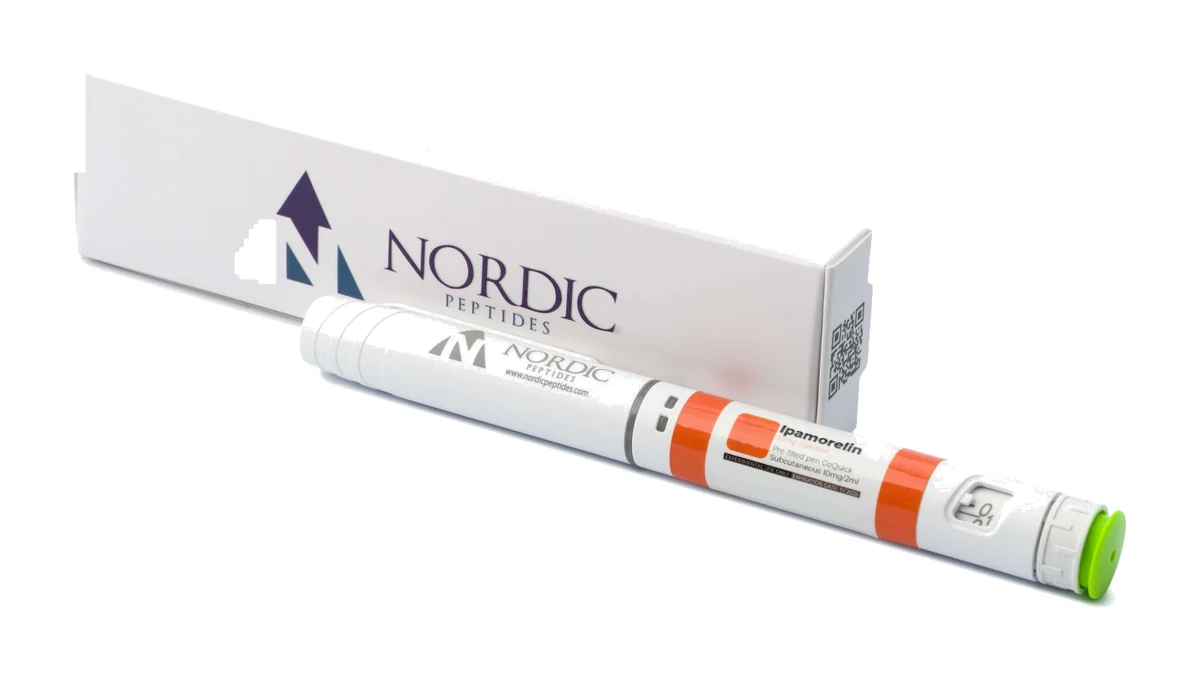
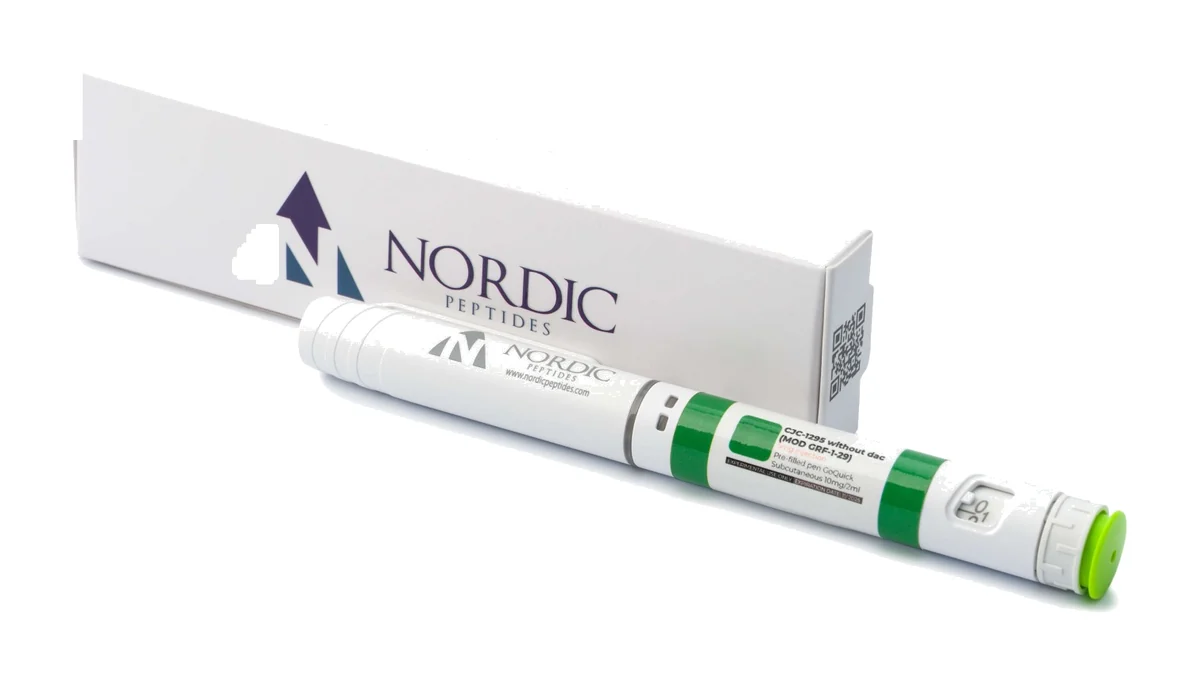
The secretagogues work one station upstream. CJC-1295 mimics growth hormone-releasing hormone at the pituitary GHRH receptor; ipamorelin acts through the ghrelin receptor, the second independent input to GH release. Both need a functioning pituitary to do anything at all. Somatropin does not.
That distinction has one consequence that matters more than any trial result: feedback. When circulating GH and IGF-1 rise, the hypothalamus and pituitary answer by releasing less of their own — somatostatin up, GHRH down, endogenous pulsatility suppressed. Exogenous supply shuts the body’s own production down while it is present; stimulation works through the loop instead of overriding it. Whether that is an advantage or a limitation depends on the question being studied, but it is the reason the two approaches are not interchangeable versions of “more GH”.
What somatropin has behind it
Somatropin is an approved medicine with a forty-year regulatory dossier. Its label covers defined replacement indications — growth failure from inadequate GH secretion in children, Turner syndrome, Prader-Willi syndrome, small-for-gestational-age, idiopathic short stature, and adult GH deficiency — each one tied to trials in that population. Everything outside those indications is, from the regulator’s point of view, unstudied territory: the dossier says what somatropin did in deficient patients, not what it does in anyone else.
That is the level of evidence nothing else on this page has. It is also the ceiling of what the label claims.
What the secretagogues have behind them
Far less, and worth stating precisely since the internet routinely inflates it.
CJC-1295 has exactly one human trial: Teichman et al., JCEM 2006 — two randomised, placebo-controlled, double-blind ascending-dose studies (28 and 49 days) in healthy adults aged 21–61. A single subcutaneous dose raised GH 2–10× for 6+ days and IGF-1 1.5–3× for 9–11 days, with a half-life of 5.8–8.1 days; repeat dosing kept IGF-1 above baseline for up to 28 days. The authors’ own conclusion was “potential utility”. The compound never went to phase 2 or 3.
Ipamorelin has even less: a single pharmacokinetic-pharmacodynamic modelling study in human volunteers (Gobburu et al., Pharm Res 1999), with an elimination half-life around 2 hours. The selectivity work describing it as the first selective GH secretagogue — GH release without the ACTH/cortisol rise of older peptides — is Raun et al. 1998. No efficacy trial in any indication exists.
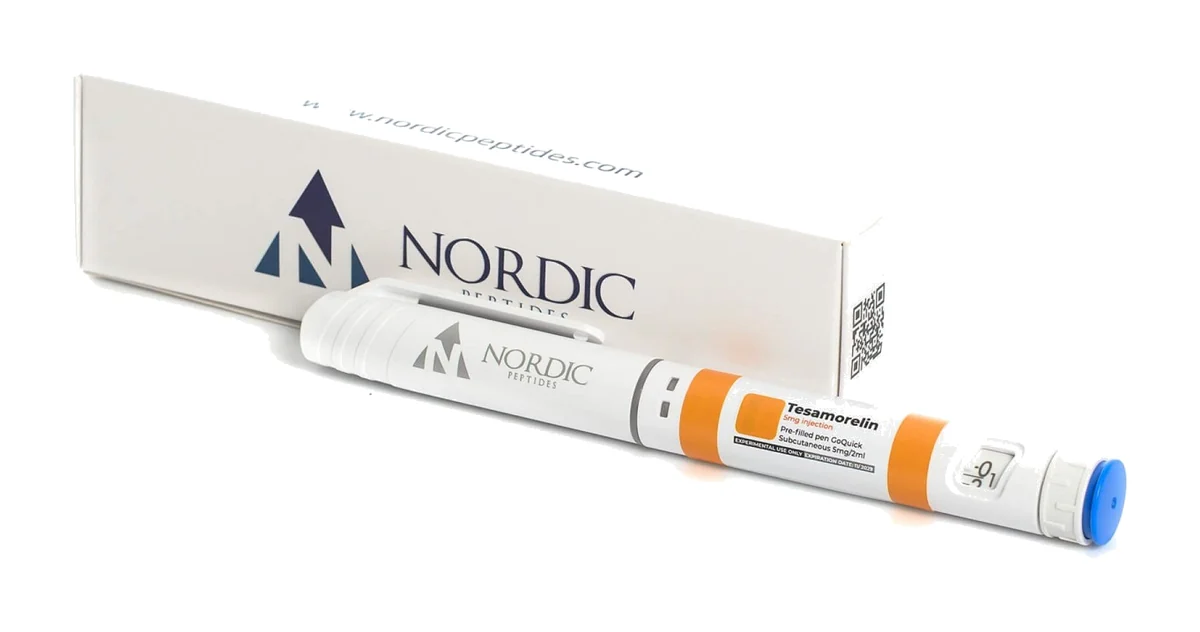
Tesamorelin is the outlier and the benchmark: a GHRH analogue with two phase 3 trials (Falutz et al., NEJM 2007: 412 adults, 26 weeks, visceral fat down 15.2% on drug vs up ~5% on placebo) and an FDA approval since 2010 — for one narrow indication, HIV-associated lipodystrophy. It is the only secretagogue with a regulatory dossier, which is why it is the reference compound for the class rather than a competitor to anything here. The full story is in the tesamorelin article.
A footnote the history deserves: sermorelin, a 29-amino-acid GHRH fragment, was approved in the 1990s as Geref and later discontinued by its manufacturer — it holds no current label. Even approved secretagogues can exit the market; CJC-1295 and ipamorelin never entered it.
What the data do not show
The central gap: no head-to-head trial of somatropin against any secretagogue for any shared endpoint has ever been run. Every “HGH vs peptides” comparison online is assembled from separate studies in separate populations with separate endpoints — deficient children on one side, healthy volunteers over weeks on the other. That assembly can illustrate mechanisms. It cannot rank outcomes, and anything presented as a verdict is extrapolation, not evidence.
Related articles for the pieces: CJC-1295 and ipamorelin untangled, the ipamorelin/CJC-1295 pairing, and the GHRP comparison.
What we supply
Somatropin, ipamorelin, CJC-1295 (no DAC) and tesamorelin from Nordic Peptides, shipped as supplied by the manufacturer, batch documentation on request. Research use only. Nothing here is a recommendation to use any of them in people; the approved products exist, are prescribed for their labelled indications, and that route is a physician’s, not ours.
References.
- GENOTROPIN (somatropin) — FDA-approved prescribing information, Pfizer (current DailyMed label).
- Teichman SL, Neale A, Lawrence B, et al. Prolonged stimulation of growth hormone (GH) and insulin-like growth factor I secretion by CJC-1295, a long-acting analog of GH-releasing hormone, in healthy adults. J Clin Endocrinol Metab 2006;91(3):799–805.
- Gobburu JV, Agersø H, Jusko WJ, Ynddal L. Pharmacokinetic-pharmacodynamic modeling of ipamorelin, a growth hormone releasing peptide, in human volunteers. Pharm Res 1999;16(9):1412–1416.
- Falutz J, Allas S, Blot K, et al. Metabolic Effects of a Growth Hormone–Releasing Factor in Patients with HIV. N Engl J Med 2007;357(23):2359–2370.