GHRP-2, GHRP-6 or ipamorelin: three ghrelin-receptor peptides, three different side profiles
All three hit the same receptor and all three release growth hormone. What separates them is everything else they do on the way — appetite, cortisol, prolactin.
23 August 2026 · 3 min read
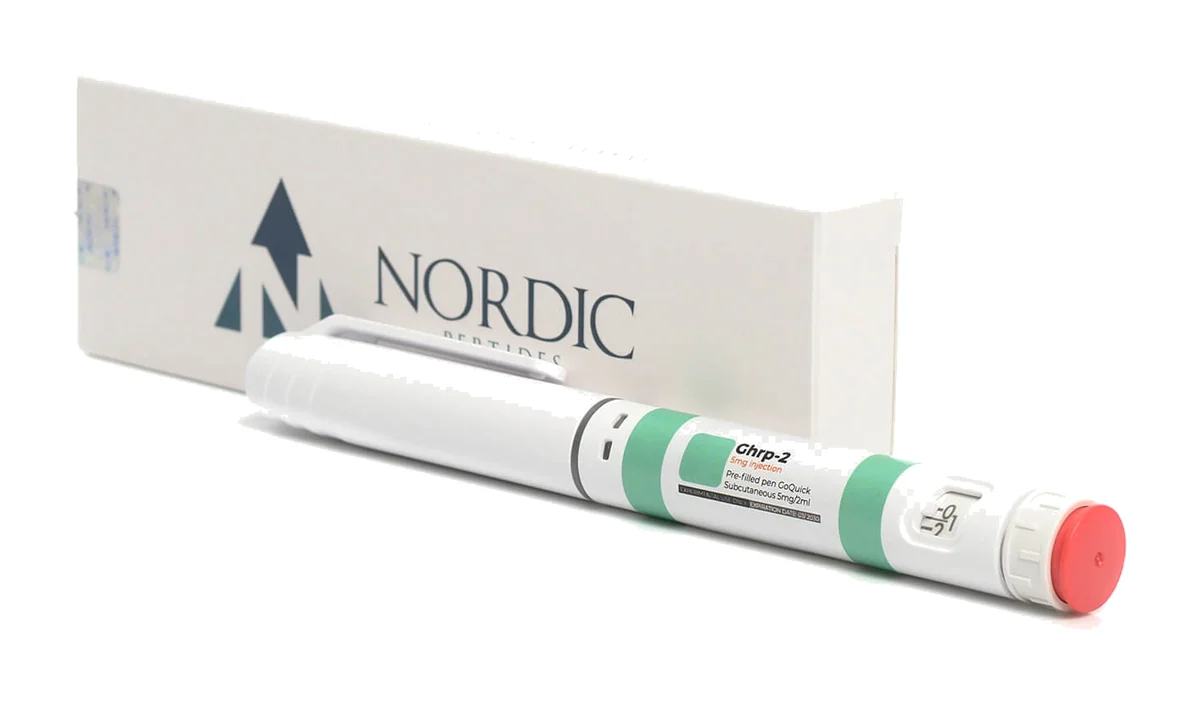 GHRP 2 - 5mg/2ml
These three are usually presented as interchangeable — “GH peptides”, pick one. They are not interchangeable, and choosing badly means your experiment measures something other than what you intended.
All three are agonists at the growth hormone secretagogue receptor (GHS-R1a), the ghrelin receptor, and all three came out of the line of work Cyril Bowers began in the 1980s. The receptor is the same. The selectivity is not.
The one that also makes you hungry
Ghrelin is not only a GH signal — it is the hunger hormone. Anything that agonises its receptor inherits some of that, and the amount inherited is the main axis of difference here.
The clearest human demonstration is a 2005 study in the Journal of Clinical Endocrinology & Metabolism (Laferrère, with Bowers as senior author): healthy men infused with GHRP-2 ate 35.9% more at a subsequent meal than the same men on saline. A follow-up in Obesity found the effect held in people with obesity too.
That is GHRP-2 — the more potent GH releaser of the two GHRPs, and the one usually described as having milder ghrelin-mimetic effects. GHRP-6 is the stronger appetite stimulus of the pair.
So the appetite effect is not a footnote in this class; in a human trial it moved food intake by more than a third.
The one built to avoid all that
Ipamorelin was designed against exactly this problem. In the 1998 paper that introduced it, it was characterised as the first selective GH secretagogue: it released growth hormone without raising ACTH or cortisol beyond what GHRH stimulation itself produced.
That selectivity is the entire reason the molecule exists. If a protocol needs GH release without confounding by cortisol, prolactin or food intake, that is the one compound in this group designed for the job.
Choosing, in one table
| GH release | Appetite | Cortisol / prolactin | Typical research use | |
|---|---|---|---|---|
| GHRP-2 | Highest peak of the three | Marked (+35.9% food intake in healthy men) | Modest | Maximum GH output where appetite is not a confounder |
| GHRP-6 | High | Strongest of the three | Higher than GHRP-2 | Appetite and ghrelin-signalling models |
| Ipamorelin | Pulsatile, selective | Minimal | Not raised above GHRH stimulation | GH-axis work needing a clean readout |
The rule of thumb that follows: if hunger is your endpoint, GHRP-6 is a feature. If hunger is not your endpoint, it is a confounder, and ipamorelin is the cleaner tool.
What about stacking with a GHRH analogue?
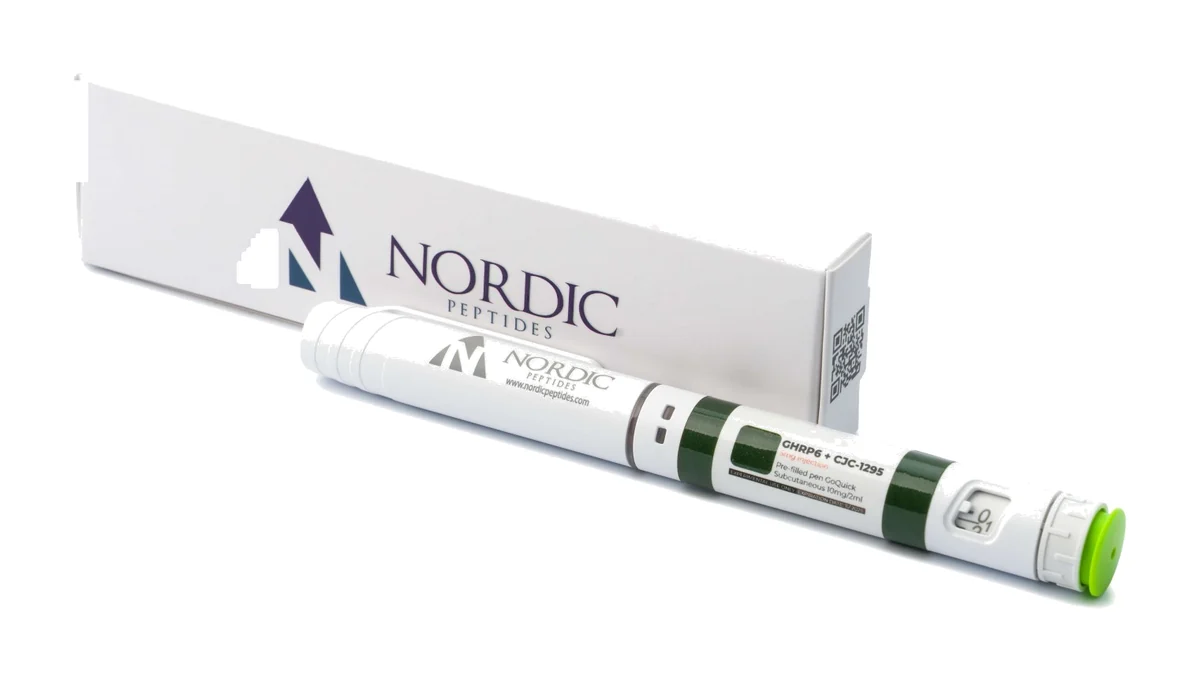
Pairing a ghrelin-receptor agonist with a GHRH analogue pulls the same output through two independent inputs, which is why the blends exist — we list GHRP-6 + CJC-1295 and ipamorelin + CJC-1295. That piece also covers the DAC / no-DAC confusion, which is the single most common error in this category and worth reading before buying anything labelled CJC-1295.
The usual blend caveat applies: a combined pen cannot tell you which component produced which effect.
Evidence, honestly
None of these three is an approved medicine. The human data is early-phase pharmacology — GH and IGF-1 responses, food intake, hormone selectivity — not outcome trials. Tesamorelin remains the only compound on the GH axis in this catalog that reached phase 3 and an approval, and it works through the GHRH receptor rather than this one.
What we supply
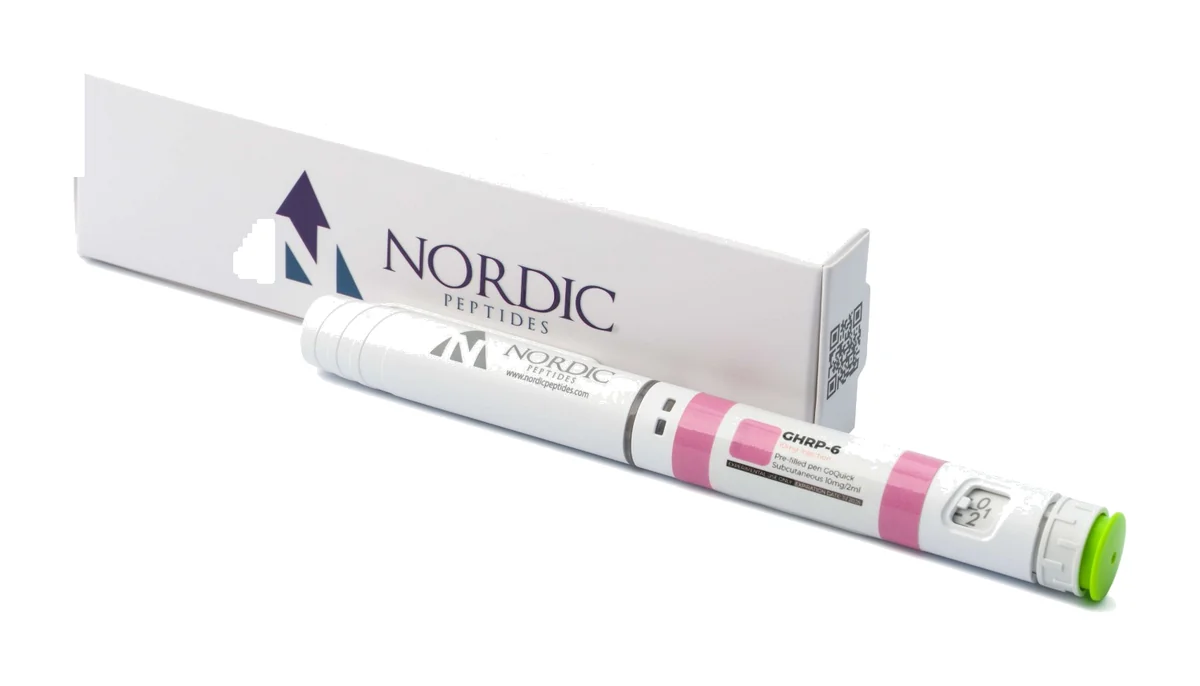
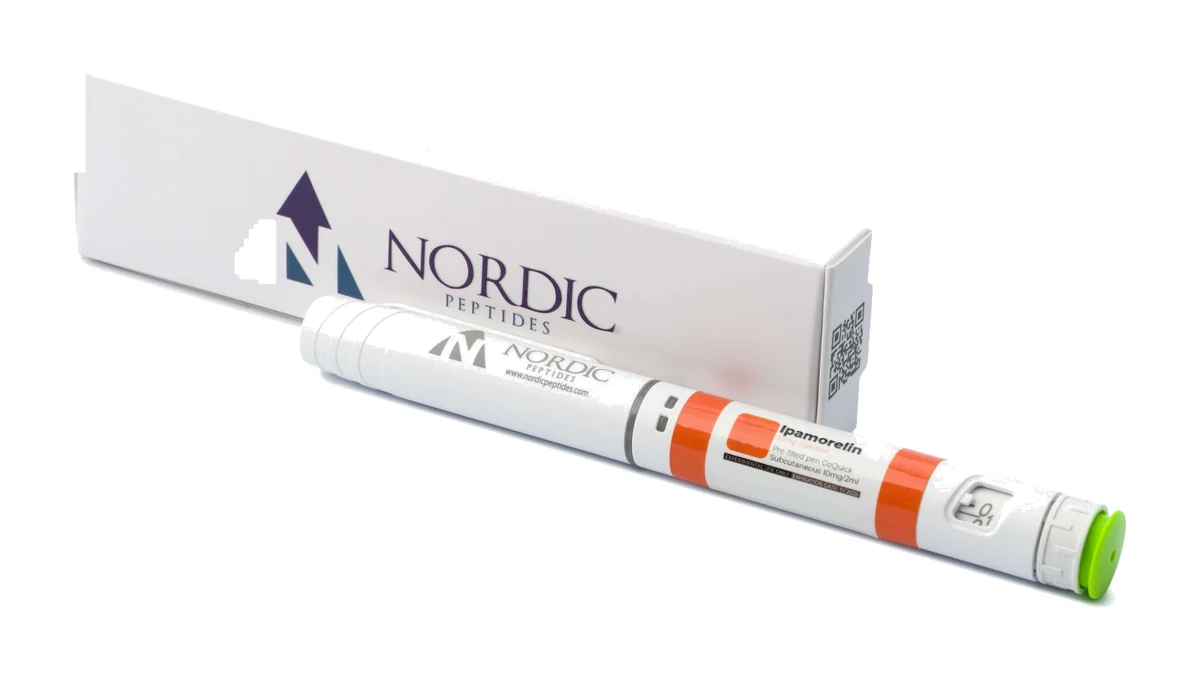
GHRP-2 5 mg/2 ml, GHRP-6 10 mg, ipamorelin 10 mg and the GHRP-6 + CJC-1295 blend — Nordic Peptides pens, shipped as supplied by the manufacturer, batch documentation on request. Research use only, not for human or veterinary use.
References.
- Laferrère B, Abraham C, Russell CD, Bowers CY. Growth hormone releasing peptide-2 (GHRP-2), like ghrelin, increases food intake in healthy men. J Clin Endocrinol Metab 2005;90(2):611–614.
- Raun K, Hansen BS, Johansen NL, et al. Ipamorelin, the first selective growth hormone secretagogue. Eur J Endocrinol 1998;139(5):552–561.
- Laferrère B, et al. Obese subjects respond to the stimulatory effect of the ghrelin agonist growth hormone-releasing peptide-2 on food intake. Obesity 2006.