Melanotan 2: three small trials, no approval — and the relative that got one
The entire human literature on Melanotan 2 is three trials in 23 men, run by one Arizona group in the 1990s. Nothing followed for tanning. Its chemical relative bremelanotide became an approved medicine — for one narrow indication that has nothing to do with tanning.
28 September 2026 · 3 min read
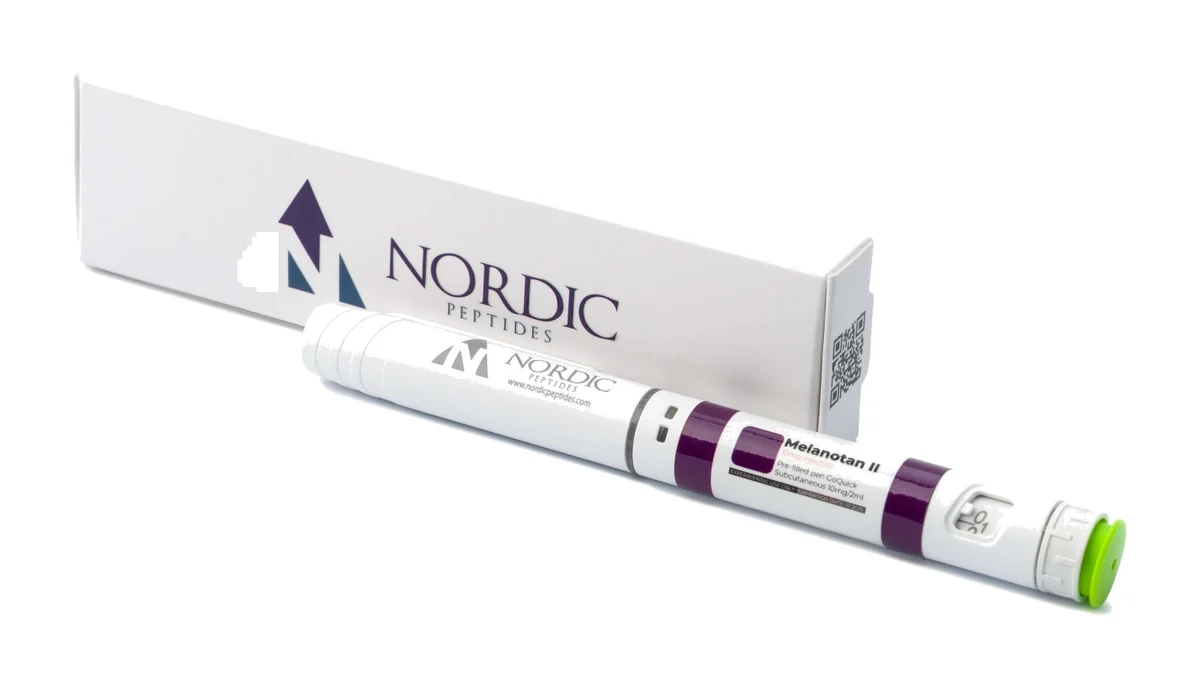 Melanotan 2 - 10mg
“Melanotan 2” is one of the highest-volume searches in this catalog’s space, and almost everything ranking for it is a sales page. The actual human literature fits in one paragraph: three small trials, 23 men in total, all run by one University of Arizona group in the 1990s. This article is that paragraph, expanded only as far as the sources allow.
What the molecule is
Melanotan 2 (MT-II) is a cyclic heptapeptide analogue of α-melanocyte-stimulating hormone, developed in Arizona by the Hadley–Hruby–Dorr–Levine group and described as superpotent at melanocortin receptors in vitro. The receptor family is the same one bremelanotide acts on — which is why the two compounds are constantly discussed together, and why that discussion needs precision. Shared receptors did not give them shared fates.
The three trials
Pilot phase I (Dorr et al., Life Sci 1996). Three healthy male volunteers, single-blind, alternating-day saline or MT-II, subcutaneous injections daily Monday–Friday for two consecutive weeks, starting at 0.01 mg/kg and escalating to 0.025–0.03 mg/kg. Two subjects showed increased pigmentation of face, upper body and buttock one week after dosing ended, measured by quantitative reflectance — tanning activity from only five low doses given every other day. The same trial recorded the side-effect profile that would follow the compound ever since: mild nausea at most dose levels, Grade II somnolence and fatigue at 0.03 mg/kg in one of two subjects, and a stretching-and-yawning complex that correlated with the onset of spontaneous penile erections lasting 1–5 hours after dosing.
Psychogenic erectile dysfunction (Wessells et al., J Urol 1998). Ten men with erectile dysfunction of no known organic cause, double-blind placebo-controlled crossover with real-time RigiScan monitoring over six hours. Clinically apparent erections developed in 8 of 10 men on MT-II; mean duration of tip rigidity above 80% was 38.0 minutes on drug against 3.0 on placebo (p=0.0045), at 0.025 mg/kg. Nausea, stretching and yawning, and decreased appetite were more frequent on drug; none required treatment.
Organic erectile dysfunction (Wessells et al., Urology 2000). Ten men with organic risk factors, same crossover design, 0.025 mg/kg twice by subcutaneous injection. Subjectively reported erections in 12 of 19 MT-II injections versus 1 of 21 on placebo; mean duration of tip rigidity above 80% was 45.3 minutes against 1.9 (P=0.047); sexual desire scores were significantly higher on drug. Nausea and stretching/yawning again; 4 of 19 injections were associated with severe nausea.
That is the complete human dataset. Hadley and Dorr’s own 2006 milestones review (Peptides 27:921–930) places these studies in the development history — and no phase 2 or phase 3 programme for tanning ever followed.
The relative that got an approval
Bremelanotide, developed from the same melanocortin chemistry, went where Melanotan 2 never did: through two randomised phase 3 trials to an FDA approval in 2019 — for one indication, hypoactive sexual desire disorder in premenopausal women, marketed as Vyleesi. The approval is narrow, the effect size modest, and the endpoints contested in the literature. The full evidence, including the published critique, is in the bremelanotide article.
The second contrast is afamelanotide (Scenesse): a linear α-MSH analogue — the melanotan-I line, not the melanotan-II line — approved for erythropoietic protoporphyria, with a long-term observational cohort of 115 patients followed up to 8 years (Biolcati et al., Br J Dermatol 2015). Two melanocortin approvals exist, each for one defined disease, each with its own dossier. Neither dossier belongs to Melanotan 2, and neither transfers to it.
What the data do not show
Almost everything the search results claim. No tanning dose-response trial was ever run — pigmentation was a secondary observation in three men. No trial enrolled women. No long-term safety data exists; the longest human exposure in the literature is two weeks. The unregulated vials and nasal sprays sold under the name were never the trial material, were never tested against it, and the literature says nothing about their content. And no head-to-head comparison of Melanotan 2 against bremelanotide, afamelanotide, or sunlight itself has ever been conducted. Anyone ranking them is extrapolating, not reporting.
What we supply
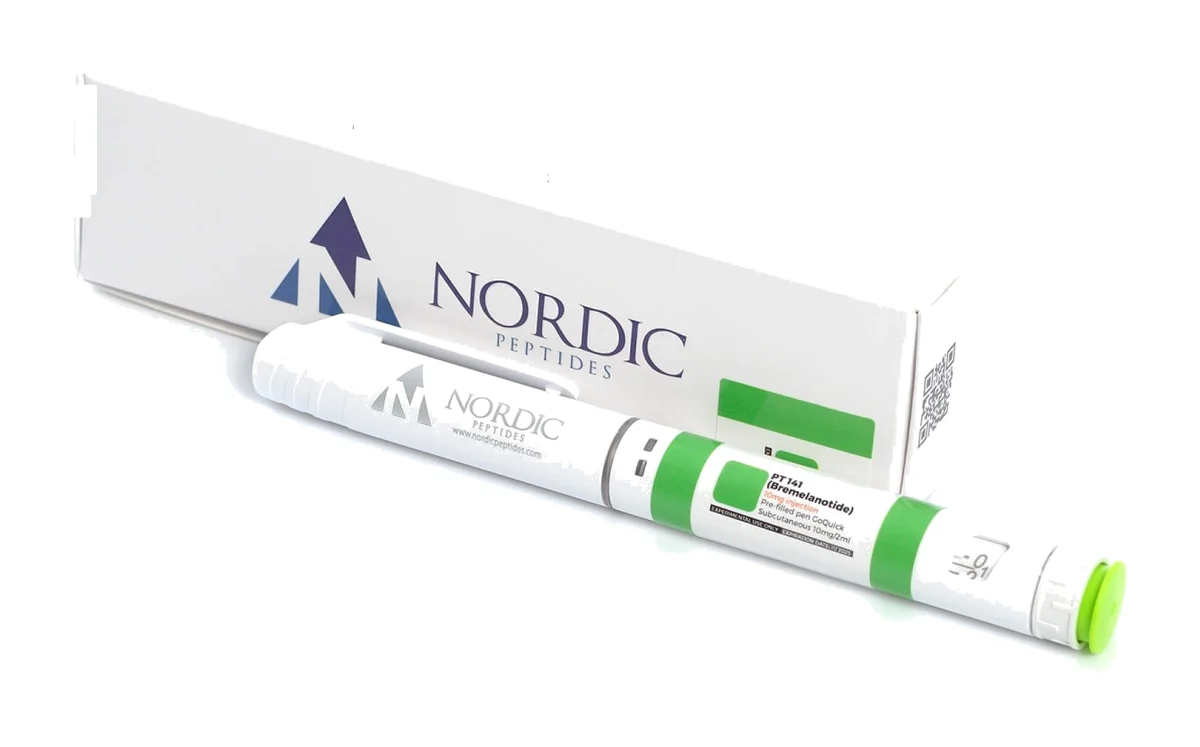
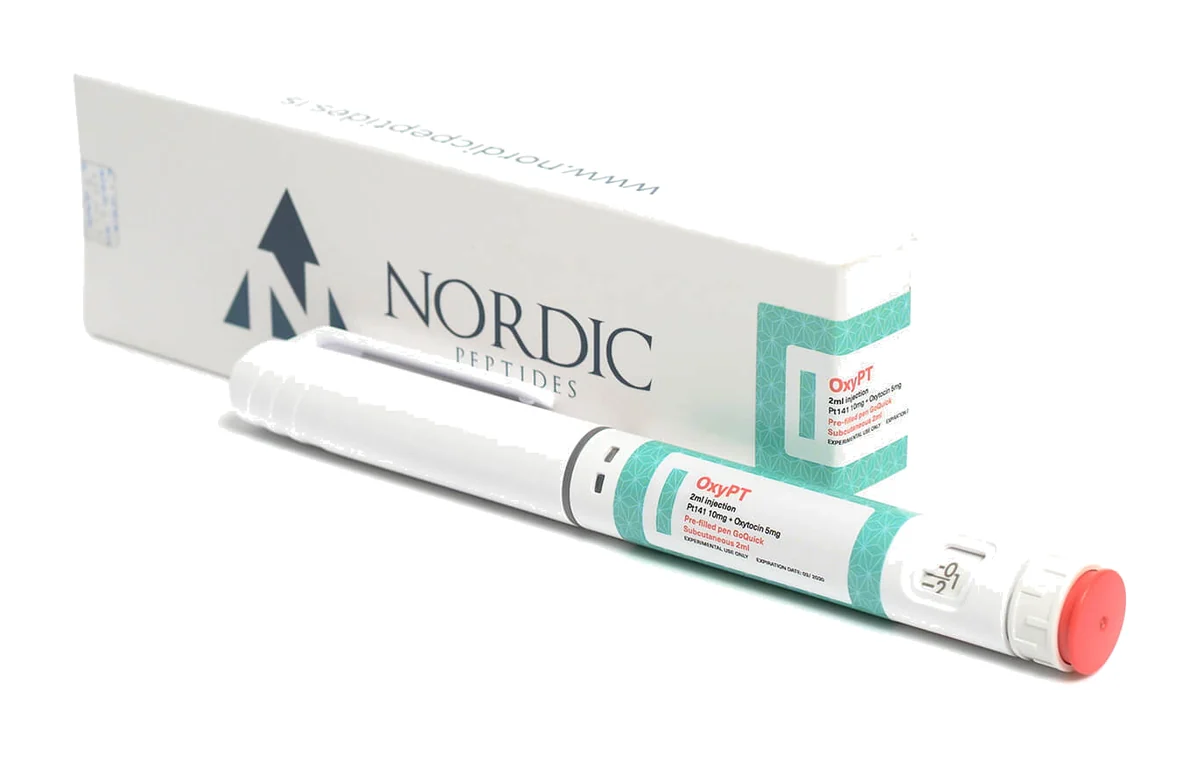
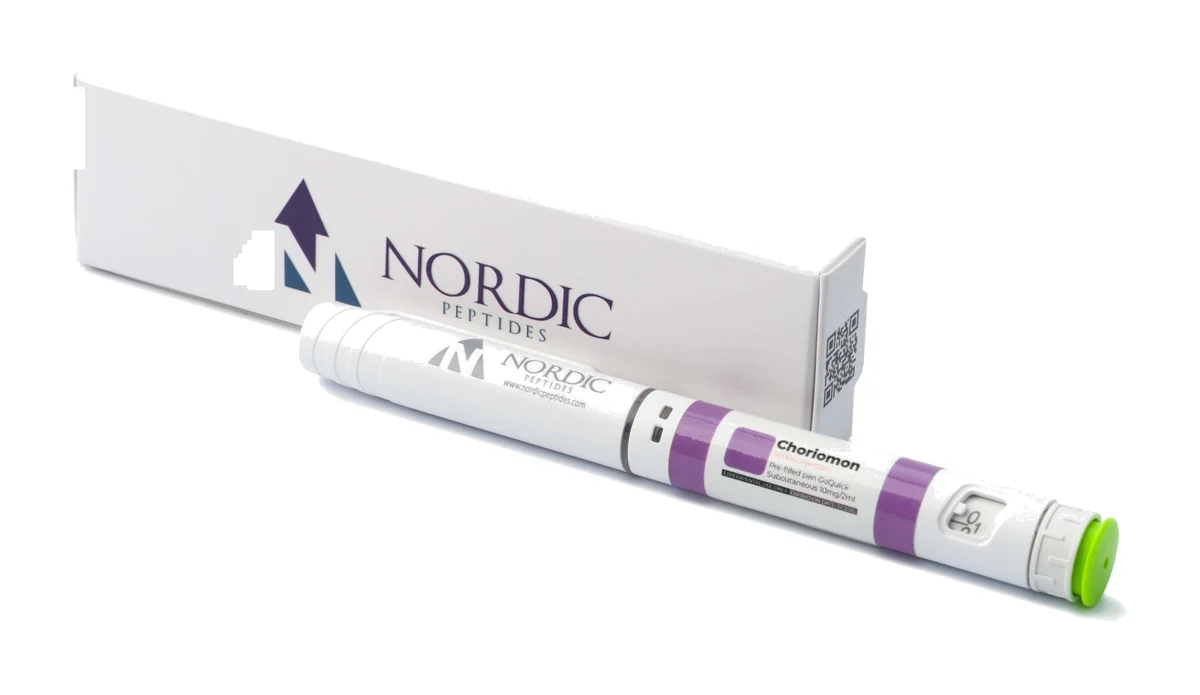
Melanotan 2, bremelanotide and OxPT from Nordic Peptides, shipped as supplied by the manufacturer, batch documentation on request. Research use only. Nothing here is a recommendation to use any of them in people; the approved products exist for their labelled indications, and that route is a physician’s, not ours.
References.
- Dorr RT, Lines R, Levine N, et al. Evaluation of melanotan-II, a superpotent cyclic melanotropic peptide in a pilot phase-I clinical study. Life Sci 1996;58(20):1777–1784.
- Wessells H, Fuciarelli K, Hansen J, et al. Synthetic melanotropic peptide initiates erections in men with psychogenic erectile dysfunction: double-blind, placebo controlled crossover study. J Urol 1998;160(2):389–393.
- Wessells H, Gralnek D, Dorr R, et al. Effect of an alpha-melanocyte stimulating hormone analog on penile erection and sexual desire in men with organic erectile dysfunction. Urology 2000;56(4):641–646.
- Hadley ME, Dorr RT. Melanocortin peptide therapeutics: historical milestones, clinical studies and commercialization. Peptides 2006;27(4):921–930.
- Biolcati G, Marchesini E, Sorge F, et al. Long-term observational study of afamelanotide in 115 patients with erythropoietic protoporphyria. Br J Dermatol 2015;172(6):1601–1612.