Oxytocin: the approved hormone inside the OxyPT blend
One half of the OxyPT blend is among the oldest approved peptide drugs in medicine — used in obstetrics since the 1960s. Here is what the labels actually cover, and what they pointedly do not.
28 September 2026 · 1 min read
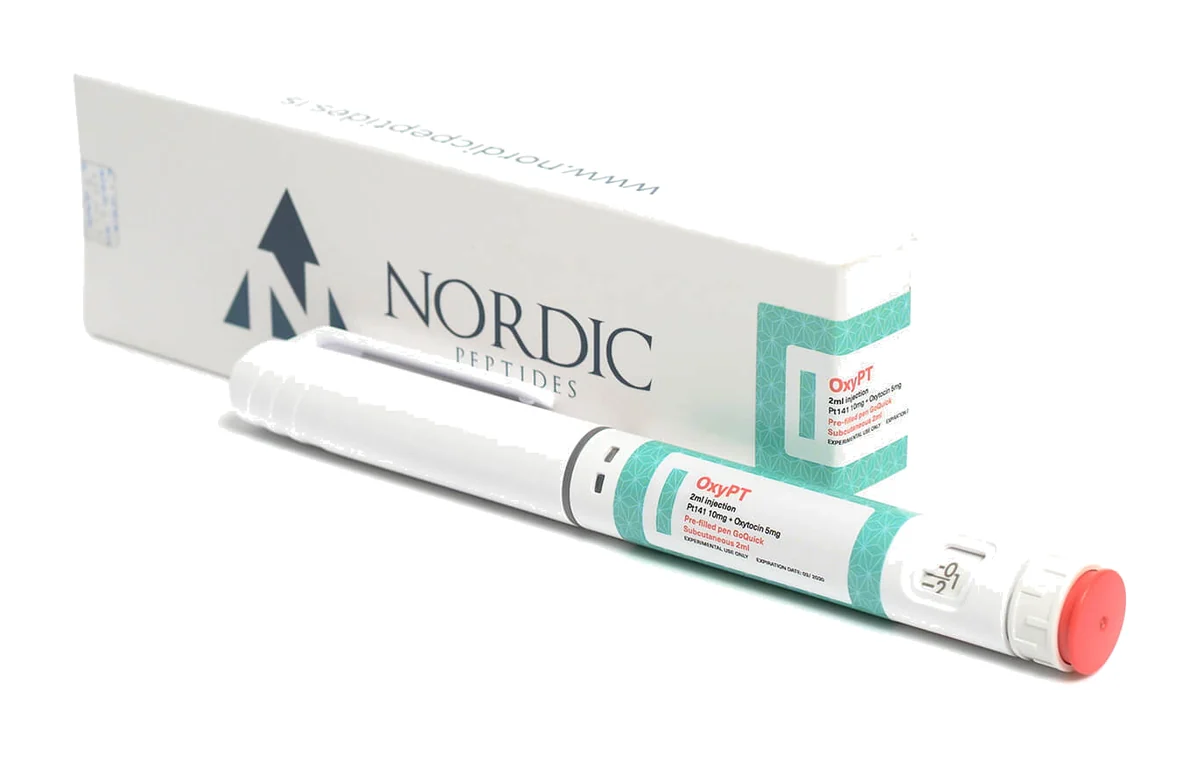 OxyPT (PT-141 + Oxytocin) – 2ml
Most compounds on these shelves have never been near a regulator. Oxytocin is the opposite: a nine-amino-acid peptide, synthesised in 1953, approved for obstetric use in the 1960s, and on the WHO list of essential medicines ever since. It is worth being precise about what that approval covers — because the approved story and the internet story barely overlap.
What the labels say
US labelling (Pitocin and generics) covers three obstetric indications: induction or stimulation of labour, control of postpartum bleeding, and management of incomplete abortion. Administration is intravenous infusion, titrated to effect, in a hospital. That is the entire approved footprint: short-term, supervised, obstetric.
The labels also document why oxytocin never became a tablet or a nasal lifestyle product: as a peptide it is rapidly broken down in the gut, and in blood its half-life is measured in minutes. Whatever social-bonding headlines say, the pharmacology in the label is plumbing — uterine contraction and milk ejection — with water-intoxication warnings at high infused doses.
What the labels do not say
They say nothing about trust, bonding, libido, or social behaviour. Those claims come from intranasal research literature — small human studies with mixed replications — and none of it appears in any approval anywhere. The gap between “essential obstetric drug” and “relationship molecule” is the gap between a label and a headline.
Why it sits in a blend
OxyPT pairs oxytocin with PT-141 (bremelanotide), which unlike oxytocin does carry a modern approval — for hypoactive sexual desire disorder — via a different pathway (melanocortin receptors, not oxytocin receptors). Read the PT-141 trials piece alongside this one: two different molecules, two different evidence bases, one pen. As ever, everything here is supplied for laboratory research, and this page is a label summary, not a protocol.