Tirzepatide vs semaglutide: the first head-to-head trial
For years the comparison was made across separate studies, which is not a comparison at all. In 2025 the two were finally run against each other in the same trial — 751 participants, 72 weeks, one protocol.
21 August 2026 · 3 min read
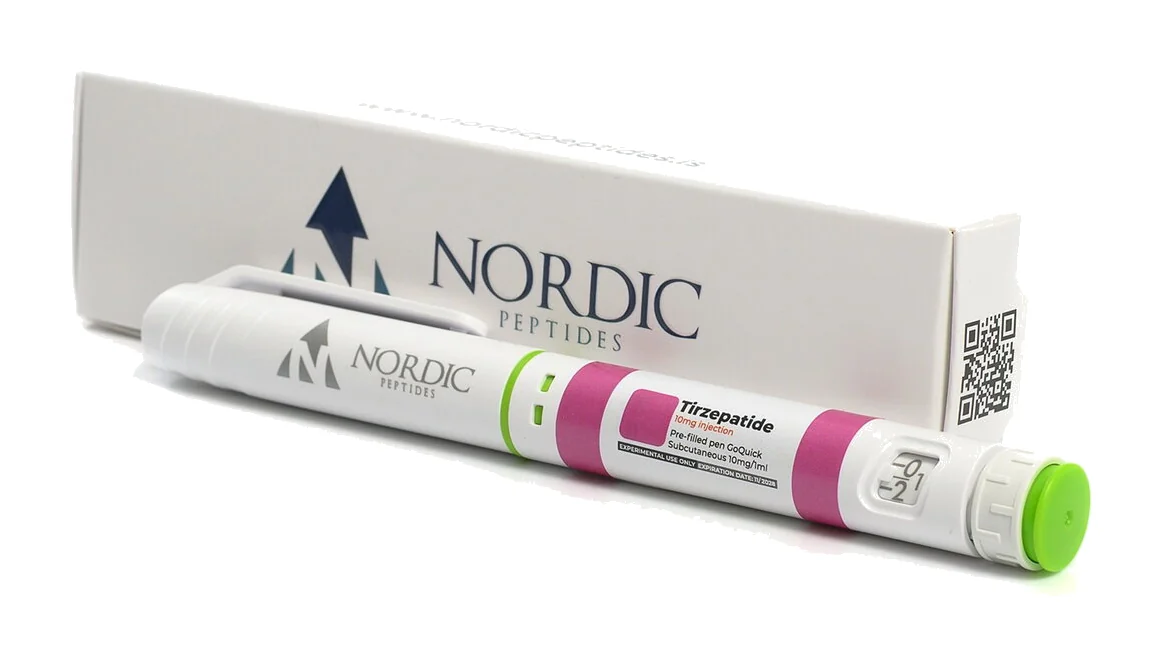 Tirzepatide - 5mg
Until 2025, every “tirzepatide beats semaglutide” claim you read online was a cross-trial comparison: one number from STEP 1, another from SURMOUNT-1, different populations, different durations, different years. That is a plausible guess, not evidence — trial populations differ in ways that move results by several percentage points on their own.
Then the two compounds were finally put in the same trial.
The two molecules
Semaglutide is a GLP-1 receptor agonist. It slows gastric emptying and acts on appetite regulation centrally. In STEP 1 (NEJM, 2021), semaglutide 2.4 mg weekly produced a mean weight reduction of 14.9% at 68 weeks, against 2.4% for placebo, with 86% of participants losing at least 5%.
Tirzepatide adds a second receptor: it is a dual GIP/GLP-1 agonist. In SURMOUNT-1 (NEJM, 2022), tirzepatide produced 20.9% at 72 weeks at the 15 mg dose, with 91% of participants losing at least 5%.
Two mechanisms, roughly six percentage points apart — across studies that were never designed to be compared.
SURMOUNT-5: same trial, same rules
SURMOUNT-5 (NCT05822830) randomised 751 adults with obesity, or overweight with a weight-related complication, and no diabetes, to maximum tolerated doses of tirzepatide or semaglutide for 72 weeks. Open-label, but with the same protocol, the same escalation rules and the same endpoints for both arms. It was published in The New England Journal of Medicine in 2025.
The result:
| Tirzepatide | Semaglutide | |
|---|---|---|
| Mean weight change, 72 weeks | −20.2% | −13.7% |
| Waist circumference | −18.4 cm | −13.0 cm |
| Discontinuation for GI adverse events | 2.7% | 5.6% |
Tirzepatide came out ahead by roughly 6.5 percentage points of body weight and 5.4 cm of waist circumference, both statistically significant. Participants on tirzepatide were also more likely to cross every higher threshold — 10%, 15%, 20%, 25% of body weight.
The cross-trial guess, in other words, turned out to be roughly right. It just took a proper trial to know that.
The tolerability line is the interesting one
The naive expectation is that the drug producing more weight loss produces more gastrointestinal trouble. That is not what the trial found: gastrointestinal adverse events led to discontinuation about twice as often on semaglutide (5.6%) as on tirzepatide (2.7%). Most adverse events in both arms were mild to moderate and clustered in the dose-escalation phase.
Worth stating clearly what this does not mean. It does not mean tirzepatide is gentler for any given person; it means that in this trial, at maximum tolerated doses, fewer people stopped because of GI effects. Individual response is not what a trial mean describes.
What a comparison like this is good for
Two things, mainly.
First, it establishes an order of magnitude for the mechanism itself: adding GIP agonism to GLP-1 agonism is worth something real, not a rounding error. That is the same logic retatrutide extends by adding a third receptor — and the retatrutide phase 2 data put its 48-week figure above both of these.
Second, it makes the marketing noise checkable. Any claim about these two compounds can now be measured against one 751-person trial rather than against a preferred pair of studies.
Limits
SURMOUNT-5 was open-label — participants and investigators knew which drug was being given, which can influence reported side effects and adherence. It excluded people with diabetes, so it says nothing about that population. It ran 72 weeks, so it says nothing about year five. And both compounds are prescription medicines in the jurisdictions where they are approved; nothing here is a recommendation, a protocol or medical advice.
What we supply
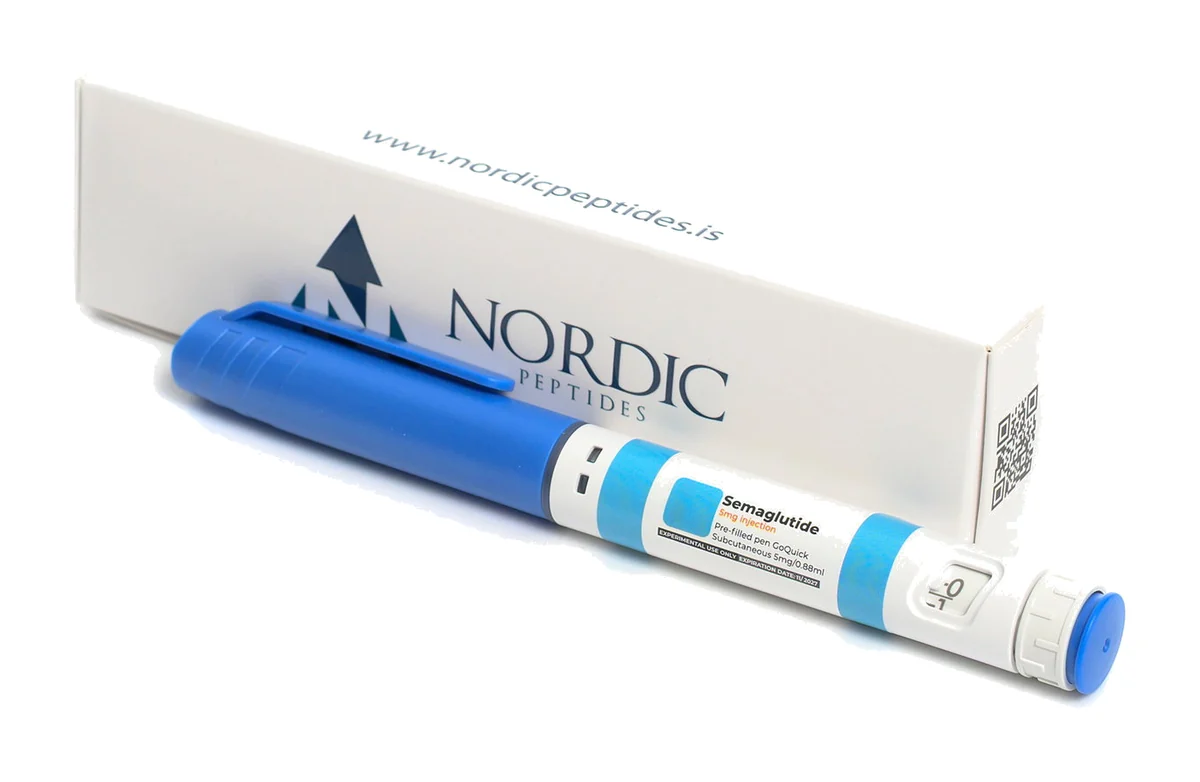
Tirzepatide (5 mg and 10 mg) and semaglutide (5 mg) pens from Nordic Peptides, shipped as supplied by the manufacturer, batch documentation on request. Research use only — not for human or veterinary use, no exceptions.
References.
- Aronne LJ, Horn DB, le Roux CW, et al. Tirzepatide as Compared with Semaglutide for the Treatment of Obesity (SURMOUNT-5). N Engl J Med 2025;393(1):26–36.
- Jastreboff AM, Aronne LJ, Ahmad NN, et al. Tirzepatide Once Weekly for the Treatment of Obesity (SURMOUNT-1). N Engl J Med 2022;387(3):205–216.
- Wilding JPH, Batterham RL, Calanna S, et al. Once-Weekly Semaglutide in Adults with Overweight or Obesity (STEP 1). N Engl J Med 2021;384(11):989–1002.
- American College of Cardiology journal scan summarising the SURMOUNT-5 results.