GLP-1 step-down: what the withdrawal trials measured
Two trials measure stopping, and only one of them randomised it. Neither measures a lower amount. What STEP 1's extension and SURMOUNT-4 actually recorded.
6 October 2026 · 5 min read
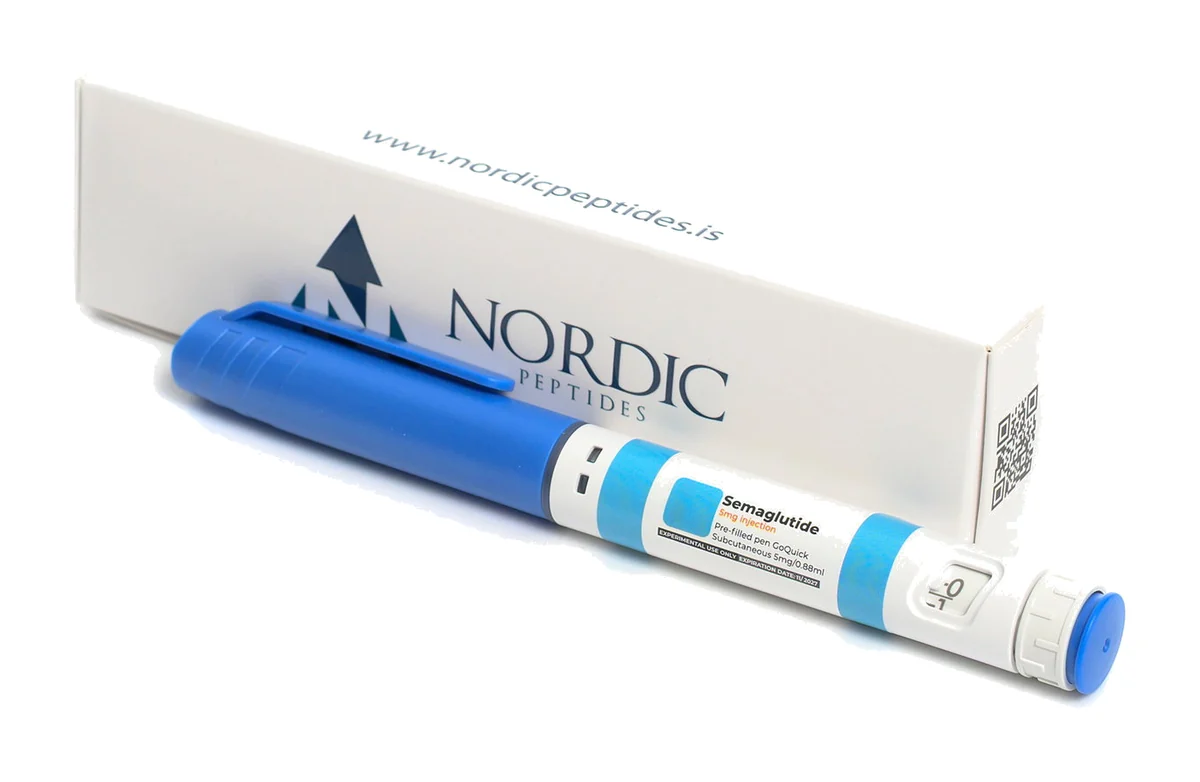 Semaglutide - 5mg
The question behind this page is arithmetic, not pharmacological: if the drug worked, and then it stops, what happens to the number. The answer the literature actually gives is in kilograms per year, for one year, in a subset of a trial, and it says nothing whatsoever about stopping at a lower amount. That distinction is the whole of what follows.
The two withdrawal trials
Two trials in this literature are built around the moment of stopping, and they were built for opposite purposes. Only one of them randomised the stopping itself, and the difference decides what each can be used for.
STEP 1 randomised 1,961 adults with overweight or obesity and no diabetes to semaglutide 2.4 mg once weekly, including 16 weeks of escalation, or placebo, plus lifestyle intervention, for 68 weeks. Mean weight change was -14.9% against -2.4%. Then the drug, and the lifestyle intervention, stopped. The extension followed a subset for a further year, and this is where the design detail matters more than the headline.
That subset was not a random sample. It comprised all eligible participants from any site in Canada, Germany and the UK, plus sites in the United States and Japan with the highest main phase recruitment. Extension analyses included 327 participants. The abstract states plainly that all analyses in the extension were exploratory.
Nobody was randomised to stop. Every participant in the extension stopped at week 68, together and all at once, which is part of why the paper calls every analysis in it exploratory. It records what happened to a completer subset after a common stopping date. It does not compare stopping with continuing.
The measurements are exact. From week 0 to week 68, mean weight loss was 17.3% (SD 9.3) on semaglutide and 2.0% (SD 6.1) on placebo. After withdrawal, participants regained 11.6 (SD 7.7) and 1.9 (SD 4.8) percentage points of lost weight respectively by week 120. That leaves net losses of 5.6% (SD 8.9) and 0.1% (SD 5.8) from week 0 to week 120. The authors’ own conclusion: one year after withdrawal, participants regained two-thirds of their prior weight loss, and the findings confirm the chronicity of obesity and suggest ongoing treatment is required to maintain improvements in weight and health.
One thing the abstract does not do is list the cardiometabolic variables. It says improvements seen from week 0 to week 68 with semaglutide reverted towards baseline at week 120 for most variables. Most. The endpoint-by-endpoint table is in the paper and not in the abstract, so nothing more specific than the direction can honestly be quoted from what is indexed.
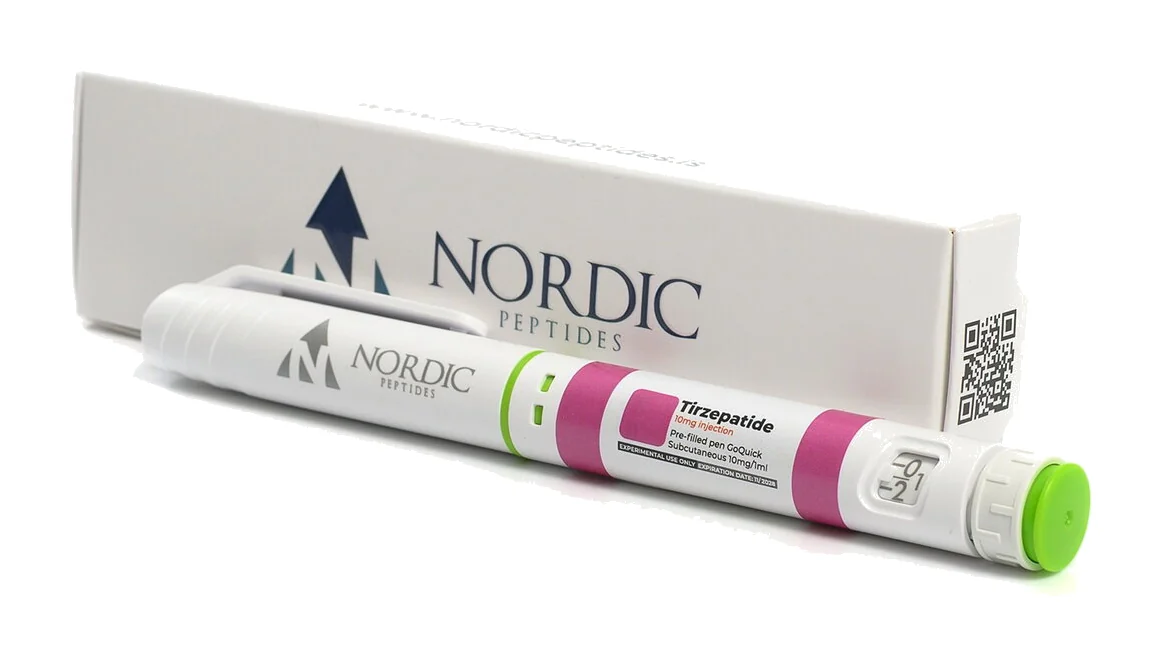
SURMOUNT-4 asks the complementary question by randomising the other way. Seven hundred and eighty-three participants went through a 36-week open-label tirzepatide lead-in, and 670 of them were randomised 1:1 at week 36 to continue tirzepatide at the maximum tolerated amount (10 or 15 mg) or to switch to placebo, for 52 weeks. Those completing the lead-in had lost a mean 20.9%. From week 36 to week 88 the mean weight change was -5.5% on tirzepatide against +14.0% on placebo, a difference of -19.4% (95% CI -21.2 to -17.7). Of the 335 continuing, 300 (89.5%) kept at least 80% of their lead-in loss, against 16.6% of the 335 on placebo.
What a maintenance protocol can say, and what it cannot
Put the two designs side by side and the boundary is sharp.
A withdrawal trial can say what leaving does. A continuation trial can say what staying does. SURMOUNT-4’s own wording is the useful part: withdrawing tirzepatide led to substantial regain of lost weight, while continued treatment maintained and augmented the initial reduction. That is a comparison of two random assignments, in a selected group that had already lost 20.9%, and it is the strongest statement available about maintenance.
Neither design can say anything about a lower amount. Not one randomised trial in this record randomised anybody to step down. The trials that vary the amount all vary it upward: a phase 3b of 7.2 mg in obesity with type 2 diabetes (512 participants, 72 weeks) beat placebo on bodyweight at -13.2% against -3.9%, and a phase 2 running to 16 mg in 245 people found 16 mg gave -3.4 kg more than 2 mg (95% CI -6.0 to -0.8) on the treatment-policy estimand. The 1.7 mg maintenance amount for adolescents is a different case again, and worth being precise about because it is easy to misread: that figure came from pharmacokinetic, BMI and safety modelling combined with the STEP Teens and adult STEP data, and the authors state it obviated a dedicated trial. It is a model that predicted a regulatory decision. It is not a measured outcome in people.
The only published de-escalation data is a retrospective case series of 30 adults who had plateaued on weekly semaglutide or tirzepatide and moved to reduced-frequency administration, usually every other week, at their existing amount, for an average of 36.3 weeks. Weight went from 87.9 kg before treatment to 74.1 kg at plateau and 72.4 kg on the reduced regimen. Total body and truncal fat declined while skeletal muscle mass stabilised. Thirty people, no control arm, no randomisation, one amount policy, and a conclusion the authors themselves frame as supporting rather than establishing. It is a signal, not a result.
Where this sits on the shelf
The compounds on this page are semaglutide and tirzepatide. For what the STEP programme itself reported before anyone stopped anything, semaglutide: what STEP showed, and what came after is the source document. For the tirzepatide weight record across SURMOUNT, tirzepatide: what the trials showed covers the phase 3 base this maintenance trial sits on top of.
What the data do not show
They do not show what happens past twelve months off treatment, because no arm ran longer. They do not show what happens to anyone who discontinued early, because the extension analysed completers, and the STEP 1 trial itself recorded that 4.5% of the drug arm stopped for gastrointestinal events against 0.8% on placebo. They do not show whether the regained weight returns as fat, muscle or both, because the extension reported no body composition endpoint. And they do not show that any amount below the top one maintains anything, because that was never randomised.
One further limit belongs with the rest. The 2025 Cochrane review of semaglutide for obesity pooled 18 randomised trials and 27,949 participants, and found that 17 of the 18 reported the drug manufacturer had a major role in the design, conduct, analysis or writing. It is a systematic review with useful long-term numbers and it is still a review of a manufacturer-led literature. Its authors identified 46 ongoing studies.
What we supply
The compounds above, as supplied by the manufacturer, tracked, from inside the EU.
Research use only. This page summarises published trial results for research reference. It is not medical advice, not a protocol, and not a suggestion for human use. Nothing we supply is for human or veterinary use.
References.
- Wilding JPH, Batterham RL, Davies M, et al. Weight regain and cardiometabolic effects after withdrawal of semaglutide: the STEP 1 trial extension. Diabetes Obes Metab 2022;24(8):1553-1564.
- Aronne LJ, Sattar N, Horn DB, et al. Continued treatment with tirzepatide for maintenance of weight reduction in adults with obesity: the SURMOUNT-4 randomized clinical trial. JAMA 2024;331(1):38-48.
- Wilding JPH, Batterham RL, Calanna S, et al. Once-weekly semaglutide in adults with overweight or obesity. N Engl J Med 2021;384(11):989-1002.
- Wong M, Wu A, Garhe PK, et al. Reduced-frequency GLP1 therapy maintains weight, body composition, and metabolic syndrome improvements: a case series. Obesity (Silver Spring) 2026;34 Suppl 1:112-120.
- Strathe A, Bomberg EM, Jensch G, et al. Efficacy, safety and pharmacokinetics of semaglutide 1.7 mg for obesity treatment in adolescents: a model-informed drug development approach. Diabetes Obes Metab 2026;28(6):4926-4934.
- Bracchiglione J, Meza N, Franco JV, et al. Semaglutide for adults living with obesity. Cochrane Database Syst Rev 2025;10(10):CD015092.
- Aroda VR, Jørgensen NB, Kumar B, et al. High-dose semaglutide (up to 16 mg) in people with type 2 diabetes and overweight or obesity: a randomized, placebo-controlled, phase 2 trial. Diabetes Care 2025;48(6):905-913.
- Lingvay I, Bergenheim SJ, Buse JB, et al. Once-weekly semaglutide 7.2 mg in adults with obesity and type 2 diabetes (STEP UP T2D): a randomised, controlled, phase 3b trial. Lancet Diabetes Endocrinol 2025;13(11):935-948.
10% off every product in your first order
Join the list for your welcome code plus early access to new research arrivals. No spam — unsubscribe anytime.