Glutathione: what the human trials actually measured
One 54-person trial measured body stores of glutathione and found them rising. Almost nothing beyond that store measurement has been tested in people.
8 October 2026 · 5 min read
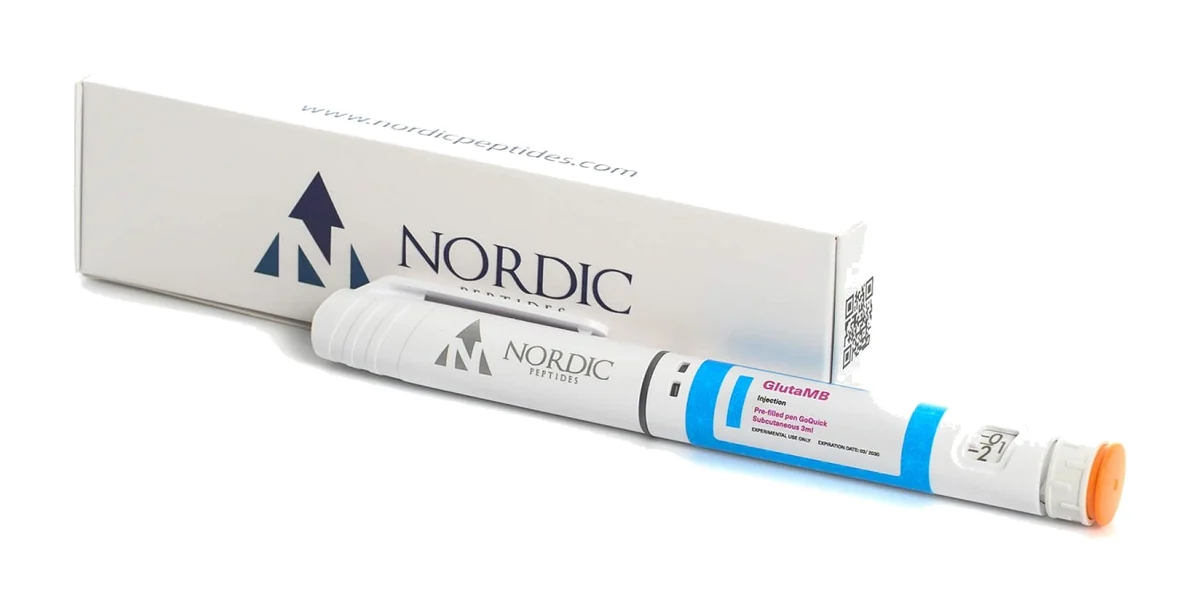 GlutaMB (Glutathione & Methylene Blue) - 2000mg+30mcg/3ml
Glutathione is the most quoted antioxidant on the supplement shelf, and it has the thinnest supporting record of the big ones. There is exactly one good human study of supplementation and it measured one thing: whether the pool of glutathione in the body got bigger. It did. Almost nothing else has been measured in people, and this page is about the difference between those two facts.
The one study that measured glutathione status directly
The 2015 Richmond trial ran a six-month randomised, double-blind, placebo-controlled trial in 54 non-smoking healthy adults, with oral reduced glutathione at 250 or 1000 mg a day. The endpoint was glutathione itself, sampled from five compartments: whole blood, erythrocytes, plasma, lymphocytes and exfoliated buccal mucosal cells.
At six months, in the high group, mean glutathione had risen by 30 to 35 % in erythrocytes, plasma and lymphocytes, and by 260 % in buccal cells, all at P below 0.05. In the low group it rose 17 % in blood and 29 % in erythrocytes. The oxidised-to-reduced glutathione ratio fell in both groups after six months. Natural killer cytotoxicity more than doubled against placebo at three months in the high group.
Two details in that abstract matter more than the headline. First, levels returned to baseline after a one-month washout, so the effect tracks the intake rather than persisting. Second, the sizes: 54 people, two amounts, six months, and a biochemical endpoint. Nothing in that study measured whether anybody felt better, functioned better, or lived longer, because those were not the endpoints the authors registered.
The intravenous evidence, which is 21 people long
The intravenous route is the one the clinics sell, and the indexed randomised evidence for it in Parkinson’s disease is one pilot with 21 subjects, 11 on glutathione and 10 on placebo, receiving 1400 mg intravenously three times a week for four weeks.
The result deserves to be read precisely. Unified Parkinson’s Disease Rating Scale ADL plus motor scores improved by a mean of 2.8 units more on glutathione, with P = 0.32. Over the following eight weeks, the same scores worsened by a mean of 3.5 units more on glutathione, with P = 0.54. The drug was tolerated and there were no withdrawals because of adverse events, and the authors described the efficacy data as preliminary.
Both P values are far from significance, and the direction of the benefit reversed in the follow-up period. The honest sentence is that this trial established tolerability, not efficacy. The dermatology review reaches the same conclusion from the other direction: it states that although intravenous glutathione injections are popular, there is no evidence to prove their efficacy, notes a public warning from the Philippine food and drug regulator about off-label skin-lightening use, and counts only three randomised controlled trials supporting oral or topical glutathione at all.
The best evidence for a GSH-raising effect is not glutathione
There is one randomised trial in this space that measured physical function, and it is worth reading because it is not a glutathione trial. Twenty-four older adults were randomised to sixteen weeks of a combination of glycine and N-acetylcysteine, twelve per arm, against an isonitrogenous alanine placebo, and twelve young adults took the same combination for two weeks. Compared with the young adults, the older group started with glutathione deficiency, oxidative stress, mitochondrial dysfunction, inflammation, endothelial dysfunction, insulin resistance, impaired physical function and several measured hallmarks of ageing. The combination corrected those defects and placebo did not.
That is a striking result and it is not evidence for glutathione. It is a two-ingredient combination in twelve people per arm, and the two ingredients are an amino acid and a precursor. If you are reading a claim that says glutathione improves physical function in older adults, this is the paper it will lean on, and the compound in the trial is not the compound on the claim.
Skin, and the design problem behind it
The pigmentation literature is the largest body of randomised work on oral glutathione, and it has a structural problem: the trials test combinations. One twelve-week randomised, double-blind, benchmark- and placebo-controlled trial in 124 Asian women split participants into four equal groups receiving 500 mg L-cystine with 250 mg reduced glutathione, 250 mg reduced glutathione alone, 500 mg L-cystine alone, or placebo. The combination produced measurable lightening at twelve weeks and a reduction in dark-spot size at six and twelve weeks, and the abstract states the effect was better than with either ingredient alone.
Read that carefully. The winning arm contained two compounds. A trial in which the active arm is a combination cannot attribute the effect to one of its ingredients, and the paper is explicit that the combination outperformed glutathione on its own. That is not a defect in the study; it is what the study was designed to find, and it is the reason the dermatology review lists duration, longevity of effect and maintenance as unanswered.
The exercise angle, where the signal is absent
Two randomised sources bear on what happens to glutathione around training. In ten well-trained male footballers, three speed-endurance sessions under whey, soy or placebo protein, glutathione decreased equally in all three trials after the work, alongside delayed-onset soreness, creatine kinase, total antioxidant capacity and protein carbonyls all moving the same way. Soy produced a faster recovery of protein carbonyls at 48 hours and nothing else separated the groups.
A systematic review of thirteen controlled omega-3 trials in physically healthy adults found that consumption improved some indicators of oxidative stress, including the reduced-to-oxidised glutathione ratio. The same abstract states that the studies did not evaluate omega-3 status at the start or after supplementation, so the observations have to be treated with caution. Interventions ranged from one day to 26 weeks and the amounts used were heterogeneous.
Neither of those says anything about glutathione supplementation. They are included here because they are the randomised work on the pool itself, and the honest reading of both is that exercise moves the pool and supplement trials mostly measure it without measuring consequences.
Where this sits on the shelf
The antioxidant pen on this shelf carries glutathione with methylene blue in a pen format. The page on that pen covers what the format is; this page covers what has been measured. They are different questions and neither answers the other.
What the data do not show
They do not show that raising glutathione improves health outcomes in anyone, because the one supplementation trial measured stores and the one functional trial measured a different compound. They do not show an effect size for the intravenous route in any indication, because 21 people produced two non-significant numbers. They do not isolate glutathione from L-cystine in any pigmentation trial, because the active arms were combinations. They do not show that the effect survives a washout, because in the one trial that measured it, it did not. They do not show anything at all about amounts below the two studied in the six-month trial, or above them, because those are the only two amounts anyone has run for six months.
What we supply
The antioxidant pen above, as supplied by the manufacturer, tracked, from inside the EU.
Research use only. This page summarises published studies for research reference. It is not medical advice, not a protocol, and not a suggestion for human use. Nothing we supply is for human or veterinary use.
References.
- Richie JP Jr, Nichenametla S, Neidig W, Calcagnotto A. Randomized controlled trial of oral glutathione supplementation on body stores of glutathione. Eur J Nutr 2015;54(2):251-263.
- Hauser RA, Lyons KE, McClain T, Carter S. Randomized, double-blind, pilot evaluation of intravenous glutathione in Parkinson's disease. Mov Disord 2009;24(7):979-983.
- Kumar P, Liu C, Suliburk J, Hsu JW, et al. Supplementing Glycine and N-Acetylcysteine (GlyNAC) in Older Adults Improves Glutathione Deficiency, Oxidative Stress, Mitochondrial Dysfunction, Inflammation, Physical Function, and Aging Hallmarks: A Randomized Clinical Trial. J Gerontol A Biol Sci Med Sci 2023;78(1):75-89.
- Duperray J, Sergheraert R, Chalothorn K, Tachalerdmanee P, et al. The effects of the oral supplementation of L-Cystine associated with reduced L-Glutathione-GSH on human skin pigmentation: a randomized, double-blinded, benchmark- and placebo-controlled clinical trial. J Cosmet Dermatol 2022;21(2):802-813.
- Sonthalia S, Daulatabad D, Sarkar R. Glutathione as a skin whitening agent: Facts, myths, evidence and controversies. Indian J Dermatol Venereol Leprol 2016;82(3):262-272.
- Kritikos S, Papanikolaou K, Draganidis D, Poulios A, et al. Effect of whey vs. soy protein supplementation on recovery kinetics following speed endurance training in competitive male soccer players: a randomized controlled trial. J Int Soc Sports Nutr 2021;18(1):23.
- Fernandez-Lazaro D, Arribalzaga S, Gutierrez-Abejon E, Azarbayjani MA. Omega-3 Fatty Acid Supplementation on Post-Exercise Inflammation, Muscle Damage, Oxidative Response, and Sports Performance in Physically Healthy Adults-A Systematic Review of Randomized Controlled Trials. Nutrients 2024;16(13):2044.
10% off every product in your first order
Join the list for your welcome code plus early access to new research arrivals. No spam — unsubscribe anytime.