Niacin and the lipid trials: the largest stopped early
AIM-HIGH randomised 3,414 patients to extended-release niacin on top of statin therapy, raised HDL and cut triglycerides, and ended with a hazard ratio of 1.02 — then stopped early. The 2025 lipoprotein(a) meta-analysis still counts niacin among the four lipid therapies that move Lp(a). This page reads both, and reads the metabolites.
17 October 2026 · 6 min read
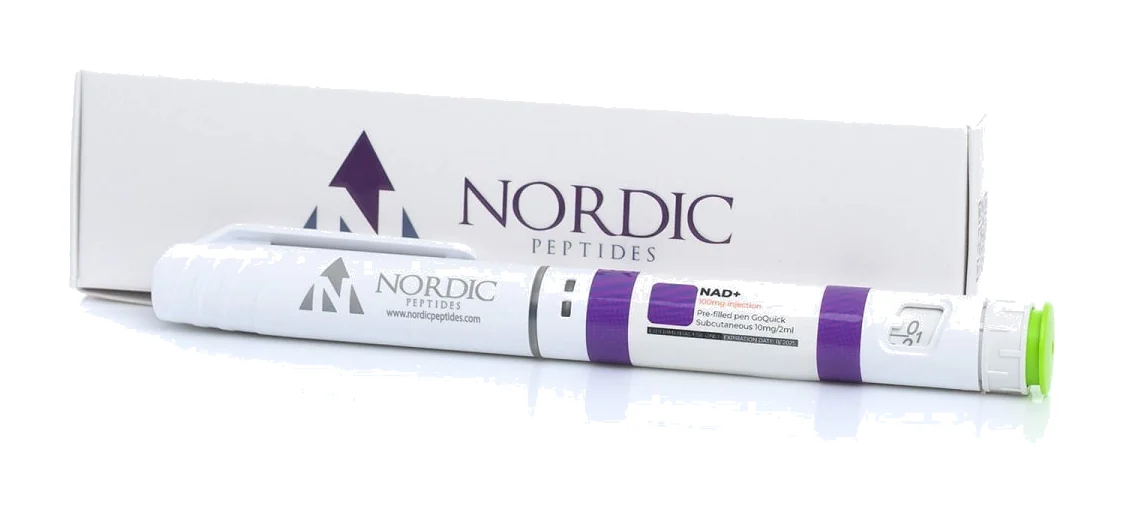 NAD+ (Nicotinamide) - 100mg
Niacin is vitamin B3, it has one of the longest and most contradictory drug literatures in nutrition, and the contradiction is not subtle. It reliably moves lipids in the laboratory. In the biggest cardiovascular outcomes trial ever run with it, the lipids moved and nothing else did, and the trial was stopped early for lack of efficacy. Then in 2024 a metabolomics paper found that the breakdown products of excess niacin were themselves associated with cardiovascular events.
Start with the trial that ended the argument, because everything else is downstream of it.
AIM-HIGH: the numbers that ended it
The 2011 New England Journal of Medicine trial randomised 3,414 patients with established cardiovascular disease and low HDL to extended-release niacin at 1,500 to 2,000 mg per day, or matching placebo. Everyone received simvastatin at 40 to 80 mg per day, plus ezetimibe if needed to hold LDL between 40 and 80 mg/dL. The primary endpoint was the first event of the composite of coronary heart disease death, non-fatal myocardial infarction, ischaemic stroke, acute coronary syndrome hospitalisation, or symptom-driven revascularisation.
At two years, the biomarker story is exactly what niacin is famous for. Median HDL rose from 35 to 42 mg/dL, triglycerides fell from 164 to 122 mg/dL, and LDL fell from 74 to 62 mg/dL.
The clinical outcome is the sentence the abstract is built around: the primary endpoint occurred in 282 patients on niacin (16.4%) and 274 on placebo (16.2%), hazard ratio 1.02 (95% CI 0.87 to 1.21, P = 0.79). The trial was stopped after a mean of three years for lack of efficacy. The authors’ conclusion is that there was no incremental clinical benefit from adding niacin to statin therapy over 36 months “despite significant improvements in HDL cholesterol and triglyceride levels.”
That phrase — despite — is the entire topic. Every mechanism niacin is sold on sits on one side of it, and every outcomes trial sits on the other.
What the meta-analyses say about the same mismatch
The 2016 JAMA meta-regression went at it from the other direction. It pooled 49 trials with 312,175 participants and 39,645 major vascular events, and asked whether each therapy’s cardiovascular benefit matched how much LDL it lowered. Statins came in at RR 0.77 (95% CI 0.71 to 0.84) per 1 mmol/L of LDL reduction, and therapies that work through LDL receptor upregulation — diet, bile acid sequestrants, ileal bypass, ezetimibe — at 0.75. For niacin, the observed RR was 0.94 (95% CI 0.89 to 0.99) against an expected 0.91 (P = .24): the drug delivered roughly what its LDL effect predicted, while fibrates beat it and CETP inhibitors and PCSK9 inhibitors missed.
Niacin was the one drug in that analysis whose biomarker effect translated into events roughly as expected, and it still lost the argument, because the amount of LDL it moves in people already on statin therapy is small.
The 2025 lipoprotein(a) meta-analysis is the strongest current case for niacin. It pooled 147 randomised trials with 145,314 subjects and separated the drug classes. Statins, bempedoic acid, ezetimibe, omega-3 fatty acids and fibrates did not affect Lp(a). Niacin did: −7.06 mg/dL (95% CI −9.27 to −4.85), a 37% reduction from baseline. Among the therapies it analysed, only PCSK9 monoclonal antibodies, inclisiran, CETP inhibitors and niacin reduced Lp(a) at all. The authors add the necessary caveat themselves: further research is needed to understand whether that effect would translate into a clinically relevant cardiovascular benefit.
Where niacin still wins a ranking
Not every ranking puts niacin last. The 2023 network meta-analysis of 170 randomised trials and 14,223 participants on micronutrient supplements in type 2 diabetes ranked niacin supplements best for reducing triglycerides (SUCRA 93.7%) and best for raising HDL (SUCRA 94.6%) — with evidence certainty rated low to very low.
That is the pattern worth holding: in head-to-head tables on surrogate lipid endpoints, niacin wins. On outcomes, the guideline bodies have stopped recommending it. The 2025 American Association of Clinical Endocrinology dyslipidemia guideline strongly recommends against the use of niacin in adults with hypertriglyceridemia and established or increased risk of atherosclerotic cardiovascular disease, and sets an LDL goal below 70 mg/dL in that group.
The surrogate endpoint that improved
Niacin’s best case is endothelial function, and the best pooled estimate comes from a 2014 meta-analysis of seven randomised trials with 441 subjects — 228 on niacin, 213 on control. Flow-mediated dilation of the brachial artery improved by a weighted mean difference of 1.98 percentage points (95% CI 0.91 to 3.05, P = 0.0003), and the effect was robust in sensitivity analysis and larger in trials using at least 2,000 mg per day. Two details in that abstract cut against reading it as a mechanism: meta-regression found no association between the flow-mediated dilation change and changes in HDL, LDL or triglycerides, and none of the included studies found any significant effect on nitroglycerin-mediated dilation.
A smaller single trial shows the same split. In 63 men after myocardial infarction, extended-release niacin with laropiprant raised flow-mediated dilation from 3.9% to 9.8% while placebo went 4.6% to 6.1%, and the paper reports that the vascular improvement did not correlate with the lipid changes.
The metabolite finding nobody quotes
The 2024 Nature Medicine paper is the most recent and the least flattering. In a discovery cohort of 1,162 stable cardiac patients, niacin metabolism was associated with incident major adverse cardiovascular events. The terminal metabolites of excess niacin, N1-methyl-2-pyridone-5-carboxamide (2PY) and N1-methyl-4-pyridone-3-carboxamide (4PY), were associated with higher three-year MACE risk in two validation cohorts — a US cohort of 2,331 (adjusted HR 1.64 for 2PY, 95% CI 1.10 to 2.42; 1.89 for 4PY, 95% CI 1.26 to 2.84) and a European cohort of 832 (2.02, 95% CI 1.29 to 3.18; and 1.99, 95% CI 1.26 to 3.14). In mice, treating with physiological levels of 4PY induced expression of VCAM-1 and leukocyte adherence to vascular endothelium.
This is observational metabolomics with a mechanistic mouse follow-up, not a trial, and it does not overturn AIM-HIGH. But it does mean the compound is not a neutral addition to a dietary background — the abstract itself describes niacin as an essential micronutrient fortified in food staples whose role in cardiovascular disease is not well understood.
The tolerability line, and a naming problem
The tolerability record belongs to the nicotinic acid side of the family. The 2008 Drugs review of the fixed-dose combination with simvastatin reports the two SEACOAST trials and concludes that the combination was generally well tolerated, with flushing as the most common adverse reaction.
That matters for this page specifically, because the compounds on our shelf are labelled nicotinamide. Nicotinamide and nicotinic acid are both vitamin B3 and they are not interchangeable in pharmacology. The 2016 Nature Communications first-in-human study of nicotinamide riboside makes the point in a footnote-sized aside: oral riboside produces distinct and superior pharmacokinetics to both nicotinic acid and nicotinamide, with blood NAD+ rising in a dose-dependent way after single doses of 100, 300 and 1,000 mg.
So: every trial, every meta-analysis and every guideline sentence on this page concerns nicotinic acid. None of them administered nicotinamide.
What the data do not show
They do not show a cardiovascular benefit from niacin. The largest outcomes trial reports a hazard ratio of 1.02 and was stopped early, and a current clinical guideline recommends against it in the population where it was studied hardest.
They do not show that lipid changes are inert either. The metabolite data associate the breakdown products of excess niacin with higher event rates, which is a different problem from the failed trial, and it has not been resolved.
They do not show a nicotinamide trial. The nicotinamide literature on this page is metabolite and NAD+ biology, and the lipid literature is entirely about the acid form.
The nicotinamide half of that sentence runs into the NAD, NMN and nicotinamide page, which covers what human data exist for the other two names on this shelf. Same pathway, different question, and nothing on the lipid side of this page speaks to it.
Where this sits on the shelf
The compounds as supplied by the manufacturer: Nicotinamide 100mg · Nicotinamide 200mg
What we supply
The nicotinamide preparations above, as supplied by the manufacturer, tracked, from inside the EU.
Research use only. This page summarises published studies for research reference. It is not medical advice, not a protocol, and not a suggestion for human use. Nothing we supply is for human or veterinary use.
References.
- AIM-HIGH Investigators, et al. Niacin in patients with low HDL cholesterol levels receiving intensive statin therapy. N Engl J Med 2011;365(24):2255-2267.
- Silverman MG, et al. Association Between Lowering LDL-C and Cardiovascular Risk Reduction Among Different Therapeutic Interventions: A Systematic Review and Meta-analysis. JAMA 2016;316(12):1289-1297.
- Xie S, et al. Effect of lipid-lowering therapies on lipoprotein(a) levels: a comprehensive meta-analysis of randomized controlled trials. Atherosclerosis 2025;408:120420.
- Patel SB, et al. American Association of Clinical Endocrinology Clinical Practice Guideline on Pharmacologic Management of Adults With Dyslipidemia. Endocr Pract 2025;31(2):236-262.
- Xia J, et al. Comparative effects of vitamin and mineral supplements in the management of type 2 diabetes in primary care: A systematic review and network meta-analysis of randomized controlled trials. Pharmacol Res 2023;188:106647.
- Sahebkar A. Effect of niacin on endothelial function: a systematic review and meta-analysis of randomized controlled trials. Vasc Med 2014;19(1):54-66.
- Ferrell M, et al. A terminal metabolite of niacin promotes vascular inflammation and contributes to cardiovascular disease risk. Nat Med 2024;30(2):424-434.
- Sanford M, et al. Niacin extended-release/simvastatin. Drugs 2008;68(16):2373-2386.
- Bregar U, et al. Extended-release niacin/laropiprant improves endothelial function in patients after myocardial infarction. Heart Vessels 2014;29(3):313-319.
- Trammell SA, et al. Nicotinamide riboside is uniquely and orally bioavailable in mice and humans. Nat Commun 2016;7:12948.
10% off every product in your first order
Join the list for your welcome code plus early access to new research arrivals. No spam — unsubscribe anytime.