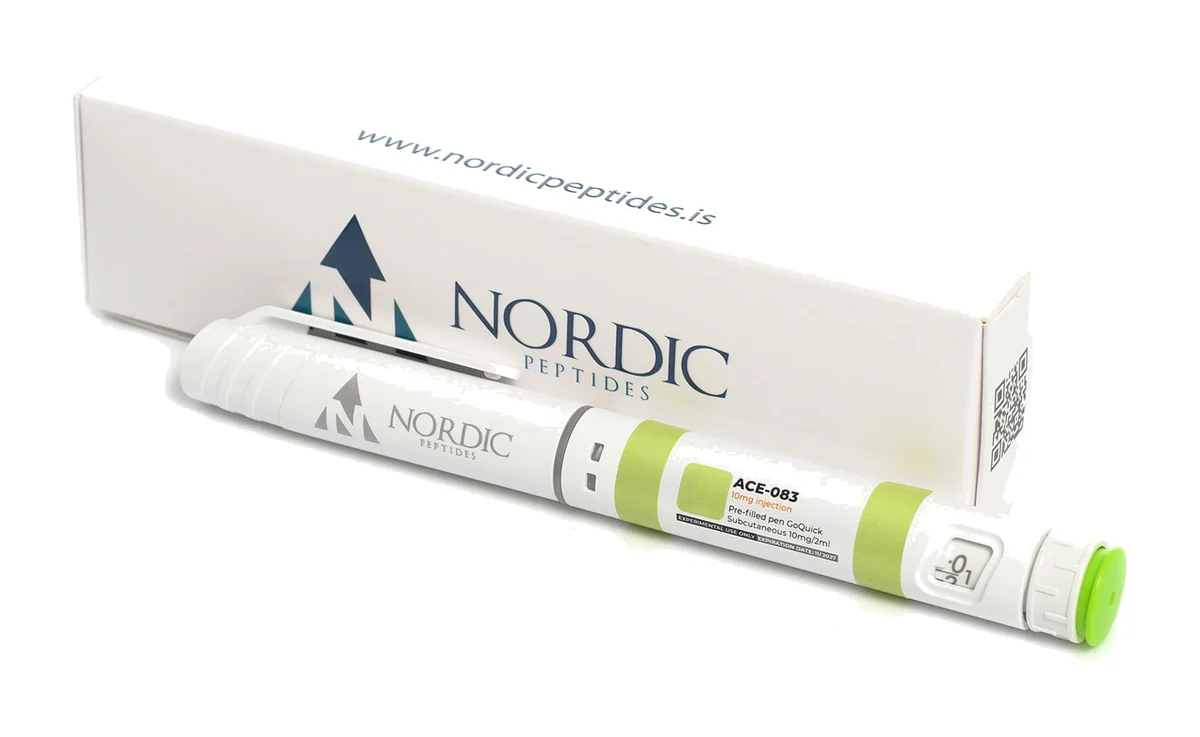
The skin shelf: GHK-Cu and Radiance, copper versus copper-free
One peptide with fifty years of literature, one modern complex built without copper, and a third pen aimed at blemish-prone skin. What is in each, which claims are backed, and how to choose between them.
27 August 2026 · 4 min read
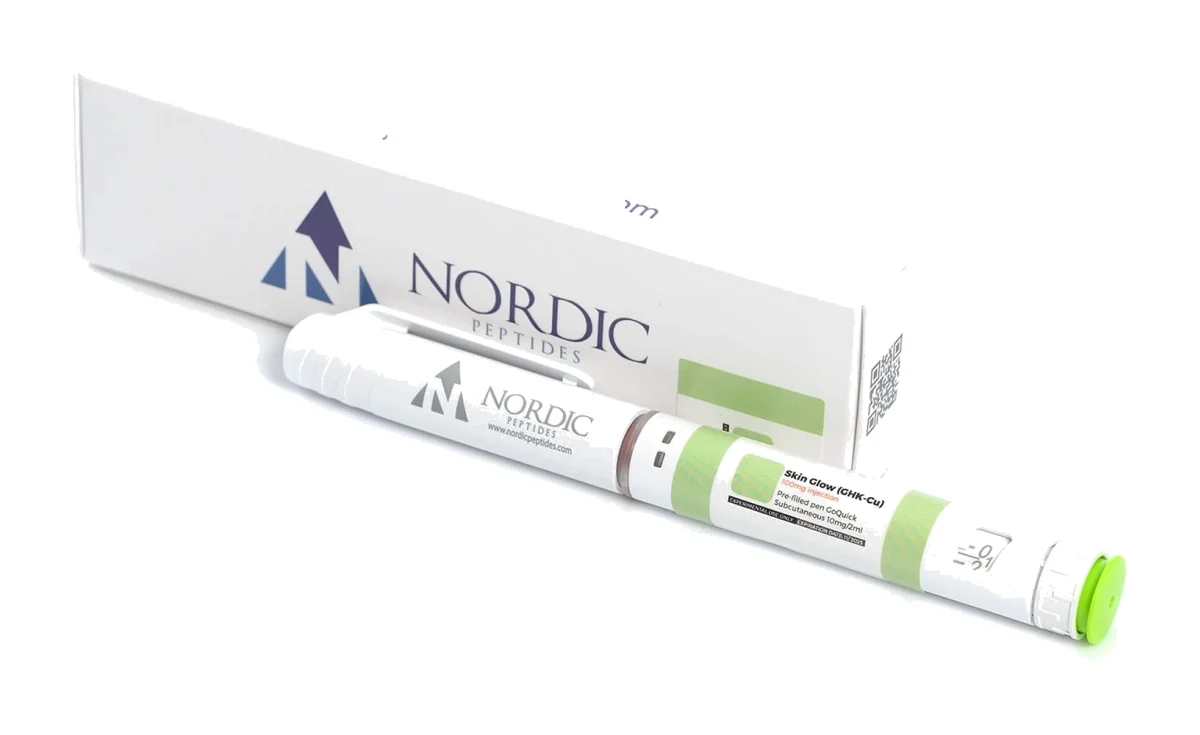 Skin Glow (GHK-Cu) - 100mg
Skin is where peptide research is easiest to sell and hardest to do honestly. Almost everything in the category is marketed with before-and-after photography and no citation at all. Our skin shelf has three products on it, and exactly one of them rests on a literature going back fifty years.
Start there.
GHK-Cu: the one with the history
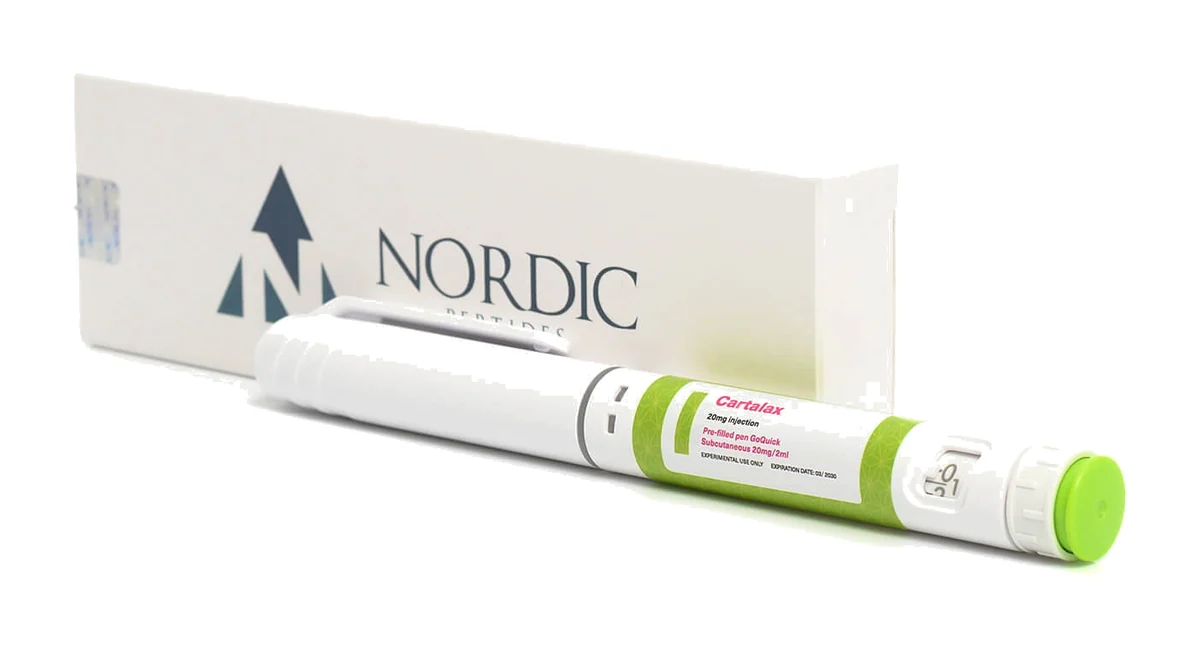
Skin Glow (GHK-Cu) is glycyl-L-histidyl-L-lysine bound to copper(II). The tripeptide was isolated from human plasma in 1973 by Loren Pickart, who was investigating why liver tissue from young donors behaved differently from old tissue — and it has been studied more or less continuously ever since. In a market where “novel” usually means “unstudied”, half a century of literature is the differentiator.
What the described actions cluster around is extracellular matrix remodelling: stimulation of collagen, elastin, proteoglycan and glycosaminoglycan synthesis, with anti-inflammatory and antioxidant activity alongside. Plasma GHK levels decline with age, which is why the compound turns up in the ageing conversation at all.
The number the review literature keeps returning to is a comparison of daily topical application over one month, in which GHK-Cu increased collagen deposition in 70% of participants — against 50% for vitamin C and 40% for retinoic acid. Two actives with far larger literatures, and the peptide held up against both.
Read that result precisely: it is topical, measured in skin, over a month, in a small comparison. That is the pattern across GHK-Cu’s whole clinical file — the strong evidence is dermatological and local. The full write-up is here, and copper handling matters more with this compound than most, because the copper complex is the active entity.
GHK-Cu appears three times in our catalog: on its own as Skin Glow, inside the Klow blend with BPC-157 and TB-500, and as a component of Acne Eraser.
Radiance: the copper-free complex
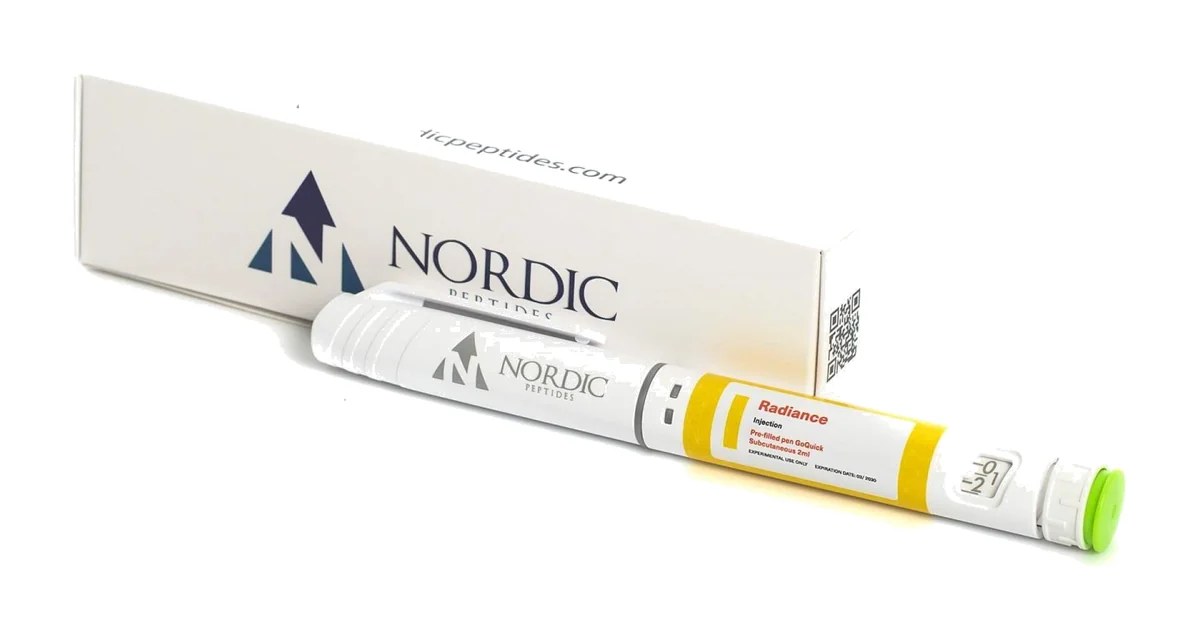
Radiance is Nordic Peptides’ answer for people who want peptide-based skin support without copper. A 25 mg / 3 ml pen; the manufacturer’s stated actives:
- Argireline (acetyl hexapeptide-8) — the expression-line peptide, one of the most widely used ingredients in cosmetic science
- Matrixyl (palmitoyl pentapeptide-4) — the collagen-support peptide, studied for firmness and wrinkle appearance
- Epitalon — the short peptide from the Khavinson bioregulator programme
- Hyaluronic acid — hydration and plumpness
- KPV — the anti-inflammatory tripeptide, here for calmer-looking skin
- an antioxidant complex: glutathione, NAC, vitamin C, CoQ10, resveratrol, niacinamide, carnosine, silk peptides
Straight assessment: Argireline and Matrixyl carry a large cosmetic-industry research base — real work, mostly topical, mostly conducted or funded by the ingredient makers, and it is not the same thing as a clinical trial of this pen. Nordic Peptides’ description, which we print on the product page in full, is theirs.
What Radiance actually offers a buyer is coverage: six or seven skin-directed actives in one factory-filled cartridge rather than assembled from six products. That, and no copper — which for some people is exactly the requirement.
Acne Eraser: the third option, for a different problem
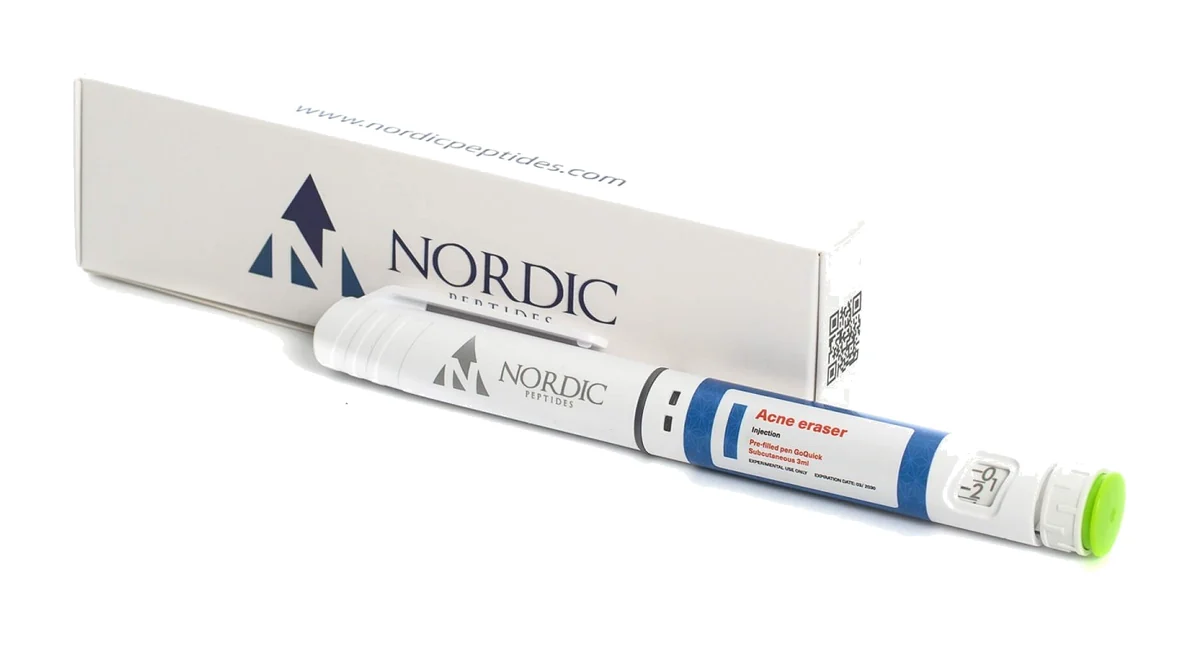
Acne Eraser is aimed at blemish-prone and inflamed skin rather than at ageing. The maker’s actives are KPV, LL-37 (a naturally occurring antimicrobial peptide), GHK-Cu, Epitalon and LZ1, with zinc PCA, niacinamide, NAC, glutathione and vitamin C behind them — a multi-pathway approach to inflammation, sebum balance, microbial balance and post-blemish recovery.
It is the most speculative of the three: antimicrobial peptides in acne are an active research area, not a settled one. But it is also the only product on the shelf built for that specific problem, and its composition is published rather than hidden behind “proprietary complex”.
Choosing between them
| If your interest is… | The pen |
|---|---|
| the single most-studied skin peptide, on its own | Skin Glow (GHK-Cu) |
| a broad copper-free anti-age complex | Radiance |
| blemish-prone, inflamed skin | Acne Eraser |
| skin support alongside tissue repair | Klow — GHK-Cu with BPC-157 and TB-500 |
All four are pre-filled pens: no reconstitution, no mixing, no dilution arithmetic, and the copper complex arrives as the manufacturer prepared it rather than as whatever survives a home reconstitution.
The honest limits
The strong GHK-Cu evidence is topical, not systemic. The cosmetic peptides in Radiance are supported mainly by cosmetic-industry research, largely on topical formulations. None of these products is an approved medicine, none has been through a clinical trial as sold, and everything we print about their intended effects comes from the manufacturer, marked as theirs.
We would rather sell you a pen with a real fifty-year file behind one ingredient and say the rest is less established, than run the version of this page with the before-and-after photographs.
What we supply
The skin and appearance shelf sits inside longevity and cellular support in the catalog — Nordic Peptides pre-filled pens, shipped as supplied, tracked, from inside the EU, in a plain unbranded box.
The front page is the quickest way to browse the rest.
Research use only. Not for human or veterinary use, and nothing on this page is medical advice.