GHK-Cu: the copper peptide with fifty years of literature behind it
Isolated from human plasma in 1973, studied continuously since, and one of the few compounds in this catalog where the human evidence is topical, comparative and reasonably old.
23 August 2026 · 2 min read
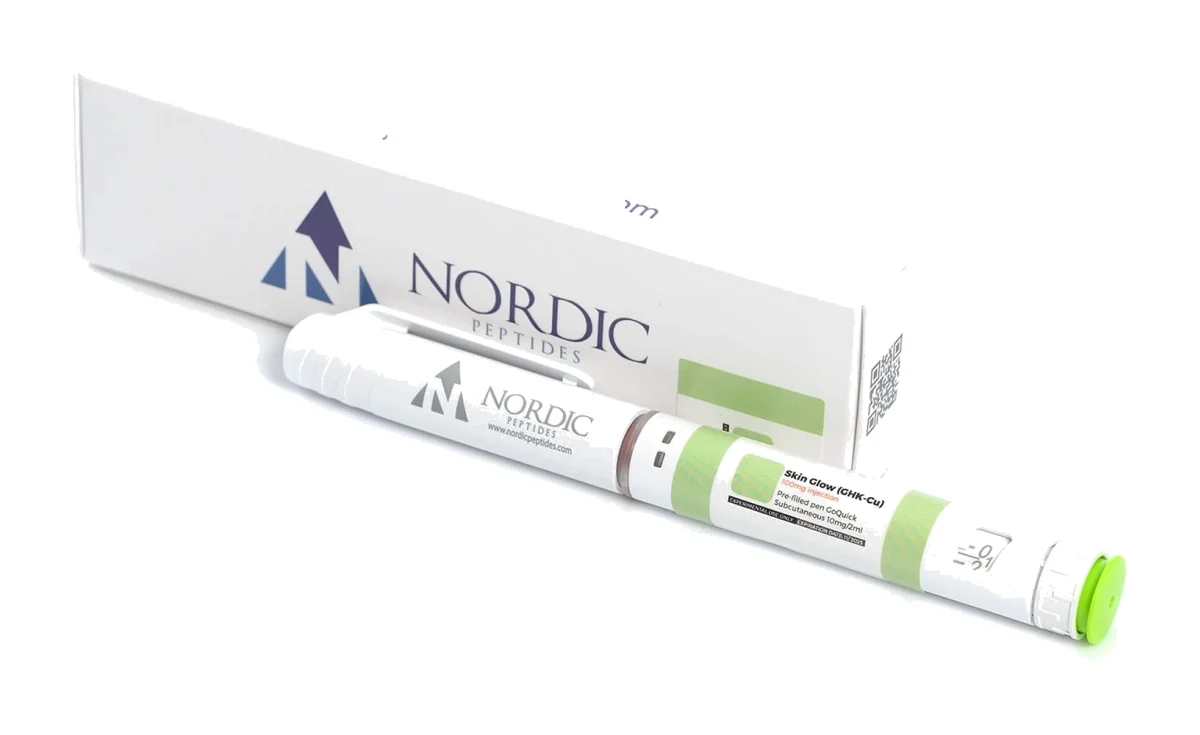 Skin Glow (GHK-Cu) - 100mg
Most compounds on this site are recent. GHK is not: it was isolated from human plasma in 1973 by Loren Pickart, who was investigating why liver tissue from young donors behaved differently from old. The tripeptide he found — glycyl-L-histidyl-L-lysine — restored some of that behaviour, and it has been studied more or less continuously ever since.
That half-century of literature is the compound’s real distinguishing feature in a market where “novel” usually means “unstudied”.
What it is and what it does
GHK is a three-amino-acid sequence with a high affinity for copper(II). Bound to copper it forms GHK-Cu, and the complex is the biologically active form.
It behaves as both a signal and a carrier peptide. The described actions cluster around extracellular matrix remodelling: stimulation of collagen, elastin, proteoglycan and glycosaminoglycan synthesis, alongside anti-inflammatory and antioxidant activity. GHK levels in human plasma decline with age — roughly the same shape of curve as MOTS-c, and the reason both are discussed in an ageing context.
Gene-expression work reported in the copper-peptide review literature describes GHK modulating large numbers of human genes in cultured cells, which is where the compound’s very broad claimed activity profile originates. Broad gene-expression effects in culture are a hypothesis generator, not an outcome.
The human evidence
Unusually for this catalog, some of it is comparative and topical. The figure the review literature keeps returning to comes from a comparison of daily topical application over one month, in which GHK-Cu increased collagen deposition in 70% of participants, against 50% for vitamin C and 40% for retinoic acid.
Two things about that result. It is a genuinely useful benchmark — it puts the peptide against two actives with far larger literatures, and it holds up. And it is a topical result, measured in skin, over a month, in a small comparison. It says nothing about systemic administration, and it is the pattern across this compound’s clinical file: the strong data is dermatological and local.
Where it sits in our catalog
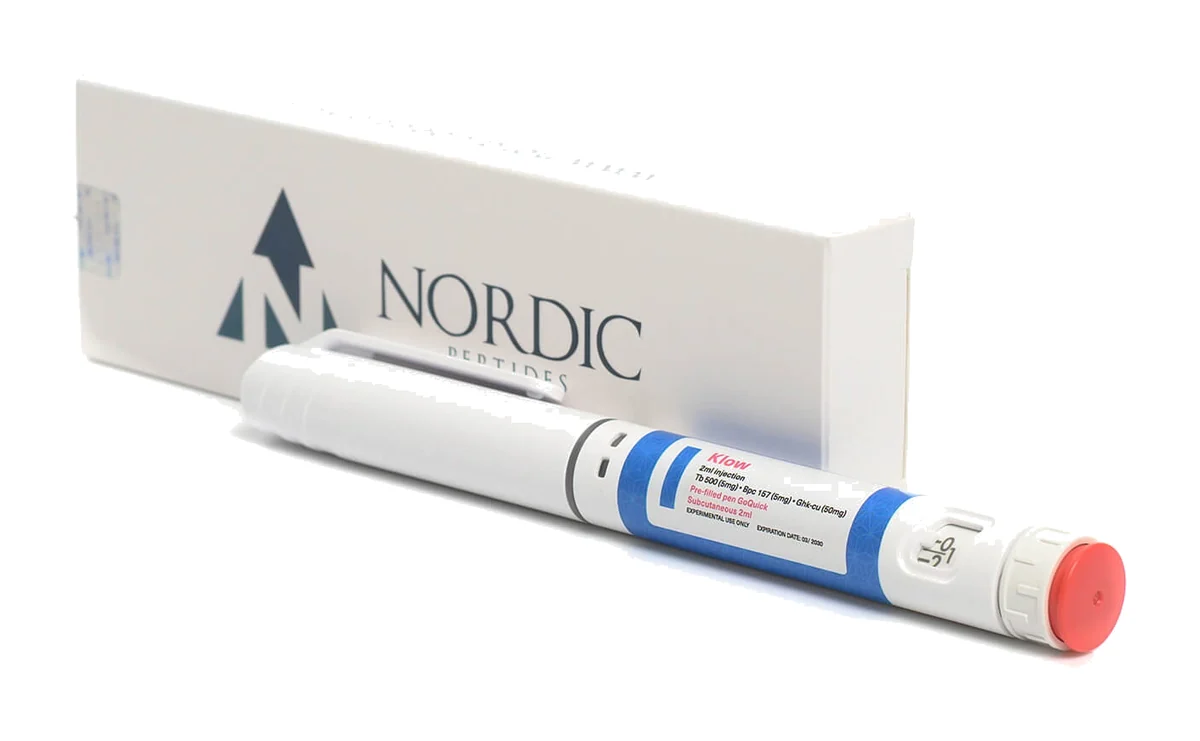
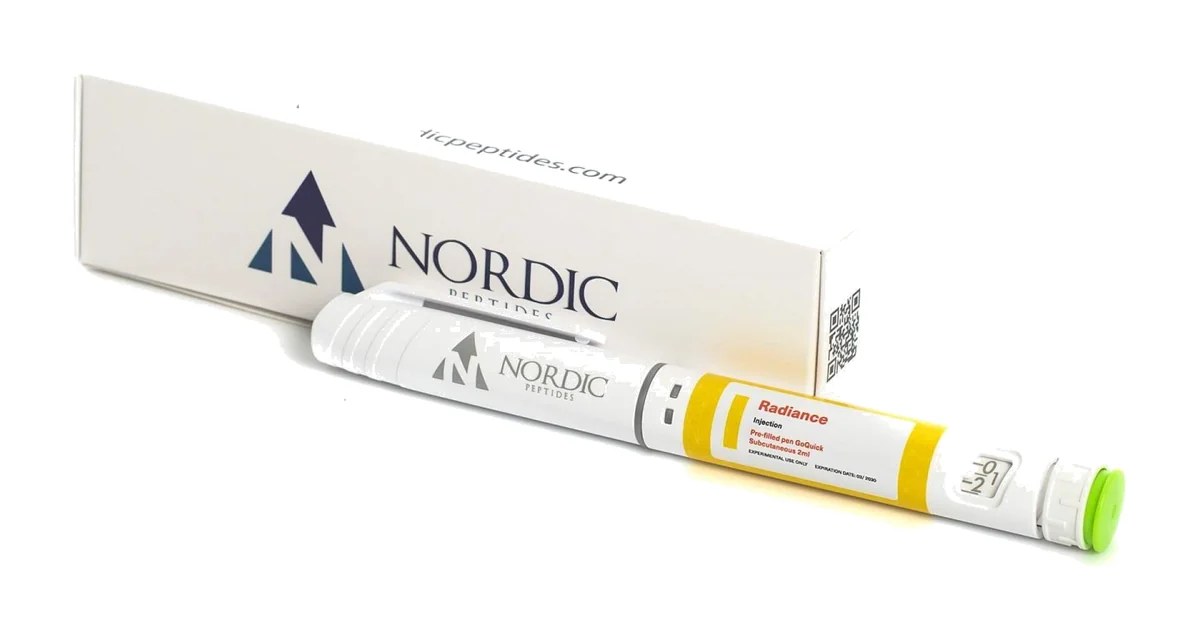
GHK-Cu appears three times: on its own as Skin Glow, inside the Klow blend alongside BPC-157 and TB-500, and as a component of Radiance. The grouping logic in the blends is the same in both — matrix remodelling and repair-associated signalling from more than one direction.
Copper matters here in a way it does not elsewhere. The complex is the active entity, so preparation and storage that preserve the copper coordination are part of handling the compound properly, not an optional refinement. The manufacturer’s own storage instruction is on the product page; the general principles are in our piece on what actually degrades a peptide.
The honest limits
- The topical literature is decades deep. The injectable literature is much thinner, and almost none of it is controlled human work.
- Broad gene-expression findings in cell culture are frequently quoted as if they were clinical effects. They are not the same claim.
- GHK-Cu is not an approved medicine. It is a widely used cosmetic ingredient with an established topical safety record — a different regulatory category and a different evidential bar.
What we supply
Skin Glow (GHK-Cu) 100 mg, the Klow blend and Radiance — Nordic Peptides, shipped as supplied by the manufacturer, batch documentation on request. Research use only, not for human or veterinary use.