Exercise mimetics: what AICAR, SLU-PP-332 and 5-Amino-1MQ have actually done, and in what species
One of these three has been given to 3,080 humans — and the trial was stopped for futility. The other two have never been given to a human at all. All three are sold on the same phrase, and the phrase comes from one mouse treadmill experiment in 2008.
4 September 2026 · 6 min read
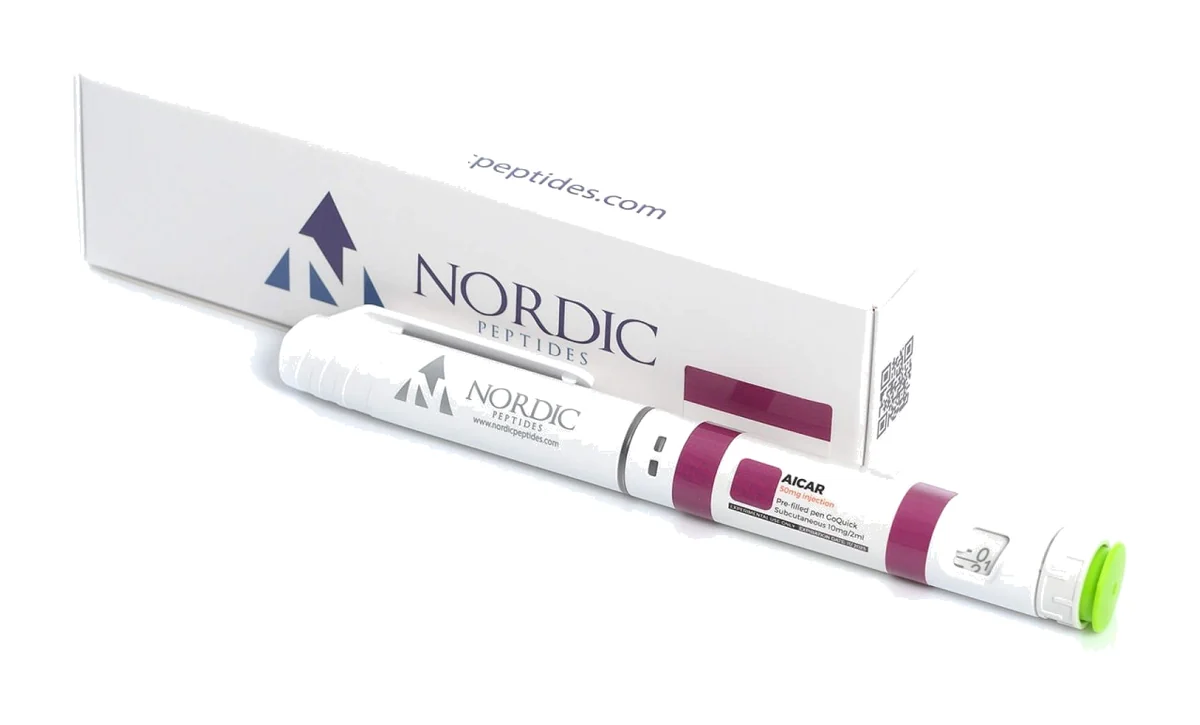 AICAR - 50mg
“Exercise mimetic” is a phrase from one paper. Narkar and colleagues published it in Cell in 2008, and it has been doing marketing work ever since for compounds that paper never tested.
Three of those compounds sit in this catalog: AICAR, SLU-PP-332 and 5-Amino-1MQ. They work through three unrelated mechanisms, and the evidence behind them is at three completely different stages. Being told which is which is the point of this page.
The paper the phrase comes from
Narkar et al. put mice on a treadmill and tested pathway-specific drugs against endurance. A PPARβ/δ agonist plus exercise training synergistically increased oxidative myofibres and running endurance. Then they asked whether an AMPK agonist could substitute for the training itself, and reported the sentence that launched an industry: even in sedentary mice, four weeks of AICAR treatment alone induced metabolic genes and enhanced running endurance by 44%.
That is the number. It is a mouse number, from 2008, on a treadmill, over four weeks, in animals that were not training. It has never been reproduced in a human.
AICAR: the one that has been in humans, under another name
Here is the part almost nobody selling this compound mentions. AICAR is the research name; the same molecule was developed as a drug called acadesine, and it was given intravenously to thousands of people.
The RED-CABG trial (JAMA, 2012) randomised intermediate- to high-risk patients undergoing on-pump coronary bypass surgery at 300 sites in seven countries to acadesine or placebo. A meta-analysis of earlier randomised trials had suggested acadesine reduced early cardiac death and myocardial infarction, so the hypothesis was serious and well-funded.
The trial was stopped after 3,080 of a planned 7,500 participants because a pre-specified futility analysis showed a very low likelihood of a significant result. The primary composite outcome occurred in 5.0% of the placebo group and 5.1% of the acadesine group (odds ratio 1.01; 95% CI 0.73–1.41). No differences in any key secondary endpoint.
Two honest readings of that:
- It was not an endurance trial. Cardiac surgery is not the treadmill, and a null result there says nothing about running economy.
- But it is by far the largest human exposure this molecule has, it was IV in a hospital, and it produced no efficacy signal in the indication it was actually developed for. There is still no human trial of AICAR for endurance or performance in the indexed literature — none.
And the mechanism story is shakier than it reads
AICAR is sold as an AMPK activator, and it does activate AMPK. But a 2021 systematic review in Cells went through the literature specifically to ask how much of AICAR’s observed activity is actually AMPK-mediated, and found an increasing number of effects previously attributed to AMPK activation are AMPK-independent — across metabolism, hypoxia, exercise, nucleotide synthesis and cancer. The authors’ conclusion is a call for caution in interpreting AICAR-based studies as evidence about AMPK at all.
If you are buying a compound because of a pathway diagram, that review is the paper that complicates the diagram.
SLU-PP-332: real, recent, and entirely preclinical
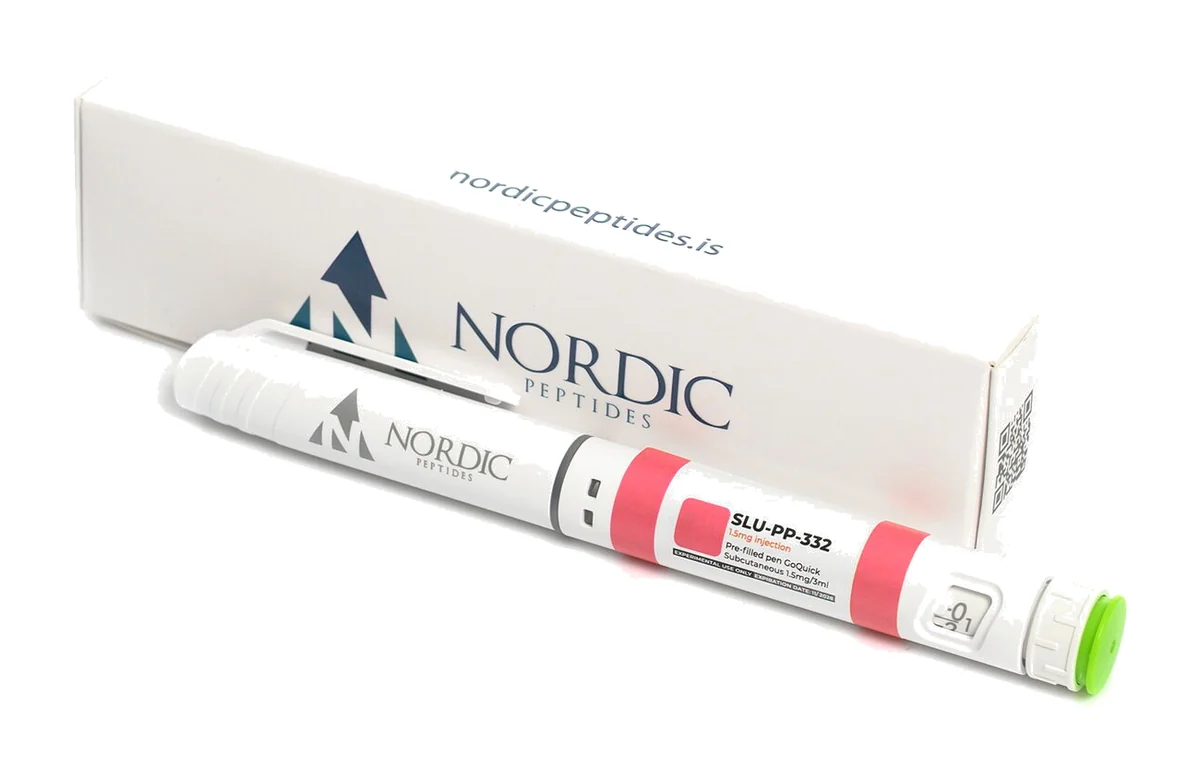
Different mechanism. SLU-PP-332 is a synthetic pan-agonist of the estrogen-related receptors ERRα, ERRβ and ERRγ — nuclear receptors that govern oxidative metabolism. It came out of Thomas Burris’s group, and the work is good, current pharmacology published in serious journals.
Billon et al. (J Pharmacol Exp Ther, 2024) gave it to diet-induced obese and ob/ob mice. It increased energy expenditure and fatty acid oxidation, decreased fat mass accumulation, reduced obesity and improved insulin sensitivity in models of metabolic syndrome.
Xu, Billon et al. (Circulation, 2024) took SLU-PP-332 and a second pan-ERR agonist into a mouse pressure-overload heart failure model. Both significantly improved ejection fraction, reduced fibrosis and increased survival, with metabolomics showing normalisation of fatty acid and oxidative phosphorylation metabolites. Genetic-dependency experiments identified ERRγ as the main mediator — which is the kind of target-specificity work most compounds on this shelf never get.
Now the other half. Every result in both papers is a mouse. There is no clinical trial of SLU-PP-332, no phase 1, no human pharmacokinetics, no human safety data, no established human dose. A Circulation paper is not a human result; it is a well-done mouse result in a good journal.
5-Amino-1MQ: an enzyme inhibitor, not a peptide
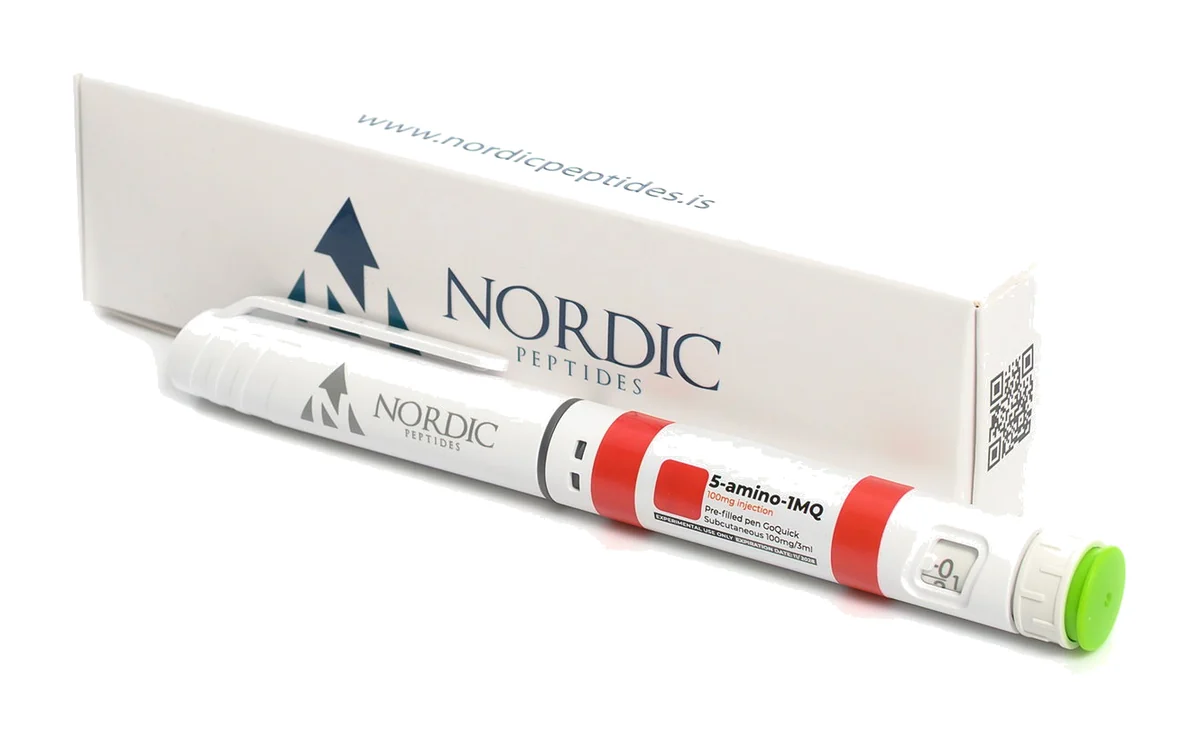
Third mechanism, and the one most often mis-shelved. 5-Amino-1MQ (5-amino-1-methylquinolinium) is a small-molecule inhibitor of nicotinamide N-methyltransferase (NNMT) — a cytosolic enzyme that methylates nicotinamide, consuming SAM and diverting nicotinamide away from NAD⁺ salvage. Inhibit it and, in theory, intracellular NAD⁺ and SAM rise while lipogenesis falls. It is not a peptide, whatever shelf it is sold on, and its logic overlaps with the NAD⁺ / NMN literature rather than with the AMPK story above.
Neelakantan et al. (Biochem Pharmacol, 2018) did the validation work on the methylquinolinium scaffold: high membrane permeability, selectivity against related SAM-dependent methyltransferases and NAD⁺ salvage enzymes, and in cultured adipocytes reduced intracellular 1-methylnicotinamide, increased NAD⁺ and SAM, and suppressed lipogenesis. In diet-induced obese mice, a potent NNMT inhibitor significantly reduced body weight and white adipose mass, decreased adipocyte size and lowered plasma total cholesterol — notably without changing total food intake and with no observable adverse effects.
A later paper (Dimet-Wiley et al., Sci Rep, 2022) names the compound explicitly — NNMTi, 5-amino-1-methylquinolinium — combined with a low-fat diet in diet-induced obese mice, reporting that the combination normalised adiposity and weight toward age-matched lean animals faster than the diet switch alone, and characterising the resulting cecal microbiome.
Human data: none. Search the clinical trial publication types and there is nothing. No human dose, no human safety profile, no approval.
The three, side by side
| Mechanism | Human evidence | Animal evidence | |
|---|---|---|---|
| AICAR | AMPK activator | 3,080-patient RCT as acadesine in cardiac surgery — stopped for futility | +44% treadmill endurance in sedentary mice |
| SLU-PP-332 | Pan-ERR agonist | None | Less fat mass, better insulin sensitivity in obese mice; better ejection fraction and survival in mouse heart failure |
| 5-Amino-1MQ | NNMT inhibitor | None | Less body weight and fat mass in obese mice, with no drop in food intake |
What the data does not show
For all three: no human performance trial, no human endurance data, no established human dose, and no regulatory approval anywhere. The “+44%” is a mouse figure and has never been tested in a person. The two newer compounds have never been administered to a human in a published study of any kind.
The related compound worth naming here is Stenabolic (SR9009), sold on the same shelf and the same promise. Its file carries a specific warning: Dierickx et al. built mice lacking both REV-ERBα and REV-ERBβ — the receptors SR9009 supposedly acts through — and found the compound still altered cell viability, metabolism and transcription in cells with no REV-ERBs at all. Their conclusion is that the effects of SR9009 cannot be used as a surrogate for REV-ERB activity. When a compound’s signature effects survive the deletion of its own target, the mechanism story on the label is not the mechanism.
What athletes need to know — this section is not optional
This is the shelf where the anti-doping consequences are most direct, and they are unusually explicit in the rules.
The WADA 2026 Prohibited List, S4.4 Metabolic modulators, prohibited at all times (in- and out-of-competition), names under S4.4.1:
- Activators of the AMP-activated protein kinase (AMPK), e.g. BAM15, AICAR, MOTS-c
- PPARδ agonists, e.g. GW1516 (GW501516)
- Rev-erbα agonists, e.g. SR9009, SR9011
So AICAR is banned by name, MOTS-c is banned by name, and SR9009 is banned by name — and substances in S4.4 are non-Specified Substances, which is the category that attracts the longest sanctions.
SLU-PP-332 and 5-Amino-1MQ are not named. That does not make them permitted: S0, Non-approved substances, prohibits at all times “any pharmacological substance which is not addressed by any of the subsequent sections of the List and with no current approval by any governmental regulatory health authority for human therapeutic use (e.g. drugs under pre-clinical or clinical development or discontinued…)”. Both are pre-clinical compounds with no approval. Both fall under S0.
If you compete under any anti-doping code, treat this entire shelf as prohibited. There is no reading of the 2026 list that makes it otherwise.
What we supply
AICAR, SLU-PP-332 and 5-Amino-1MQ, all Nordic Peptides, shipped as supplied by the manufacturer, batch documentation on request. Presentation, storage and the manufacturer’s own description are on each product page. If you want the compound on this shelf with the most human data behind it, that is not any of these three — it is tesofensine, and even there the phase 3 was never published.
Research use only — not for human or veterinary use, and nothing here is medical advice.
References.
- Narkar VA, Downes M, Yu RT, et al. AMPK and PPARdelta agonists are exercise mimetics. Cell 2008;134(3):405–415 (PMID 18674809).
- Newman MF, Ferguson TB, White JA, et al. Effect of adenosine-regulating agent acadesine on morbidity and mortality associated with coronary artery bypass grafting: the RED-CABG randomized controlled trial. JAMA 2012;308(2):157–164 (PMID 22782417).
- Višnjić D, Lalić H, Dembitz V, Tomić B, Smoljo T. AICAr, a widely used AMPK activator with important AMPK-independent effects: a systematic review. Cells 2021;10(5):1095 (PMID 34064363).
- Billon C, Schoepke E, Avdagic A, et al. A synthetic ERR agonist alleviates metabolic syndrome. J Pharmacol Exp Ther 2024;388(2):232–240 (PMID 37739806).
- Xu W, Billon C, Li H, et al. Novel pan-ERR agonists ameliorate heart failure through enhancing cardiac fatty acid metabolism and mitochondrial function. Circulation 2024;149(3):227–250 (PMID 37961903).
- Neelakantan H, Vance V, Wetzel MD, et al. Selective and membrane-permeable small molecule inhibitors of nicotinamide N-methyltransferase reverse high fat diet-induced obesity in mice. Biochem Pharmacol 2018;147:141–152 (PMID 29155147).
- Dimet-Wiley A, Wu Q, Wiley JT, et al. Reduced calorie diet combined with NNMT inhibition establishes a distinct microbiome in DIO mice. Sci Rep 2022;12(1):484 (PMID 35013352).
- Dierickx P, Emmett MJ, Jiang C, et al. SR9009 has REV-ERB-independent effects on cell proliferation and metabolism. Proc Natl Acad Sci USA 2019;116(25):12147–12152 (PMID 31127047).
- WADA 2026 Prohibited List, International Standard, in force 1 January 2026 — S4.4 Metabolic modulators; S0 Non-approved substances.