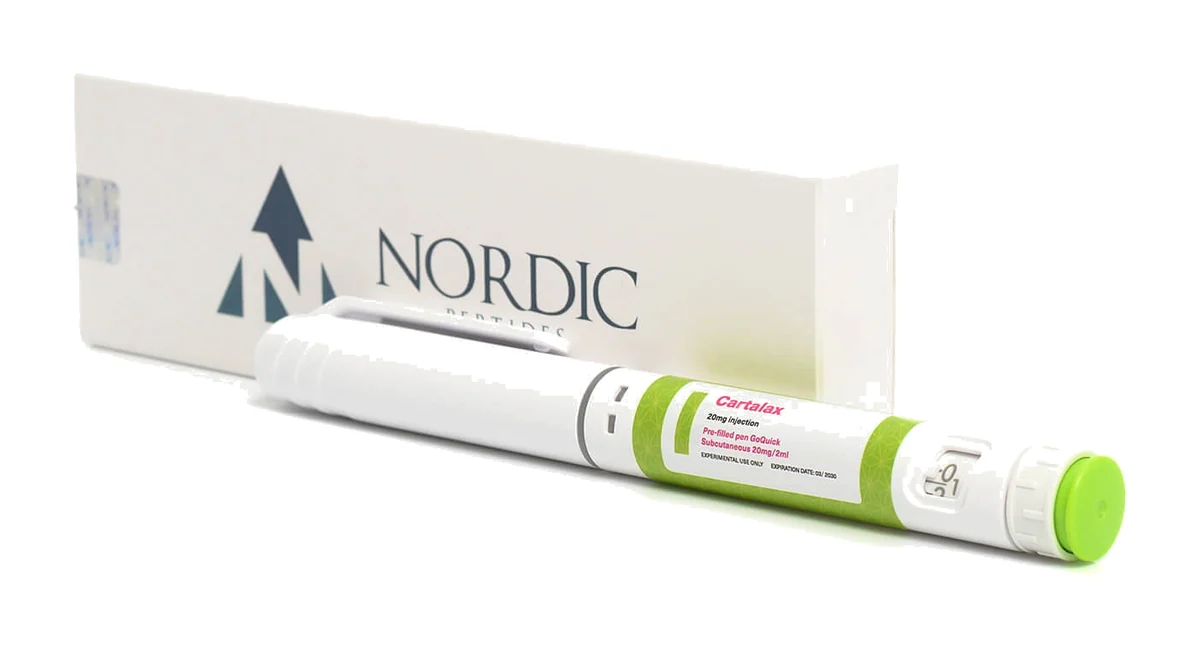
Retatrutide 6, 12, 20 or 30 mg: which pen, and why four of them exist
The four strengths are not four products. They map onto how the phase 2 trial was escalated — and onto how much material a given protocol actually consumes.
23 August 2026 · 3 min read
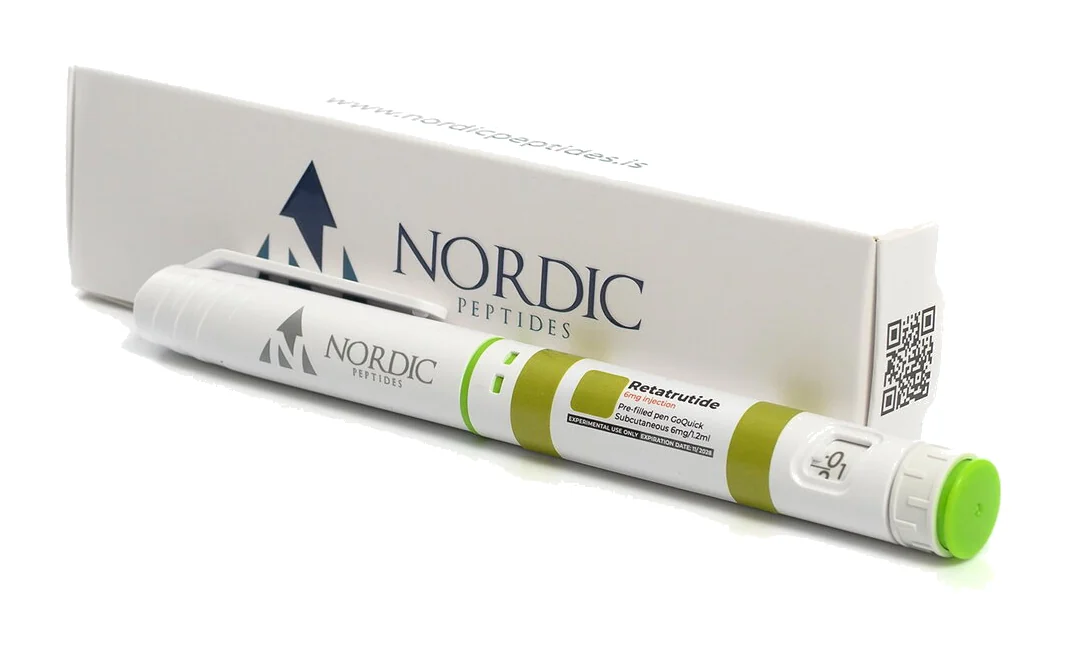 Retatrutide - 6mg
Four strengths of the same compound is the most common question in our inbox, so here is the reasoning laid out. It is short, and it is not a protocol.
What the trial did
The phase 2 trial randomised participants to retatrutide at 1, 4, 8 or 12 mg once weekly, with different escalation schedules — some starting at 2 mg, some at 4 mg. It ran 48 weeks.
The results tracked the dose closely. Mean weight change at 48 weeks was −22.8% at 8 mg and −24.2% at 12 mg, and the proportion of participants crossing each threshold rose with the dose:
| Weekly dose | ≥5% loss | ≥10% loss | ≥15% loss |
|---|---|---|---|
| 4 mg | 92% | 75% | 60% |
| 8 mg | 100% | 91% | 75% |
| 12 mg | 100% | 93% | 83% |
| Placebo | 27% | 9% | 2% |
Two things fall out of that table. The dose–response is real, and the gap between 8 and 12 mg is much smaller than the gap between 4 and 8 mg — the curve is flattening at the top of the studied range.
The escalation detail matters as much as the target: starting at 2 mg rather than 4 mg reduced the gastrointestinal adverse events that dominate this compound’s safety profile.
How that maps to a pen
A pen contains a total quantity of compound, not a weekly dose. Which pen makes sense depends on the weekly quantity a protocol calls for and how long the work runs — a 30 mg pen is not “stronger” than a 6 mg pen, it is more of the same material in one cartridge.
Roughly:
- 6 mg — the smallest unit. Sensible for a short escalation phase, a pilot, or when a protocol works at the low end of the studied range.
- 12 mg — the workhorse, and the one that matches the trial’s top studied weekly dose if a protocol runs at that level.
- 20 mg and 30 mg — bulk cartridges. The reason to take these is cost per milligram, not potency: the larger pens are materially cheaper per mg, which is why longer protocols end up there.
Every one of the four is the same Nordic Peptides compound in the same pre-filled pen format. The variant you pick changes the quantity and the price, nothing else.
What we will not tell you
We will not suggest a weekly dose, an escalation schedule or a duration. Not because we are being coy — because the only published human data comes from a phase 2 trial run under medical supervision, and retatrutide is not an approved medicine anywhere. Anything beyond “here is what the trial did” would be a supplier inventing a protocol, which is exactly what this section of the site exists not to do.
If you want the full picture on what the trial measured, including the parts that are usually skipped, that is in the detailed piece on the phase 2 data. If you are choosing between compounds rather than strengths, the comparison across the GLP-1 line is the better page.
Practical notes
- All four are pre-filled pens, which is a deliberate choice — no reconstitution, no dilution arithmetic.
- Storage is the manufacturer’s: room temperature, 15–30 °C, away from light and moisture, never frozen. Detail here.
- Batch documentation is available on request against your order number.
Research use only. Not for human or veterinary use, and nothing on this page is medical advice.