BurnMix and Lipobalance: the metabolic pens for people who want more than one lever
Two multi-pathway fat-loss formulations, opened up compound by compound. What each ingredient is there to do, which ones have human data, which ones do not, and where they sit next to the GLP-1 shelf.
27 August 2026 · 4 min read
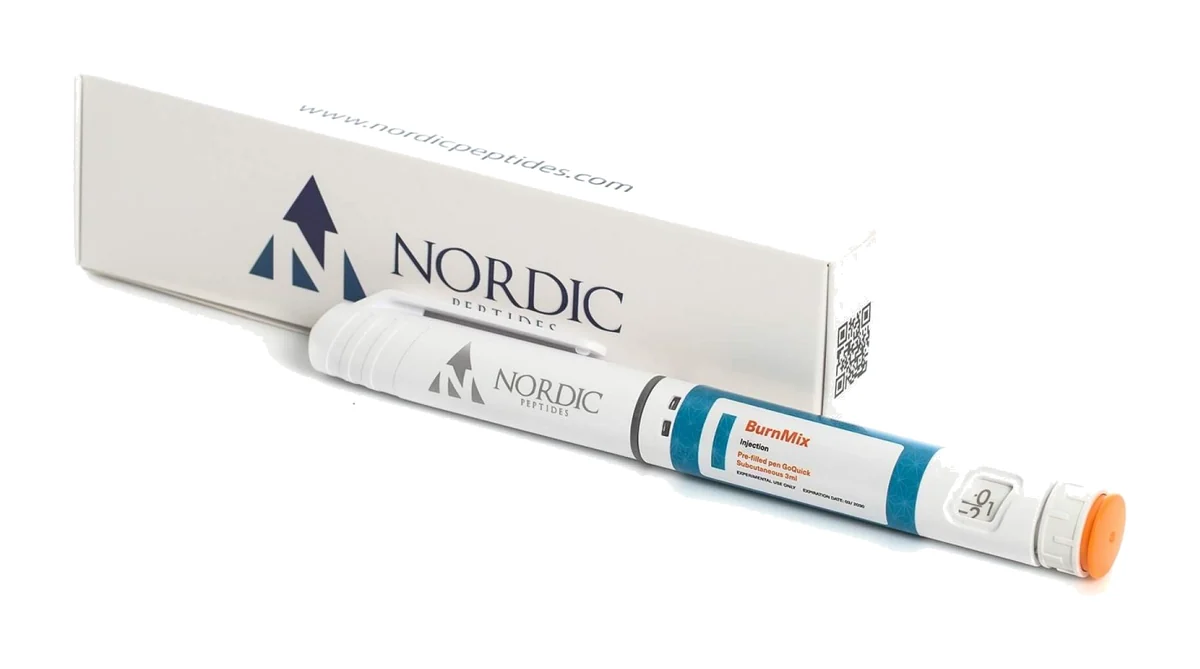 BurnMix (Proprietary Peptide & Cofactor Stack) - 3ml
The GLP-1 shelf gets the headlines, and deservedly — the trial numbers behind semaglutide, tirzepatide and retatrutide are the strongest in the whole catalog. But it is one mechanism, and two of our best-selling pens exist because plenty of laboratories want several at once.
BurnMix and Lipobalance are multi-component metabolic formulations. This piece opens both of them up, ingredient by ingredient, because a stack is only as good as the parts you can actually account for.
BurnMix: ten components, one cartridge
The manufacturer prints the full composition, which by itself puts it ahead of most “proprietary matrix” products in this category. Per pen:
| Component | Amount |
|---|---|
| Glutathione | 500 mg |
| Yohimbine | 750 mcg |
| Fragment 176–191 | 600 mcg |
| NMN | 600 mcg |
| Cordyceps | 540 mcg |
| DIM (diindolylmethane) | 300 mcg |
| Dulaglutide | 270 mcg |
| Campesterol | 240 mcg |
| Adipotide | 90 mcg |
| Tesofensine | 60 mcg |
Nordic Peptides describe the intent as multi-pathway: lipolysis, appetite control, mitochondrial energy and metabolic rate at once. Their words, printed in full on the product page.
Three things a buyer should notice, and no shop will point out for you:
It is not GLP-1-free. There is dulaglutide in it — a GLP-1 receptor agonist. If your reason for avoiding the GLP-1 shelf is the mechanism itself, this pen does not avoid it either; it simply carries a small amount of one alongside nine other things.
Two components have real human trial history. Tesofensine, a triple monoamine reuptake inhibitor, went through a randomised, double-blind, placebo-controlled phase 2 trial in 203 obese patients published in The Lancet in 2008 — it is a properly studied compound, and we also sell it on its own. Yohimbine has decades of human pharmacology behind it, with a side-effect profile to match.
And the amounts are small. Compare the 60 mcg of tesofensine here with the milligram-range doses used in that trial, or the 270 mcg of dulaglutide with the milligram dosing of the approved product. A formulation like this is a stack of low-dose inputs, not ten full doses in one pen — and anyone telling you otherwise has not read the label.
Lipobalance: the lipid and vascular side
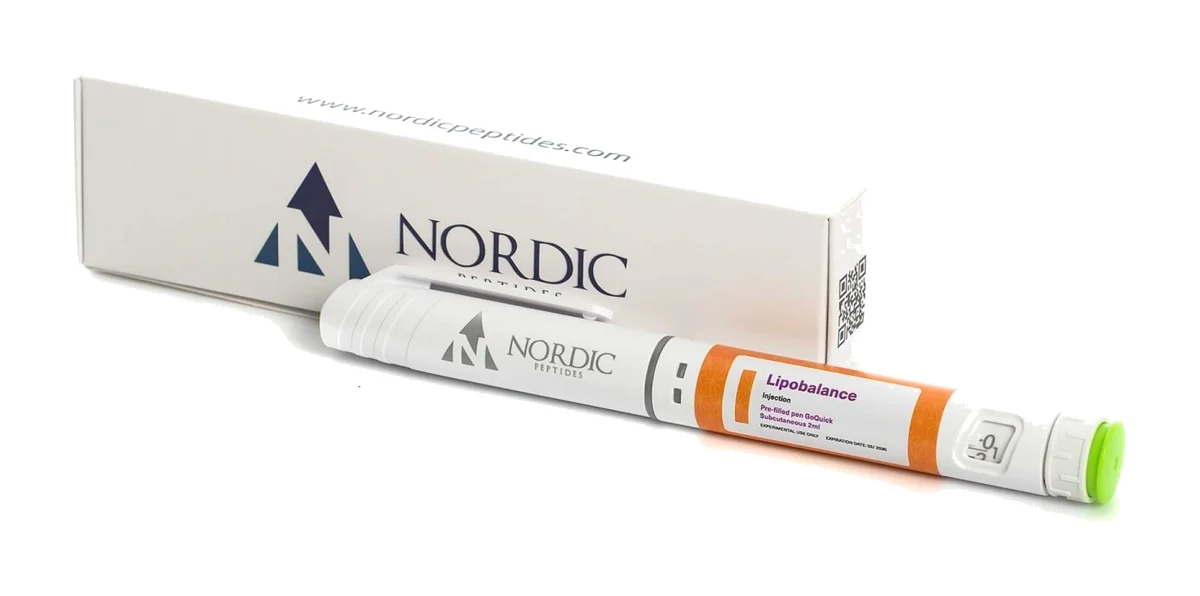
Different intent entirely. The manufacturer’s blend: phosphatidylcholine, sodium deoxycholate, AOD-9604, NAD+, glutathione, zinc and supporting peptides, in a 20 mg / 2 ml pen where one unit is 100 mcg.
The interesting part is the first pair. Phosphatidylcholine with deoxycholate is the classic injectable lipolysis combination — and deoxycholic acid is one of the very few molecules anywhere near this category with an actual regulatory approval: the FDA approved a deoxycholic acid injection for submental fat in April 2015, on a programme of 18 phase 1 to 3 studies. That approval is for a specific local indication with a specific product, not for this pen. But it means the mechanism is not speculative — it has been through the full process, once, for one use.
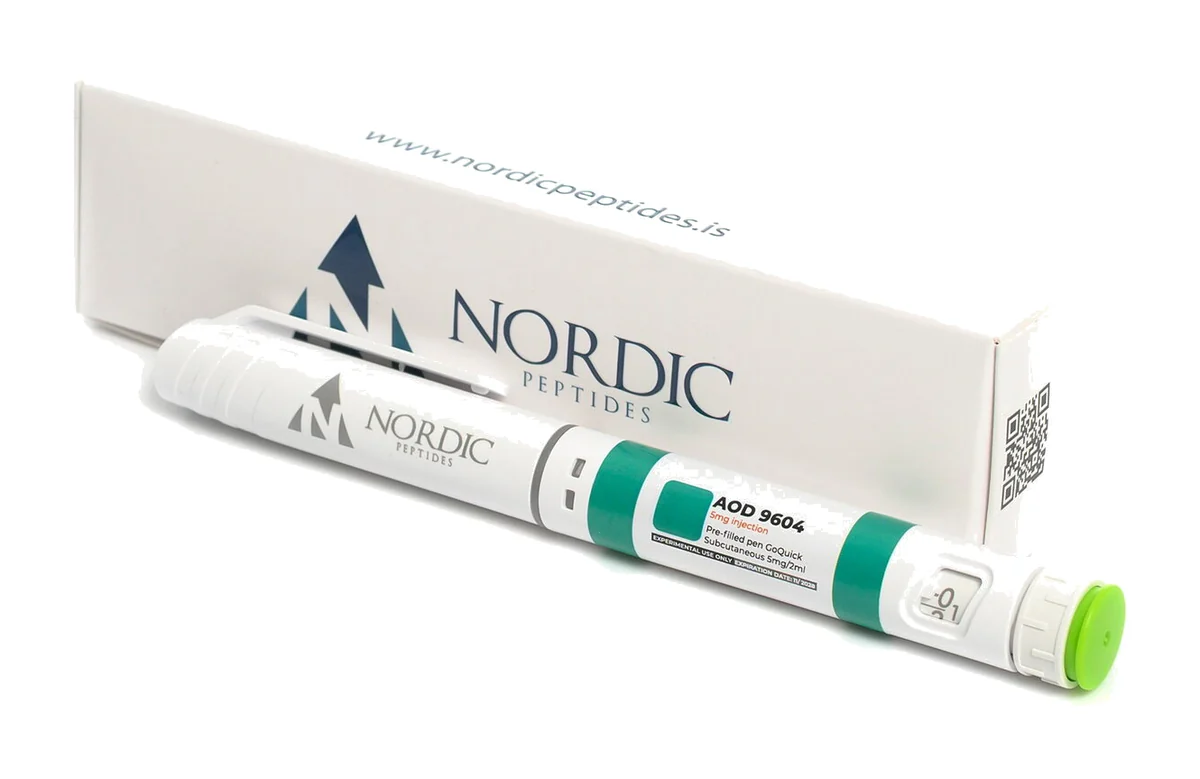
AOD-9604 is the other component with a documented history, and the honest version is instructive. It is a fragment of human growth hormone developed specifically for obesity. In 2004 the developer announced results from a 12-week trial in 300 obese patients across six dose groups: the 1 mg group averaged 2.8 kg lost against 0.8 kg on placebo. That announcement was a company release rather than a peer-reviewed publication, the full study never appeared as one, and development was later discontinued when longer trials did not produce commercially meaningful weight loss.
That is exactly the sort of paragraph most shops delete. We keep it, because “a real trial that read positively and a programme that was then abandoned” is genuinely useful information — and AOD-9604 remains one of the more interesting research compounds in the catalog because of it, sold on its own as well as inside this pen. The published animal work behind it, and how it relates to the HGH Fragment 176-191 sold under the other name, is a page of its own.
NAD+, glutathione and zinc round it out on the antioxidant and cofactor side. On the NAD line, the same caveat as everywhere: the coenzyme itself is not efficiently taken up intact by cells, and the human trial in that field tested a precursor — NMN, 250 mg/day for 10 weeks, improving muscle insulin sensitivity in prediabetic women. Full detail here.
Which of the three routes fits the work
- Strongest published human evidence: the GLP-1 pens. Retatrutide reached −24.2% mean weight change at 48 weeks in phase 2, and tirzepatide beat semaglutide in the first head-to-head trial. Nothing else in this catalog is close.
- Multi-pathway, low-dose, convenience-first: BurnMix. Ten inputs, one dial, no reconstitution.
- Lipid handling, vascular and antioxidant support: Lipobalance, with the deoxycholate–phosphatidylcholine pairing at its centre.
They are not competitors so much as different questions. And all three ship the same way: factory-filled pens, no mixing, no dilution arithmetic, in a plain box on one flat delivery fee.
What is not established
No trial has tested either finished formulation. Neither pen is an approved medicine anywhere, and the approvals that exist for individual molecules — deoxycholic acid for one local cosmetic indication — do not transfer to a multi-component research pen. We publish the composition and the trial record for each part; we do not publish a protocol, a dose or an expected result, because nobody has earned the right to.
What we supply
BurnMix, Lipobalance, AOD9604, Tesofensine, HGH Fragment 176-191 and the full metabolic shelf — Nordic Peptides pre-filled pens, shipped as supplied by the manufacturer, tracked, from inside the EU.
The front page has the shortcuts if you would rather browse than read.
Research use only. Not for human or veterinary use, and nothing on this page is medical advice.
References.
- Astrup A, Madsbad S, Breum L, et al. Effect of tesofensine on bodyweight loss, body composition, and quality of life in obese patients: a randomised, double-blind, placebo-controlled trial. Lancet 2008;372(9653):1906–1913.
- Metabolic Pharmaceuticals company announcement on the AOD9604 phase 2 obesity trial (300 patients, 12 weeks), reported December 2004. Never published as a full peer-reviewed paper.
- Yoshino M, Yoshino J, Kayser BD, et al. Nicotinamide mononucleotide increases muscle insulin sensitivity in prediabetic women. Science 2021;372(6547):1224–1229.
- US FDA approval of deoxycholic acid injection (ATX-101 / Kybella) for submental fat, April 2015 — prescribing information.